

Roland Berger expert outlines ways to mobilise capital for growth

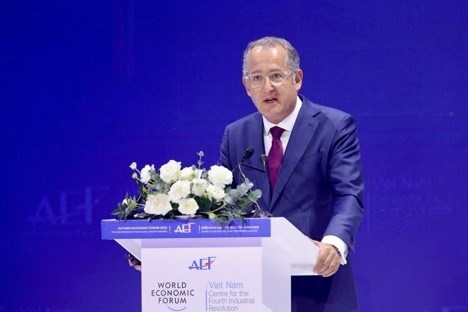 |
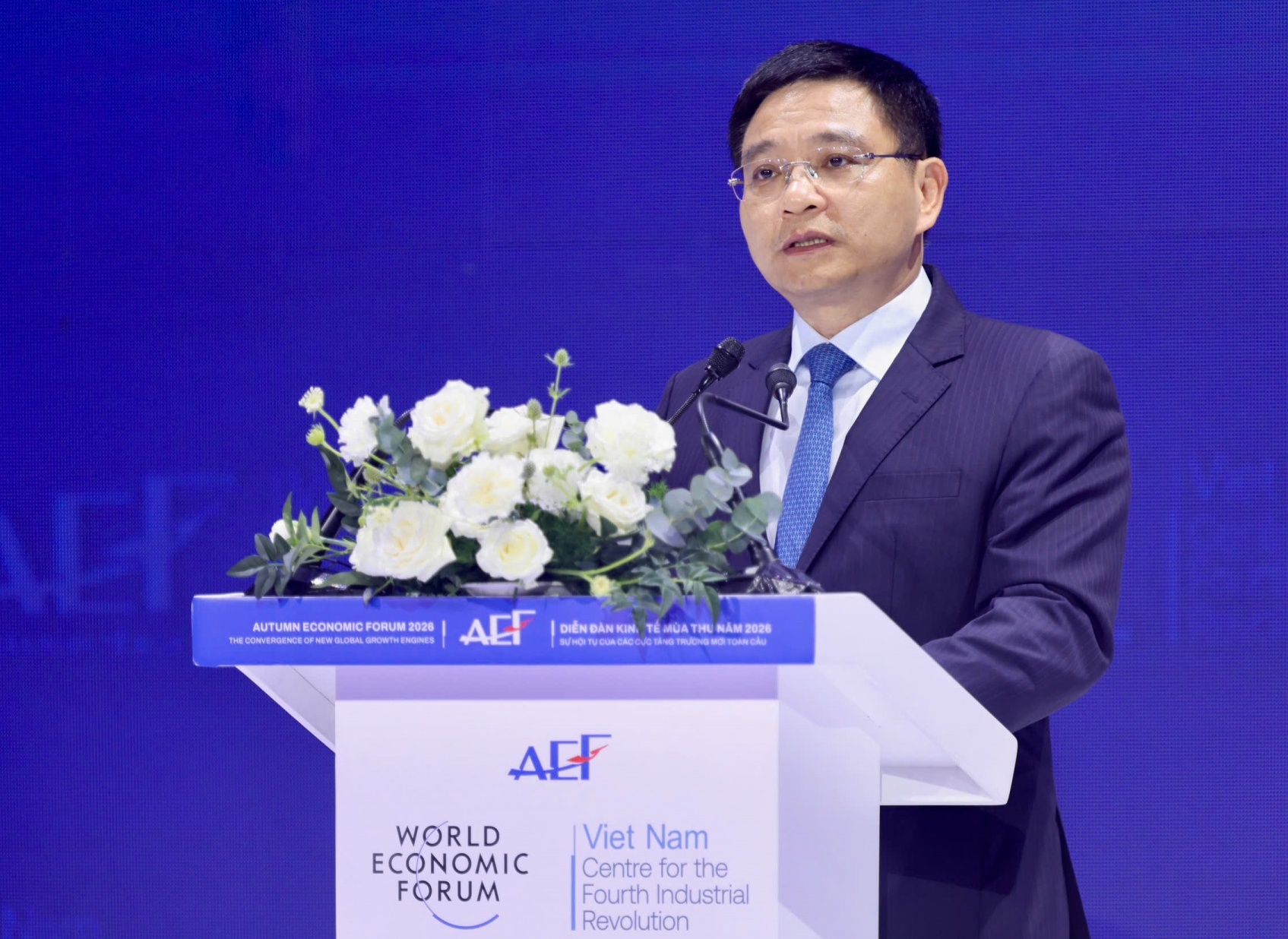
| Denis Depoux, global managing director of Roland Berger at the discussion session of the Autumn Economic Forum 2026. Photo: Le Toan |
According to Depoux, foreign direct investment (FDI) flows are undergoing significant shifts across Asia, driven by three main trends: diversification of production locations, industrial modernisation, and supply chain regionalisation.
Multinational corporations are distributing their manufacturing operations across multiple countries to reduce dependence on a single source of supply. Meanwhile, automation, digitisation and robotics are helping improve productivity and offset the additional costs associated with expanding production networks.
Depoux said that, amid these trends, Vietnam had become a key destination for Chinese and US businesses.
“Companies such as BYD, JOS Solar, and Goldwind are not simply relocating assembly operations to Vietnam, but are also bringing technologies, production processes and innovation capabilities developed across their global networks,” he said.
Vietnam continues to attract investment from US companies such as Apple, Qualcomm and Intel. Although their investment scales vary, US businesses tend to focus on high-value-added sectors such as semiconductors, AI, and advanced technologies.
According to Depoux, the convergence of these investment flows is helping to establish a more deeply integrated manufacturing ecosystem across ASEAN. Notably, this restructuring is reflected not only in changing trade flows but also in the development of tangible manufacturing capabilities.
“For example, LEGO has built its first carbon-neutral factory in Vietnam, with an investment of $1 billion, while maintaining its supplier network in China and integrating the two systems. In this case, it is not China or Vietnam, but China and Vietnam working together,” Depoux said.
This shift is also reflected in Vietnam’s export structure. In 2016, electronics and machinery accounted for around 37 per cent of Vietnam’s exports to the US and Europe. Today, their share has risen to nearly 60 per cent, while the proportions accounted for by apparel and footwear have declined significantly.
However, the development of increasingly complex supply chains is also driving greater demand for financing.
Depoux cited the example of a Vietnamese company that may have to pay for chips and components in Chinese yuan or South Korean won, cover wages in VND, but wait 60-90 days to receive payments in US dollars, euros or Japanese yen.
This creates substantial demand for working capital, foreign exchange services and currency hedging instruments. According to Depoux, this is an area in which financial centres can play a significant role by providing specialised financial services to domestic and foreign-invested enterprises participating in supply chains.
“Vietnam’s economy needs more than capital, as capital alone cannot deliver the 10 per cent growth target,” Depoux said.
Vietnam needs to boost productivity and efficiency, and improve operational performance at every level, from public services and state-owned enterprises to private businesses and foreign-invested enterprises.
This requires innovation and the modernisation of industrial supply chains. Economists refer to this as total factor productivity. It is essential to offset the declining returns on capital while helping businesses minimise the additional costs incurred when scaling up production capacity.
Vietnam therefore needs to move from assembly towards advanced manufacturing, while undertaking extensive digitisation of logistics operations, from seaports to factories. This process cannot rely on short-term capital flows or one-off investments. Instead, it requires substantial, long-term and patient capital to improve operational efficiency over a period of many years.
Depoux pointed out that Vietnam’s credit-to-GDP ratio had reached around 146 per cent, indicating that the banking system was shouldering a substantial share of the economy’s financing needs. Meanwhile, public debt stood at around 35 per cent of GDP, leaving some fiscal headroom to mobilise resources for development investment.
“Vietnam’s problem is not an excessive public debt burden, but a banking system carrying too much credit exposure while the economy lacks sufficient long-term capital,” he said.
Another paradox highlighted by Depoux is the divergence between foreign direct investment and foreign portfolio investment. While foreign investment in Vietnamese factories has reached high levels, foreign investors were net sellers of nearly $5 billion worth of Vietnamese shares last year.
“Capital flowing into factories favours and trusts Vietnam, but capital in the financial markets still needs an additional boost,” he added.
FTSE Russell’s upgrade of Vietnam’s market is a first step. Vietnam needs to continue working towards being classified as an emerging market by Morgan Stanley Capital International, while also securing an investment-grade sovereign credit rating.
These are important conditions for attracting pension funds, institutional investment funds and other investors capable of providing stable, long-term capital.
Depoux recommended prioritising the development of the corporate capital market.
“Vietnam’s corporate bond market currently accounts for around 10–11 per cent of GDP, having previously peaked at 18 per cent, while the government’s target is 20 per cent. Vietnam needs to develop a larger, deeper and more liquid corporate bond market to finance industrial modernisation,” he said.
He also proposed making the achievement of an investment-grade credit rating a national objective. “As I mentioned, this is fundamental to attracting investment,” he said.
In addition, Vietnam needs to accelerate industrial modernisation, strengthen domestic and international infrastructure connectivity, and leverage the convergence of the physical economy and the digital economy to pull in technology capital.
At the same time, Ho Chi Minh City and Danang should be positioned as resilient supply chain finance centres. The focus should be on serving supply chains that integrate physical manufacturing with technology, thereby meeting their growing financing needs.
 | Vietnam IT software and services industry offers high growth potential The IT software and service industry in Southeast Asia is at an inflection point, poised for a next phase of growth. Ahmad Ridhwan Azizan, partner expert at Roland Berger Southeast Asia, and Truong Bui, partner and general manager at Roland Berger Vietnam, look at the Vietnamese market's opportunity to become the fastest growing in the region. |
 | Opportunities are real but time-bound Vietnam’s macroeconomic outlook for the rest of the decade beyond is seemingly on the right track. John Low, managing partner of Roland Berger Southeast Asia and Australia, and Truong Bui, partner and head of Roland Berger Vietnam, point out what the country must do to sustain growth beyond 2026. |
What the stars mean:
★ Poor ★ ★ Promising ★★★ Good ★★★★ Very good ★★★★★ Exceptional
 Tag:
Related Contents



Latest News
More News
- Data-driven management for modern tax administration (October 19, 2026 | 09:28)
- Recent deals in Vietnam point to a quieter, more negotiated market (October 12, 2026 | 09:00)
- VIFC entrants need to build flexible structures as framework takes shape (October 12, 2026 | 08:52)
- Driving early detection and integrated liver disease management (September 30, 2026 | 13:58)
- Vietnam’s capital-markets upgrade creates a new deadline for deal readiness (September 14, 2026 | 09:00)
- Resolution 10 equals growth driven by strategic innovation (September 08, 2026 | 14:44)
- Partnerships streamline pathways for investors in Vietnam (September 08, 2026 | 08:58)
- Vietnam can lead the way in AI regulatory system (September 04, 2026 | 09:00)
- Vietnam's next cycle: capital shifts from low-cost manufacturing to higher-value investment and M&A (August 26, 2026 | 14:51)
- Significant steps made in related-party transactions (August 21, 2026 | 15:51)





 Mobile Version