

Tax reforms carve the path for growth and confidence

At the Tax & Legal Institute 2026, hosted by KPMG in Vietnam on October 27, Mai Xuan Thanh, director general of the Vietnam Tax Authority under the Ministry of Finance, said that tax refunds had increased by almost 50 per cent on-year from 2025 and exceeded 94 per cent of the annual target.
 |
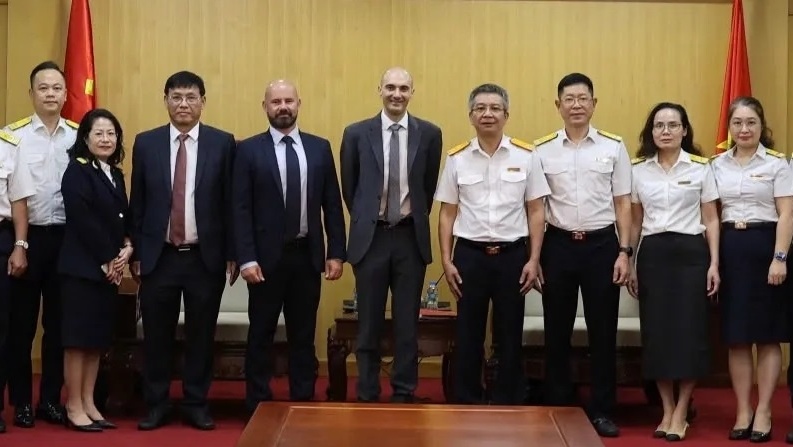
| The event heard that a major ambitious growth target requires more state budget revenues and fiscal discipline |
“State budget revenues must be underpinned by economic development and production and business activities. As businesses grow, tax revenue will also increase. Therefore, to help achieve Vietnam’s 10 per cent economic growth target, the tax sector must strengthen its engagement with businesses and support them throughout their development,” he said.
Another notable achievement highlighted by Thanh at the event was Vietnam’s removal from the European Union’s list of non-cooperative jurisdictions for tax purposes in October. According to Thanh, the result was achieved through the government’s decisive direction and coordination between the MoF and relevant agencies.
Thanh said that several mechanisms were currently being implemented, including spontaneous exchange of information, exchange of information upon request, and country-by-country reporting. A delegation from the Organisation for Economic Co-operation and Development is scheduled to visit Vietnam in November to work on this issue.
“Businesses operating in Vietnam are responsible for cooperating with the authorities in declaring beneficial ownership information in accordance with regulations. This is an important basis for the authorities to verify compliance, prevent tax evasion, and address capital and profit shifting that does not comply with applicable regulations,” stated Thanh.
Strengthening tax information exchange will also help Vietnam integrate more deeply into the global tax administration system while enhancing the transparency of its business environment. “This, in turn, will help Vietnam build greater confidence among investment funds, governments, and international financial institutions, supporting the attraction of investment capital in the coming years,” Thanh added.
Hoang Thuy Duong, partner and head of Tax for Vietnam & Cambodia at KPMG in Vietnam, said that achieving current growth targets required Vietnam to take a realistic view of the global economic environment. Nevertheless, Vietnam’s economy had demonstrated considerable resilience, sustaining export growth and attracting positive foreign inflows.
“An ambitious growth target requires state budget revenue to increase accordingly while maintaining fiscal discipline and ensuring that resources are allocated in a balanced manner to support development. Vietnam still has fiscal space to invest in infrastructure, ranging from seaports and airports to expressways, thereby strengthening production capacity, export performance, and services development,” he said.
Against the backdrop of the implementation of numerous new tax laws, Duong noted that tax administration would become increasingly stringent, including through broader and more effective tax coverage and measures to ensure fairness among businesses and individuals.
“Businesses therefore need to pay greater attention to tax compliance, related-party transactions, and associated obligations,” said Duong. “In particular, digitalisation in tax compliance and administration is a strategic step that aligns with international trends. The application of technology and AI will transform tax declaration and payment processes, as well as tax audits and inspections.”
Nguyen Thu Huong, partner, head of Tax Dispute Resolution & Controversy at KPMG in Vietnam, said the tax sector was taking decisive steps to integrate digital transformation into tax administration. Addressing businesses’ concerns about tax audits and inspections, Huong said their primary objective was to improve compliance.
“Businesses should therefore avoid focusing solely on preparing for a specific tax inspection. Instead, they should conduct regular tax health checks to identify errors that can be corrected promptly, rather than waiting until an inspection decision is issued before taking remedial action,” said Huong.
When issues are unclear, businesses should proactively engage with the tax authorities and seek guidance before more serious complications arise.
“Rather than simply filing tax returns, submitting reports, and waiting for the authorities to conduct audits or inspections, businesses should take a proactive approach to compiling data, reconciling figures, analysing risks, and identifying anomalies so that they can make timely adjustments, mitigate risks, and strengthen compliance,” she added.
Also at the event, Le Thi Kieu Nga, partner and head of Tax Advisory at KPMG in Vietnam, said that of the approximately 1,500 businesses in Vietnam subject to the global minimum tax (GMT), around 200 businesses and projects had incurred top-up tax liabilities.
“If a business does not pay the top-up tax in Vietnam, the tax may be collected in the jurisdiction where its parent company or intermediate parent company is located. As a result, the business would still be subject to the minimum effective tax rate of 15 per cent,” stated Nga.
“This reduces the effectiveness of traditional corporate income tax incentives for multinational groups subject to the GMT. If a company’s effective tax rate is already below the 15 per cent threshold, the benefits of tax incentives may no longer be retained entirely by the business, as the shortfall could instead be collected as top-up tax in another jurisdiction,” she said.
Tran Thi Thuy Ha
Partner, Global Transfer Pricing Services KPMG in Vietnam
Businesses must ensure that related-party transactions comply with the arm’s-length principle, as transfer pricing documentation alone may not be sufficient to withstand scrutiny by tax authorities. This requires a robust analysis of pricing methods, supported by reliable data and evidence that reflects the functions performed, assets used, risks assumed, and economic circumstances of the parties involved.
These requirements also extend to country-by-country reporting. Multinational enterprise groups with consolidated global revenue of at least $836 million may fall within the reporting framework, while businesses should review whether notification obligations apply when reports are filed overseas. At the same time, changes to the rules governing data sources for transfer pricing analysis make the selection of appropriate comparables increasingly important.
Profitability must also be assessed in context. Industry profit indicators published by tax authorities do not mean that all businesses in the same sector must achieve identical margins. Differences in business models, risk profiles, and market conditions can lead to different results, which companies should be prepared to substantiate with relevant evidence.
To manage these risks, businesses may consider mechanisms that provide greater certainty or help resolve disputes. Advance pricing agreements can establish an agreed approach to pricing for covered related-party transactions, while the mutual agreement procedure can help address disputes between tax authorities and cases of double taxation under applicable tax treaties. Businesses should review regulatory changes, reassess their transfer pricing risks, and strengthen supporting documentation, while considering whether agreement mechanisms suit their circumstances.
Tran Van Trung
Partner, Tax Advisory; Head, Power Sector, KPMG in Vietnam
Recent changes to Vietnam’s tax framework require businesses to reassess their eligibility for corporate income tax incentives, particularly those available to qualifying high-tech enterprises and research and development centres. Depending on the applicable conditions, preferential tax rates and extended incentive periods may be available, making it important for companies to review the relevant criteria rather than rely solely on incentives they have previously applied.
Beyond tax incentives, the treatment of capital transfers is another area requiring careful consideration, particularly in cross-border transactions involving multinational groups. Determining the portion of income attributable to Vietnam can be complex when a transaction takes place overseas and the group operates across several jurisdictions.
Asset-based allocation may be relevant in some cases, but it may not fully reflect the value of businesses whose operations depend heavily on services or intangible assets. These challenges can also arise in internal group restructuring, where businesses need to establish the appropriate transfer value and assess differences between transaction prices and book values.
For cross-border transactions, businesses must also consider whether relief is available under double taxation agreements. Such relief is not automatic: companies must satisfy the relevant conditions and provide adequate supporting documentation. Careful assessment of the transaction structure and the applicable treaty provisions is therefore important when determining the tax implications of a capital transfer.
Taken together, these issues underline the need for businesses to review their tax positions before implementing transactions or recognising expenses. Maintaining complete documentation, assessing potential liabilities early, and engaging with tax authorities where appropriate can help clarify uncertainties and reduce the risk of disputes during tax audits and finalisation.
What the stars mean:
★ Poor ★ ★ Promising ★★★ Good ★★★★ Very good ★★★★★ Exceptional
 Tag:
Related Contents





Latest News
More News
- Roland Berger expert outlines ways to mobilise capital for growth (October 29, 2026 | 16:21)
- Data-driven management for modern tax administration (October 19, 2026 | 09:28)
- Recent deals in Vietnam point to a quieter, more negotiated market (October 12, 2026 | 09:00)
- VIFC entrants need to build flexible structures as framework takes shape (October 12, 2026 | 08:52)
- Driving early detection and integrated liver disease management (September 30, 2026 | 13:58)
- Vietnam’s capital-markets upgrade creates a new deadline for deal readiness (September 14, 2026 | 09:00)
- Resolution 10 equals growth driven by strategic innovation (September 08, 2026 | 14:44)
- Partnerships streamline pathways for investors in Vietnam (September 08, 2026 | 08:58)
- Vietnam can lead the way in AI regulatory system (September 04, 2026 | 09:00)
- Vietnam's next cycle: capital shifts from low-cost manufacturing to higher-value investment and M&A (August 26, 2026 | 14:51)









 Mobile Version