
Vietnam M&A set for 2027 rebound after tough year

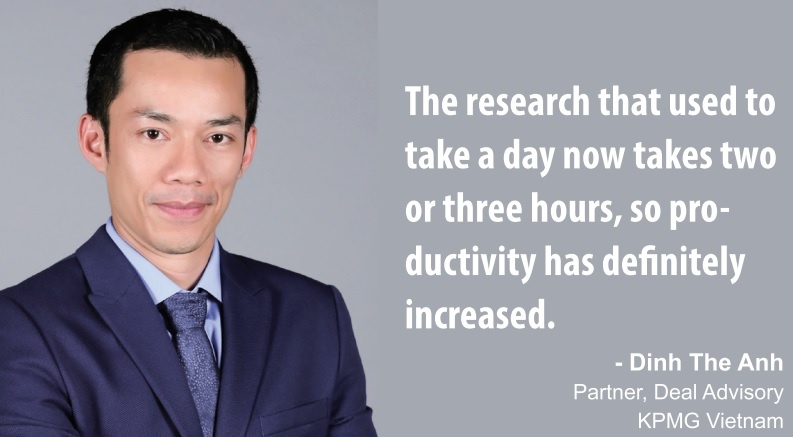
Anh, who has more than two decades of experience advising on mergers and acquisitions (M&As), devotes most of his time to fundraising mandates and strategic investor searches. He also advises Japanese, South Korean, and Southeast Asian investors on acquisitions of Vietnamese businesses. He is one of 23 dealmakers featured in Ansarada’s 2027 M&A Predictions Report: Going All In, published on November 3.
 |
“Vietnam is still a relatively small M&A market, so we’re quite sector-agnostic, though certain industries reliably draw the most interest: consumer, tech, financial services, healthcare, and education,” he said.
Looking back, 2025 was, in his words, “the toughest year for M&A practitioners in Vietnam”. Headline figures were flattered by internal restructurings and non-cash transactions, and once those were stripped out, underlying deal size and volume dropped sharply. The market rallied in the first half of 2026 before losing momentum again.
“We got a good start in the first and second quarters, but we’re seeing a slowdown in the second half. Overall, it’s better than last year,” he said.
Much of 2026’s hesitancy, Anh argued, comes down to compliance. “Compliance has been a huge theme in 2026 for the average Vietnamese business,” he said, pointing to new tax registration and e-invoicing rules for household businesses and small online sellers. “Many had never needed to register before, and some paused trading while they adjusted, with a knock-on effect on larger consumer businesses that sell through those channels.”
Foreign retailers, by contrast, are getting relief: Decree No.342/2026/ND-CP, effective October 18, narrow the economic needs test, meaning many foreign investors will no longer need case-by-case approval for each additional store.
Layered on top of global uncertainty, the net effect was a market treading water rather than accelerating, a pause Anh expects to ease in 2027 as businesses adjust and confidence returns.
That recovery, he predicted, will be led by banking. With roughly 50 banks operating in the country and many looking to raise capital to fund growth, he expects a steady flow of bond and equity issuances to feed a healthier deal pipeline. Consumer is his other pick for a rebound, after a prolonged lull in domestic spending.
Structurally, though, mid-market will remain the mainstay. “Vietnam’s economy isn’t dominated by large conglomerates, so the market will always be driven more by small and medium companies,” he noted.
Cross-border activity continues to define the market, with roughly 30-40 per cent of deals staying domestic and the remainder involving foreign buyers, mainly from Japan, South Korea, Thailand, and Singapore. Thai investors, in particular, have been more focused on their home market, though Anh expects them to return as Vietnam continues to outpace regional growth.
Domestic buyers, meanwhile, have redirected capital towards infrastructure in line with national investment priorities, leaving more room in conventional M&A for private equity and foreign acquirers.
AI is embedded in KPMG’s deal process, Anh said, particularly in due diligence, where the firm’s data and AI tools have cut research timelines sharply: work that once took a day can now take two or three hours. But he was careful to draw a line between speed and judgment.
“If you don’t know where to get the data, where the sources are, or whether that source is reliable, it can be a real problem if you rely on AI to give you information without knowing whether you can trust it,” he said. This is why AI-assisted work at the firm is still reviewed by experienced deal professionals.
The same logic is reshaping recruitment in his Deal Advisory team, which increasingly looks for versatile dealmakers who can work fluently alongside the firm’s tax, legal and strategy specialists, with AI helping staff get up to speed on unfamiliar territory faster than before.
Even so, Anh is unconvinced this shrinks headcount needs.
“The research that used to take a day now takes two or three hours, so productivity has definitely increased. But the depth of what’s required has increased too.”
Elsewhere, he sees the country’s established IT outsourcing sector beginning to reposition around AI-enabled services, an early stage but increasingly investible trend as providers build genuine AI capability into their offerings.
The market’s biggest current friction, in Anh’s view, is how long deals now take to close. In his experience, closings have stretched from 9-12 months to 14-15, and buyer shortlists have thinned, often down to a single serious bidder.
Buyers, he said, want granular monthly and quarterly financials broken down by channel, product line and country before they commit, while sellers increasingly favour investors already established in Vietnam over newcomers testing the market from outside.
For well-prepared sellers, though, he sees opportunity in that same shift, since thorough early preparation now carries more weight with cautious buyers than it once did.
Anh remained optimistic about the decade ahead. “As an advisor, I always believe in the future,” he said, adding that he expects Vietnam’s growth story to continue as the current reform agenda is carried through. His call for 2027 is rising deal volumes and sizes, with banking and consumer leading the way back.
What the stars mean:
★ Poor ★ ★ Promising ★★★ Good ★★★★ Very good ★★★★★ Exceptional
 Tag:
Related Contents



Latest News
More News
- Why Vietnam deal teams may want to prepare for both IPO and sale (October 27, 2026 | 09:00)
- Recent deals in Vietnam point to a quieter, more negotiated market (October 12, 2026 | 09:00)
- Data compliance the hidden clause in cross-border Vietnam deals (September 28, 2026 | 09:00)
- Vietnam’s capital-markets upgrade creates a new deadline for deal readiness (September 14, 2026 | 09:00)








 Mobile Version