
Robotic surgery advances women's health at FV Hospital

Dr. Robert François Marie Riche, who graduated in obstetrics and gynaecology from Grenoble Alpes University and completed advanced training in laparoscopic surgery at Clermont Auvergne University and Aix-Marseille University, has been using the da Vinci Xi robotic system at FV Hospital to perform highly precise procedures.
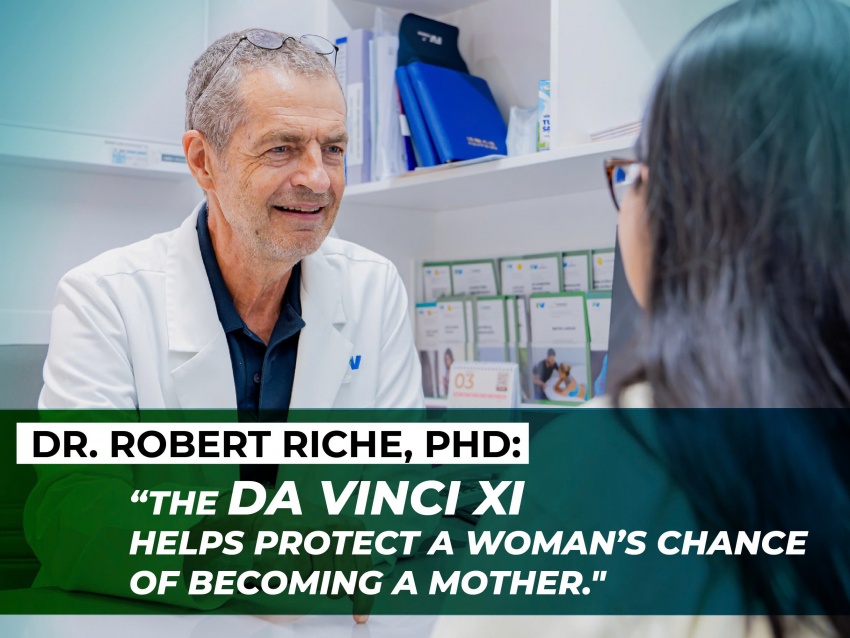 |
| Riche providing counselling to a patient at FV Hospital. Photo: FV |
After many years working in France, he came to Vietnam in the early 2000s. Riche previously served as head of the Obstetrics and Gynaecology Department at FV Hospital from 2004 to 2008, before continuing to provide professional advice to various healthcare systems in Ho Chi Minh City. According to Riche, obstetrics and gynaecology is one of the specialities that demands a high degree of precision in surgery.
A woman's pelvis contains several vital organs – including the uterus, ovaries, bladder, and rectum – located in close proximity and connected by a complex network of blood vessels and nerves. As a result, each surgery aims to remove damaged tissue while preserving as much of the reproductive organs as possible.
“In obstetrics and gynaecology, simply curing a disease is not enough,” Riche explained. For him, every surgery must be geared towards protecting the patient's future – especially that of young women who wish to become mothers.
It is from this understanding that doctors consistently prioritise conservative surgical methods when conditions permit: from removing tumours while preserving the ovaries, preserving the uterus in the treatment of fibroids, to early-stage cancer intervention while maintaining the patient's fertility.
“When I started working at FV in 2004, obstetric and gynaecological surgery was primarily open or performed vaginally. From around 2005 onwards, laparoscopic surgery gradually became more popular due to its advantages of being less invasive, reducing pain, and shortening recovery time for patients,” said Riche.
However, for complex cases located deep within the pelvic region – where surgical space is limited, and many important anatomical structures are concentrated, laparoscopic surgery still has certain limitations. The emergence of the da Vinci Xi robotic surgical system has opened up new possibilities, especially in the treatment of complex obstetric and gynaecological diseases.
Compared to traditional laparoscopic surgery, the da Vinci Xi robotic system offers several significant advantages. The robotic arm's flexible rotation and absolute vibration resistance enable surgeons to perform stable and precise procedures, even in tight and challenging surgical spaces. Meanwhile, high-resolution 3D images allow doctors to clearly observe the intricate anatomical structures in the pelvic region.
 |
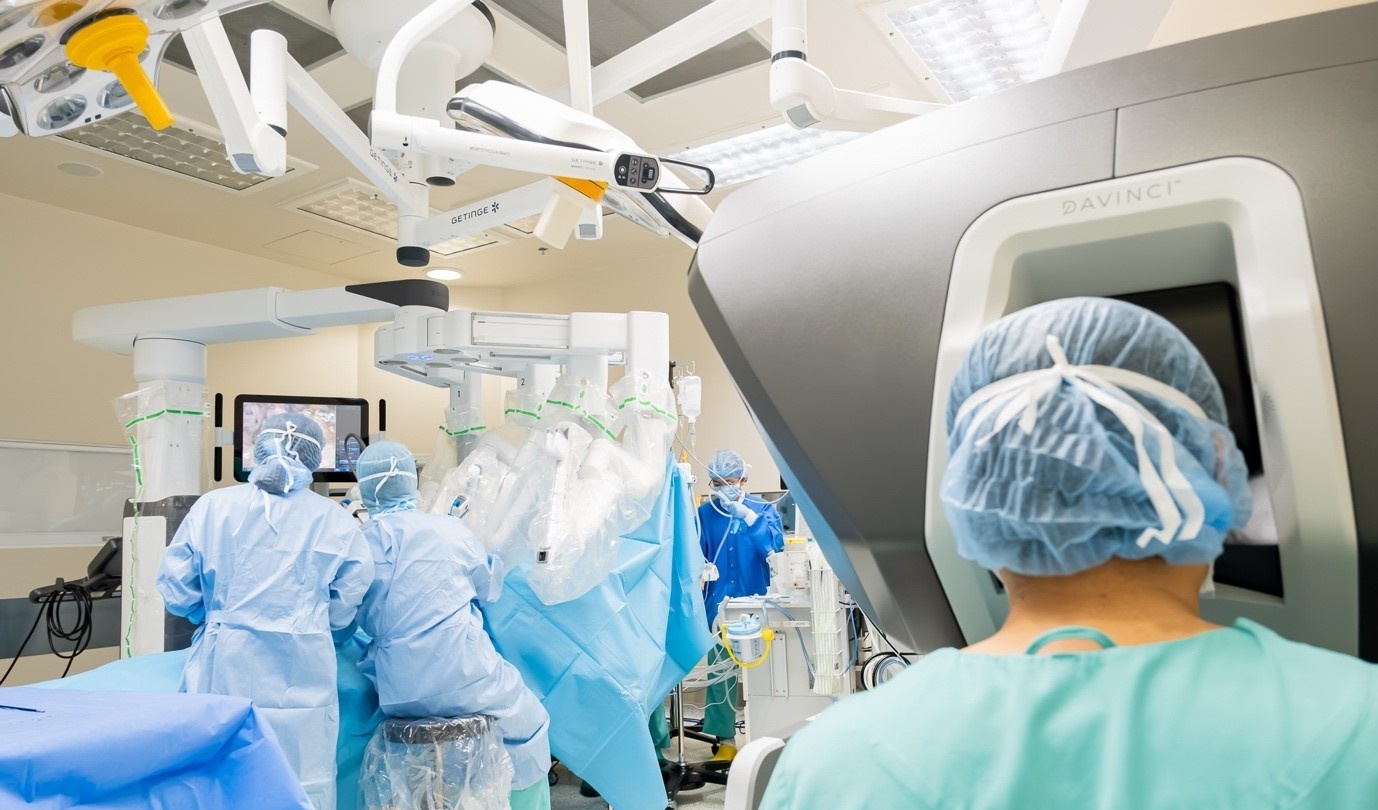
| Riche in the operating room equipped with the da Vinci Xi robotic system. Photo: FV |
No matter how advanced the technology, the effectiveness of robotic surgery still depends on the experience and skill of the surgeon. With over 30 years of experience in obstetrics and gynaecology, Riche is utilising the da Vinci Xi robotic surgery system to great effect, transforming this technology into a powerful tool to assist in many complex surgical procedures.
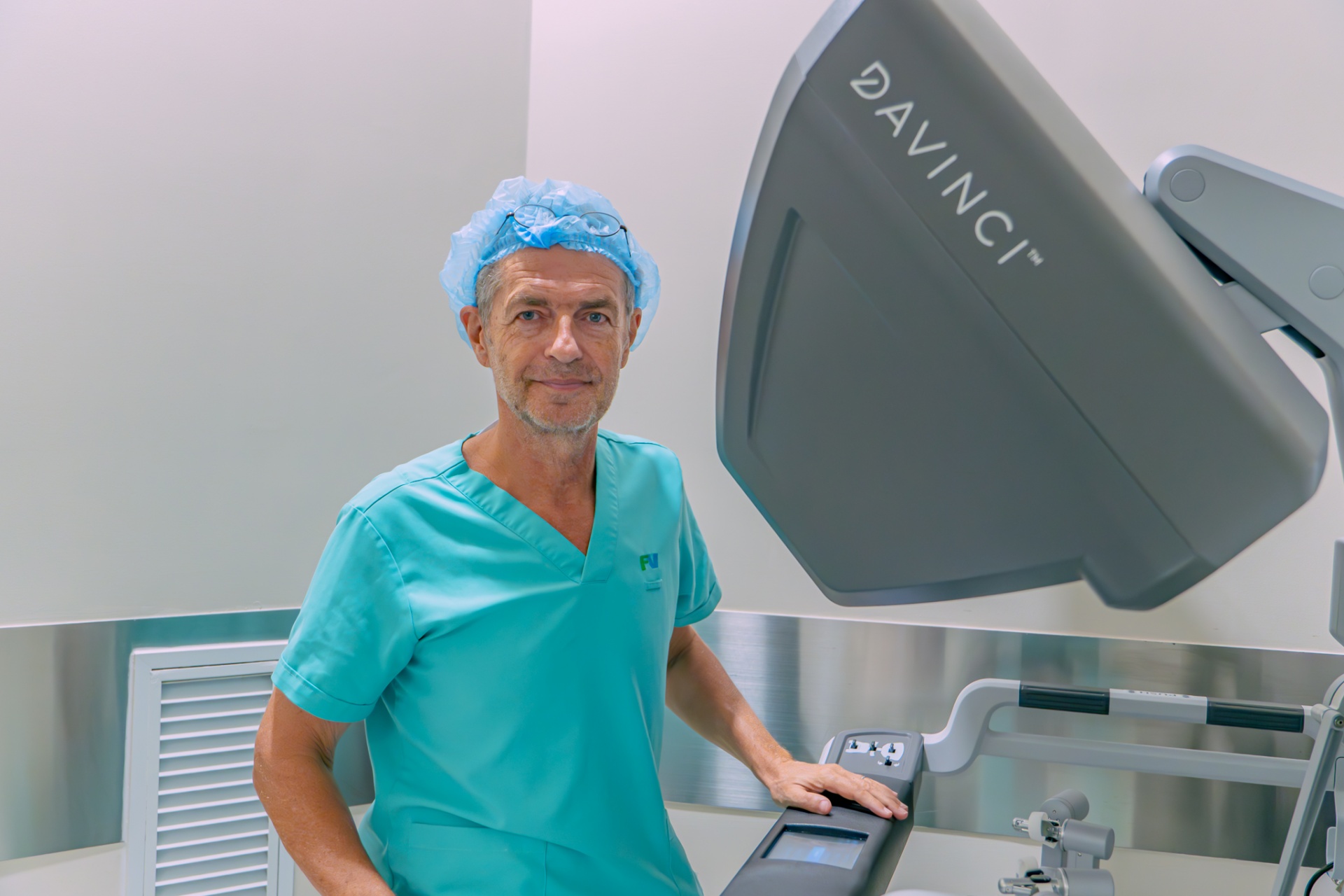 |
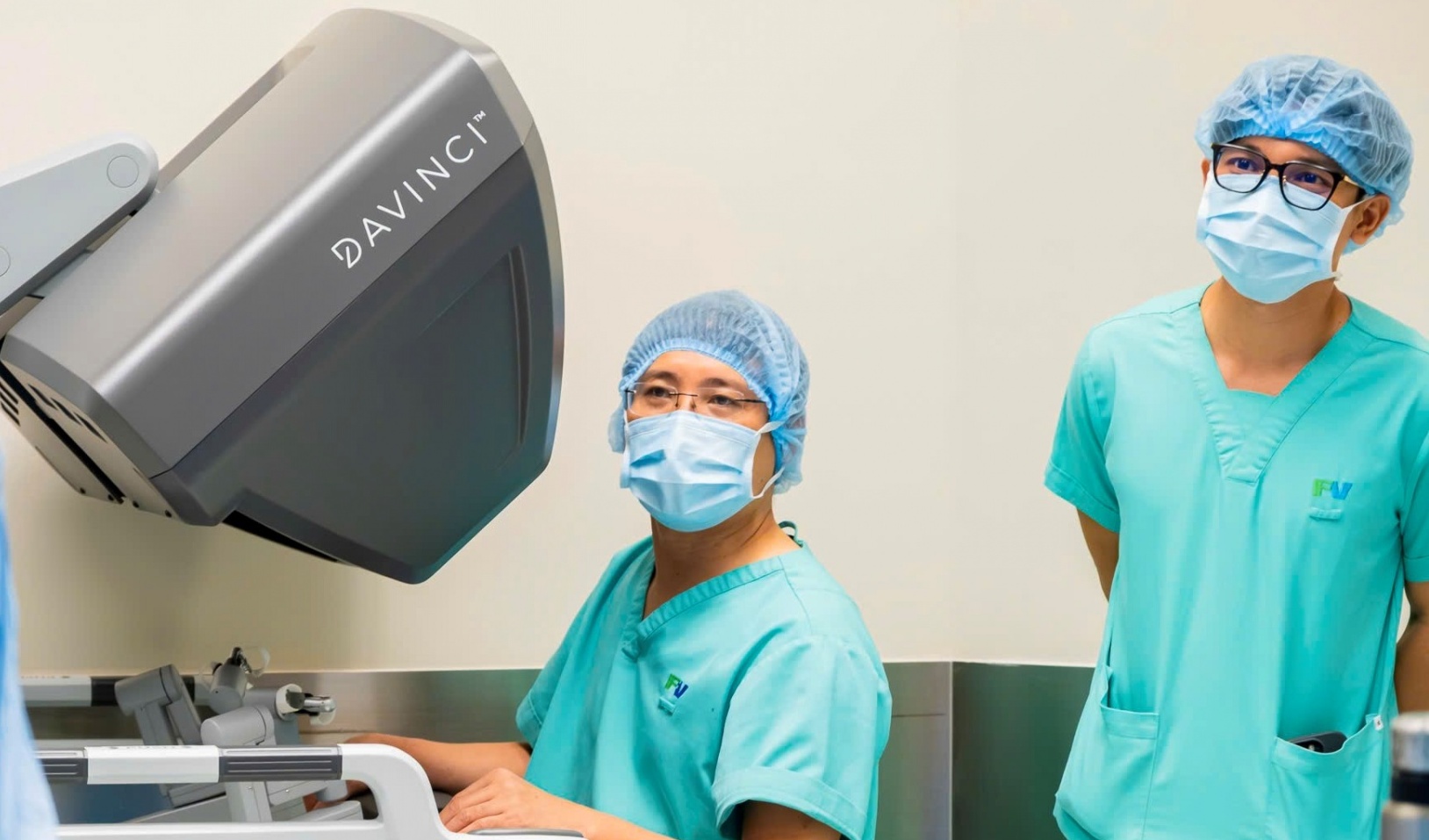
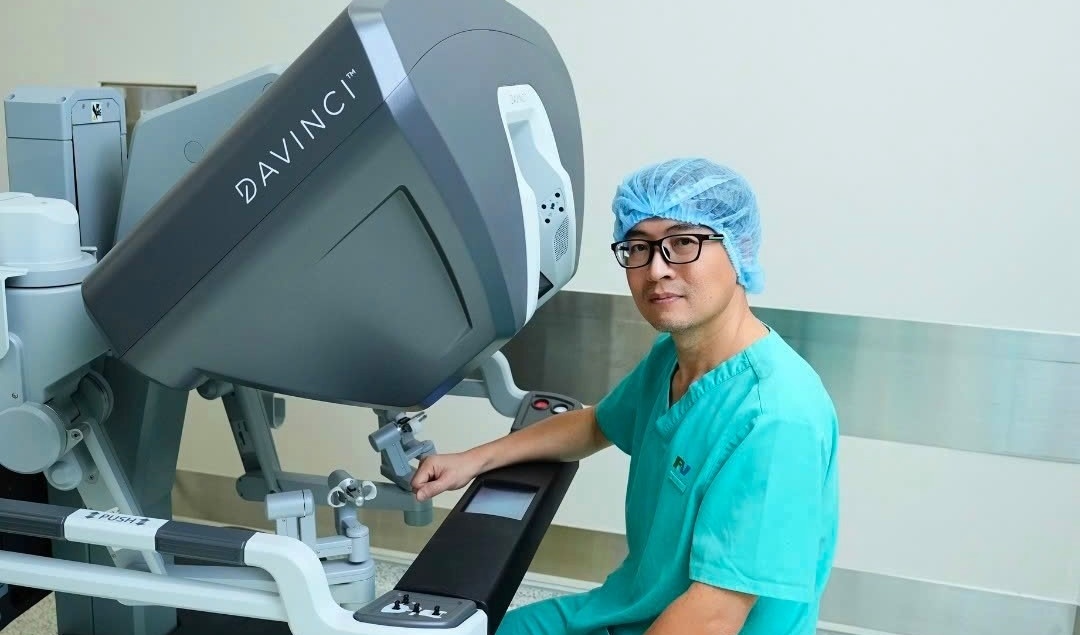
| Riche with the da Vinci Xi robotic surgery system. Photo: FV |
According to Riche, robotic surgery is particularly useful in treating complex gynaecological diseases such as uterine fibroids, endometriosis, genital prolapse, or early-stage gynaecological cancer. These cases require extremely precise surgical procedures to both remove the damage and preserve the reproductive organs as much as possible.
In robotic surgery, doctors typically only need to make about four small incisions, each approximately 8mm long, in the abdominal wall to insert the instruments. Thanks to its minimal invasiveness, patients typically experience less pain, less blood loss, and faster recovery; hospital stays can be shortened from 7 to 8 days for open surgery to approximately 2 to 3 days.
During a recent robotic surgery observation and practice trip to Malaysia, Riche also monitored many complex cases that were effectively treated, such as endometriosis with a large tumour that was surgically treated in about 45 minutes, or uterine fibroids with complex pelvic adhesions that were completed in about 75 minutes This significantly shortens the surgical time compared to traditional methods.
“90 per cent of current obstetric and gynaecological diseases can be treated with robots. The biggest advantage is that, despite having a level of safety comparable to traditional endoscopy, robotic surgery dramatically reduces the rate of needing to switch to open surgery: from 10 per cent to less than 1 per cent,” Riche said.
He also noted that robotic surgery does not apply to tumours that are too large – 15 to 20 cm – or malignant ovarian tumours that require complete removal.
According to Riche, robotic surgery has become a routine procedure in many developed countries. “Obstetrics and gynaecology require precision and finesse in every operation, and robots are key.”
The French expert also expressed his hope that more and more women in Vietnam will have the opportunity to access this advanced surgical technology, “Because the ultimate goal of treatment is not just to cure the disease, but also to help women maintain their health, confidence, and preserve their ability to become mothers when conditions permit.”
| For consultation and examination of obstetric and gynaecological diseases using the da Vinci Xi robotic system with Dr. Robert Francois Marie Riche, readers can contact FV Hospital at 06 Nguyen Luong Bang Street, Tan My Ward (formerly District 7), Ho Chi Minh City or contact via phone number (028) 3511 3333 |
 | Race against time: FV doctors save elderly patient from stroke and acute myocardial infarction An 80-year-old man suffering from both a stroke and an acute myocardial infarction was saved within minutes thanks to FV Hospital's 24/7 "Golden Hour" cardiac response team and international-standard Cathlab. |
 | FV Hospital's integrated care model proves comprehensive and effective The intensive care unit (ICU) is often seen as the frontline in the battle for patients' lives, where the collaboration between multiple specialities determines success. At FV Hospital, a multidisciplinary, comprehensive care model has demonstrated remarkable effectiveness in treating critically ill patients. |
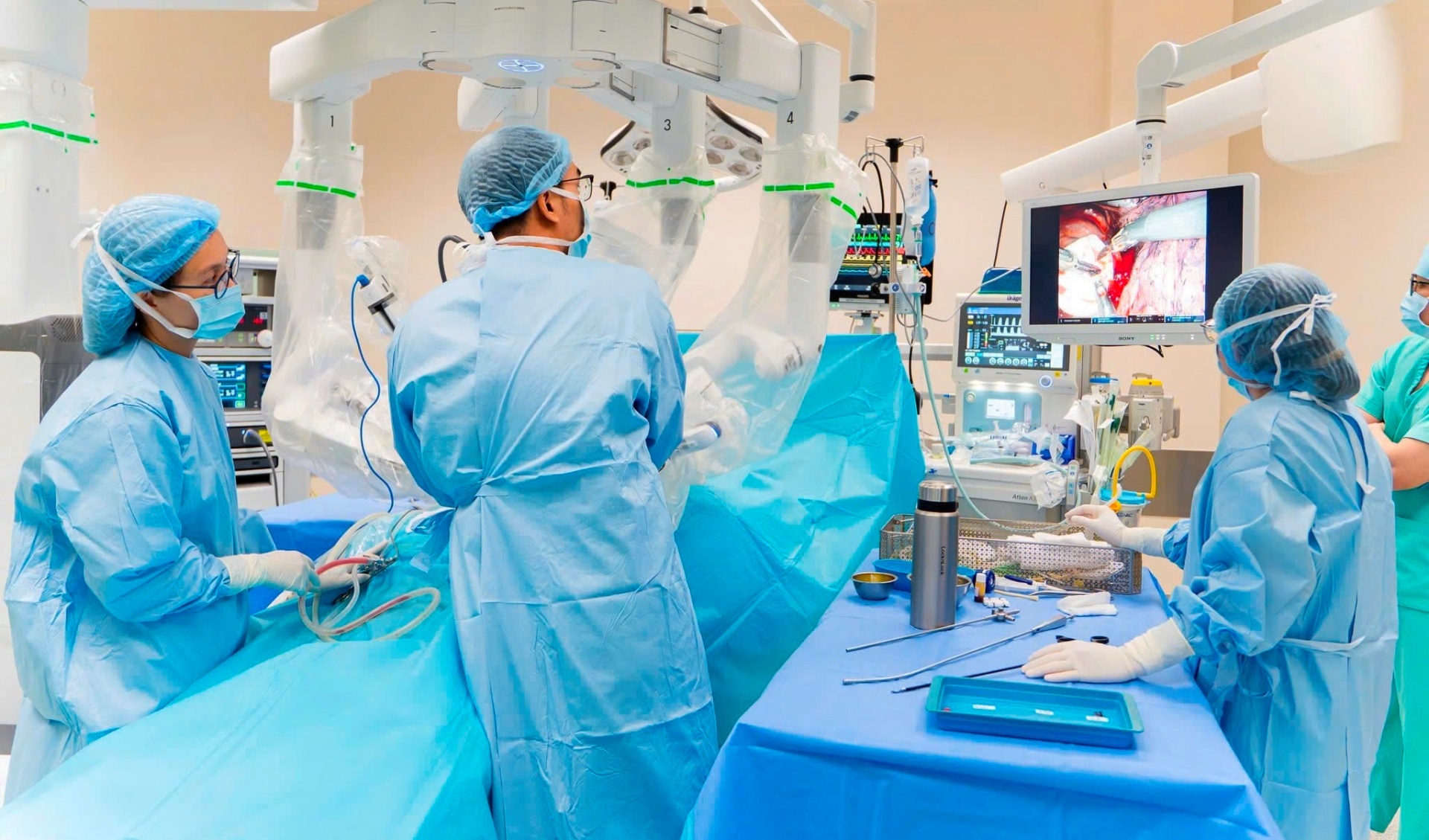
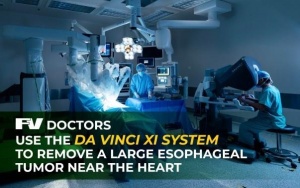 | Robotic surgery proves effective for complex thoracic case at FV Hospital Doctors at FV Hospital have used the da Vinci Xi robotic system to successfully remove a large esophageal tumour from a patient while preserving the oesophagus, demonstrating the growing role of robotic surgery in treating complex thoracic conditions. |
What the stars mean:
★ Poor ★ ★ Promising ★★★ Good ★★★★ Very good ★★★★★ Exceptional
 Tag:
Tag:
Related Contents





Latest News






More News
- Sojitz in Vietnam: 40 years from individual projects to a business cluster 'KATAMARI' (October 08, 2026 | 09:00)
- Coteccons targets 'Quality Growth' with 25 per cent dividend plan (October 07, 2026 | 13:00)
- Vietnam Education Forum opens UK Education Mission's Hanoi visit (October 07, 2026 | 12:27)
- Tax authorities deactivate TINs of nearly 180,000 businesses (October 07, 2026 | 12:08)
- World Bank raises Vietnam's 2026 GDP growth forecast to 7.4 per cent (October 07, 2026 | 11:41)
- Vietstock 2026 to spotlight livestock innovation and green transition (October 07, 2026 | 09:00)
- Vietnam’s GDP grows over 9 per cent in first nine months (October 05, 2026 | 18:45)
- Vietnam earns $56.3 billion from agro-forestry-fishery exports (October 05, 2026 | 18:32)
- DSV balances resilience and decarbonisation in supply chains (October 05, 2026 | 18:20)
- Electronics exports reach $175.4 billion in the first nine months (October 05, 2026 | 18:12)



Latest News






 Mobile Version