
Agentic AI set to reshape Vietnam’s enterprise landscape

 |
With Vietnam targeting high-income status by 2045 and AI projected to contribute nearly 12 per cent of GDP by 2030, how is AI reshaping enterprise competitiveness and investment appeal?
AI presents a generational opportunity for Vietnamese businesses to leapfrog global competitors
Unlike more mature markets weighed down by decades of 'legacy debt' and dated infrastructure, Vietnam’s business landscape is young, digitally savvy, and agile. This allows local enterprises to bypass the painful process of deconstructing old systems and instead build agent-first organisations from the ground up.
By adopting agentic AI, companies can scale their operations like never before. In service sectors, for instance, businesses can deploy AI agents to handle 24/7 customer inquiries with human-like reasoning, freeing up human employees to focus on high-value strategy and relationship building.
The combination of human expertise with digital labour at scale fundamentally changes the competitiveness of Vietnamese enterprises, transforming them from labour-intensive, process-driven operations into high-value, knowledge-driven innovation hubs.
Looking further, this shift allows Vietnam to move beyond a low-cost labour proposition towards high-value, intelligent services. As ASEAN becomes increasingly competitive, the transformation to agentic enterprises is critical to attracting higher-quality investment.
 |
With the new AI Law coming into effect in Vietnam 2026, how do you see the relationship between regulation, data governance, and the pace of AI adoption in the market?
The AI Law, which introduces a risk-based framework that differentiates between high-risk and general-purpose AI, is a welcome development. It strikes a balance between protecting citizens and fostering innovation.
At Salesforce, we believe that trusted governance is not a barrier to innovation but an accelerant. Robust governance and guardrails do not slow down innovation; they function as a catalyst that provides organisations with the confidence to move faster. A clear regulatory framework encourages enterprises to invest in and deploy AI, knowing the rules of the road.
Beyond regulation, AI is only as good as the data it is grounded in. Many businesses struggle with fragmented data trapped in disconnected systems, which prevents AI from delivering accurate results. Salesforce’s Data 360 unifies disparate data streams into a single, trusted foundation. This allows AI agents to be grounded in the customer’s data, ensuring every action is accurate, and every insight is relevant.
When investors and stakeholders see that AI is grounded in auditable, governed data, it accelerates adoption rather than hindering it. Combining with robust governance, Vietnamese firms can scale their digital transformation aggressively.
This law will likely shift the market away from 'DIY' AI experiments – which often lack governance and fail to reach production – towards trusted, enterprise-grade platforms. By adopting platforms with built-in guardrails and transparency, companies can ensure their AI agents operate within legal boundaries, turning compliance from a hurdle into a competitive advantage.
As Salesforce invests in AI skills development in Vietnam and ASEAN, how do you see AI workforce training shaping productivity and investment appeal?
The shift to an AI-enabled workforce allows Vietnam to move its labour force up the value chain. We see the power of this shift firsthand at Salesforce, as users of our own Agentic AI technology.
Our sales development reps use agents to engage thousands of leads that would otherwise go untouched, generating millions in net-new pipeline, while our IT agents resolve 35 per cent of support tickets autonomously.
Similarly, upskilling Vietnam’s workforce to collaborate with AI agents will fundamentally change the nature of labour here. It transitions the narrative of Vietnam from being a hub for cost-effective outsourcing to a destination for high-value innovation, where workers are proficient in managing digital outcomes and driving strategic growth.
How is Salesforce enabling Vietnamese small- and medium-sized enterprises (SMEs) to adopt AI in ways that deliver practical business outcomes despite resource constraints?
SMEs are the backbone of the Vietnamese economy, but they often lack the resources to compete with large enterprises on service capacity. Agentforce changes this equation by levelling the playing field.
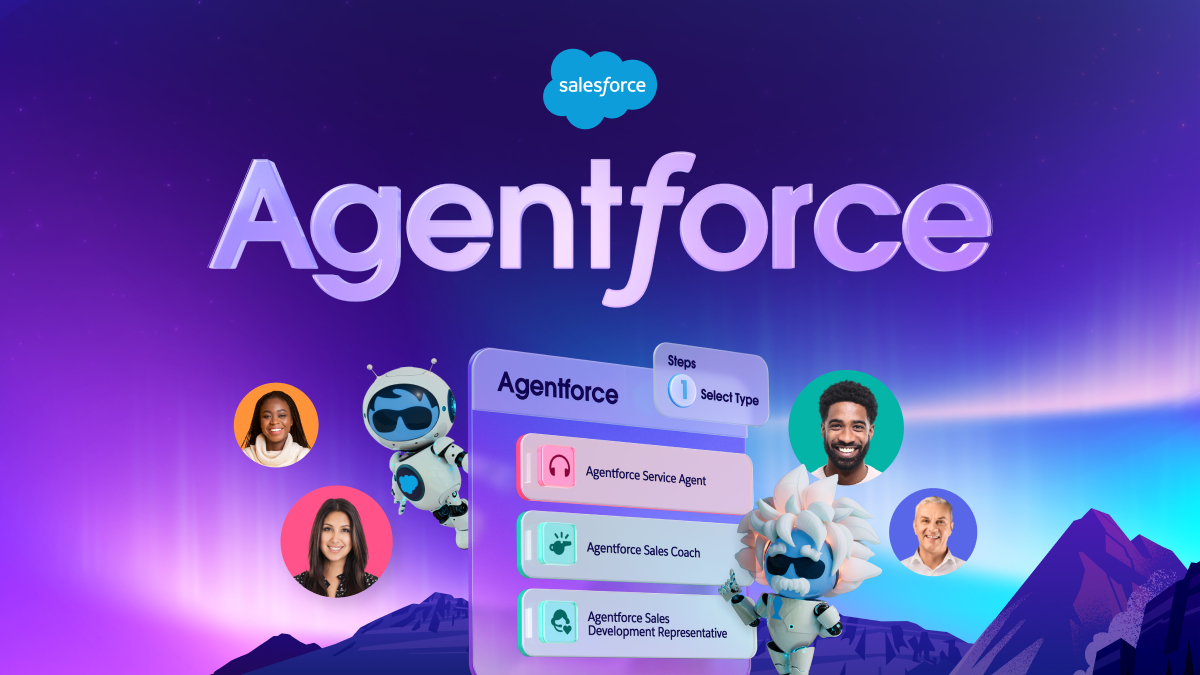 |
Consider a small local clothing business supplying stock to retailers. In the past, they might have lost customers simply because they missed enquiries about inventory during peak hours or couldn't follow up quickly enough to book sales meetings. With Agentforce, they can deploy an AI agent to answer stock inquiries instantly, 24/7, in Vietnamese, and to autonomously schedule meetings with prospective retailers. This ensures they never miss a sales opportunity due to a lack of manpower, allowing a team of 10 to operate with the efficiency and reach of a team of one hundred.
We are making this accessible through flexible pricing models and, critically, by offering these tools in Vietnamese. This means a local SME can implement an AI agent that speaks their language and integrates directly into their workflows, delivering immediate value – like reducing response times or automating order tracking – without needing a team of data scientists.
How does Salesforce plan to support Vietnamese businesses in boosting competitiveness and climbing the digital value chain over the long term?
Our vision is to help every Vietnamese business become an Agentic Enterprise. In this future, AI doesn't replace people; it elevates them. We move from 'humans in the loop' to 'humans at the helm', where employees direct AI agents to execute complex workflows.
In the last few years, the AI conversation has been dominated by large language models, and what they can create – poems, code, and images. But these models are probabilistic engines – they predict the next likely word. While that creativity is a feature for writing, in business contexts like banking or customer service, 'guessing' can be a bug. You cannot afford to hallucinate a financial transaction or approximate a student’s academic record.
This is where Salesforce plays a critical role. We help businesses cross the 'last mile' of enterprise AI by connecting that raw intelligence to accurate data, business logic, and strict governance. This ensures that agents don't just reason like a human, but follow rules like a machine – executing critical actions deterministically. We are effectively moving Vietnamese enterprises from the era of chatbots that guess to agents that work.
We are already seeing this in action with trailblazers like Fulbright University Vietnam. They deployed Agentforce in just three weeks to transform their student services. Their students now interact with an AI agent for instant answers on policy and coursework, freeing up staff to provide personalised counselling.
By integrating data, agents, and apps into a single system, we empower Vietnamese businesses to automate routine work at an infinite scale while unleashing the full creativity and strategic potential of their human workforce. This is how Vietnam moves up the digital value chain – by creating a labour model where every employee is augmented, productive, and focused on impact.
 | Techcombank adopts Salesforce to drive customer engagement Techcombank deploys Salesforce to help achieve single view of customers |
 | Salesforce and FPT IS to elevate digital experience for customers FPT Information System Corporation (FPT IS) and Salesforce have been providing strategic solutions for the finance and banking industry in Vietnam, helping to shape the digital experience for customers. |
 | Firmable announces new integration with Salesforce, enhancing the power of Australian B2B data. Firmable, Australia's leading B2B database platform, has launched a new customer relationship management (CRM) integration with Salesforce. expanding its CRM ecosystem to streamline workflows and boost productivity for more than 20,000 Salesforce users across Australia. |
What the stars mean:
★ Poor ★ ★ Promising ★★★ Good ★★★★ Very good ★★★★★ Exceptional
 Tag:
Tag:Related Contents




Latest News




More News
- Expanding education partnerships to drive mutual growth (October 06, 2026 | 16:04)
- VTG 2026 to showcase textile and footwear innovation in Ho Chi Minh City (October 06, 2026 | 16:00)
- Infineon boosts Vietnam footprint with Ho Chi Minh City office (October 06, 2026 | 10:02)
- Vietnam Customs expands priority enterprise scheme to 74 firms (October 03, 2026 | 08:00)
- ASL Law opens Danang office (October 02, 2026 | 22:12)
- Project ACTIVE 2.0 launches in Vietnam to boost cervical cancer care (October 02, 2026 | 22:02)
- Vietnam launches first embodied AI conference to advance robotics ecosystem (October 02, 2026 | 17:00)
- DKSH Performance Materials – A trusted partner in Vietnam’s evolving personal care landscape (October 02, 2026 | 14:28)
- Ghanaian delegation reviews PSL Machinery’s cashew factory-management and implementation roadmap (October 02, 2026 | 10:18)
- People living with chronic kidney disease and diabetes should be aware of infectious disease risks (September 30, 2026 | 18:00)


Latest News




 Mobile Version