

Cooperation must align with Vietnam’s long-term ambitions

Japan resumed its official development assistance to Vietnam in 1992, and since then JICA has actively expanded its cooperation. Through financial assistance, we have supported numerous initiatives that underpin Vietnam’s economic growth.
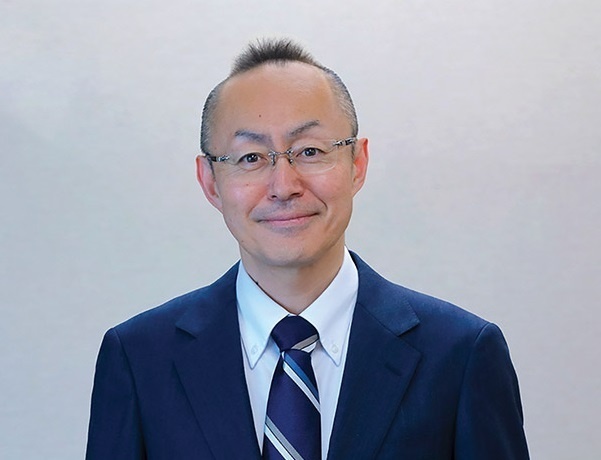 |
| Kobayashi Yosuke, chief representative, Vietnam Office Japan International Cooperation Agency |
In the transport sector, we have contributed significantly to the development of quality infrastructure such as roads, airports, seaports, bridges, and railways. We take great pride in the fact that many business travellers and tourists enter Hanoi through Noi Bai International Airport, then travel to the city centre via the access road and Nhat Tan Bridge – all of which are fruits of Vietnam-JICA cooperation.
In Ho Chi Minh City, Metro Line 1 – developed with JICA’s assistance and in operation since December 2024 – is now widely used for commuting, schooling, and tourism. In 2025, Vietnam’s trade volume reached a historic high, placing the country among the world’s top 15 trading nations.
We are proud to have helped lay the foundation for this achievement through the introduction of customs clearance systems and the development of Lach Huyen Port and other ports through financial cooperation that mobilised private investment.
Our technical cooperation has also made substantial contributions to Vietnam’s economic growth. Many projects have been implemented alongside financial cooperation in order to maximise impact. One example is our technical cooperation for Ho Chi Minh City Urban Railway Company No.1, which equipped the company with the capacity to operate and manage the newly-built Metro Line 1 from day one.
Technical cooperation has also supported a wide range of initiatives aligned with Vietnam’s key reform pillars: law making and enforcement; sci-tech and innovation; private sector development; international integration; the healthcare system; and the education system.
For example, in the area of law making and enforcement, we have continuously worked with Vietnam to improve its legislative and judicial capacity since 1996. Many laws have been introduced or amended throughout this history of cooperation. Vietnam’s introduction of the two tier governance system in 2025 has offered JICA an opportunity to share Japanese experience in this area including through study tours by future leaders to Japan’s localities.
Healthcare is another long standing area of cooperation. Our approach has evolved with changes in technology and disease patterns, and our current projects focus on telehealth and hepatitis.
Regarding the education system, we are partnering with more than 20 universities in various ways, many of which focus on joint research in science, technology, and innovation.
Looking beyond 2026, it is essential to design our cooperation from a medium to long-term perspective aligned with Vietnam’s national development goals. We aim to deepen discussions with our Vietnamese counterparts and explore comprehensive cooperation packages that build on achievements to date.
For example, regarding Hanoi’s metro line 2, we wish to explore cooperation not only for the Nam Thang Long–Tran Hung Dao section, but also for potential extensions to Noi Bai International Airport and Thuong Dinh, thereby examining possibilities for supporting the entire line 2 corridor as a package.
Similarly, for Ho Chi Minh City’s Metro Line 1, we hope to explore cooperation on the full line, including the extension to Binh Duong, in addition to the existing Ben Thanh-Suoi Tien segment.
Cooperation packages can take many other forms. For example, a programme loan capable of responding swiftly to Vietnam’s financing needs could be combined with the introduction of Japanese technologies and services that facilitate policy implementation.
The year 2026 represents a turning point for Vietnam – the beginning of a “second doi moi” following the 14th National Party Congress. In this context, we hope to renew JICA’s approach as an ODA implementing agency by proactively proposing medium to long term cooperation packages to Vietnamese and Japanese stakeholders in order to maximise impact.
One specific issue we are watching closely as we welcome the new year is the development of Vietnam’s stock market, which is crucial for achieving the goals on private sector development. JICA has worked with Vietnamese counterparts on stock market development since 2017, and we are very excited that Vietnam’s market is highly likely to be upgraded within the year.
JICA intends to continue its cooperation for capital market development while improving management capacity and financial access for smaller businesses in a comprehensive manner, thereby contributing to the achievement of the goals set out in Resolution 68. We believe that one of the keys to achieving these goals is greater collaboration between Vietnamese and Japanese companies, and we plan to contribute through our work with the long established Vietnam–Japan Institute for Human Resources Development, in partnership with the Japan Chamber of Commerce and Industry and other Japanese organisations and businesses.
Regarding individual cooperation projects, we expect to approve new financial cooperation in early 2026, including project loans for small scale infrastructure development in eight northern provinces and a policy loan related to climate change measures and disaster risk reduction. We also plan to launch or prepare technical cooperation schemes in traffic demand management for sustainable urban transport development in Hanoi and the application of satellite technologies for disaster-risk reduction and climate change.
We also anticipate further progress in ongoing projects – for instance, JICA has long worked with the Ministry of Agriculture and Environment in the area of climate change mitigation. Technical cooperation continues to support the development of a greenhouse gas online reporting system, which will collect emissions data from relevant institutions. Our goal is to have the system completed within 2026, as it will serve as a foundation for a future emissions trading scheme.
Delivery of medical and research equipment for the Cancer Hospital and the National Institute for Hygiene and Epidemiology are also expected to be completed this year under our financial cooperation.
Furthermore, building on initiatives launched in 2025, we will continue supporting the semiconductor engineering bachelor’s programme at Vietnam–Japan University and expand the advanced online AI education programme in collaboration with the University of Tokyo.
Together with these plans, we are also exploring the possibility of a new loan on the digital transition and AI. These plans will be guided by the Japanese government’s initiatives including “Japan-ASEAN Co-creation Initiative for Artificial Intelligence” proposed by Japan’s Prime Minister Takaichi in October, which aims to jointly build a safe, secure, and trustworthy AI ecosystem through model development, human resource development, and co-creation of solutions.
Meanwhile, preparations for cooperation from 2027 onward in areas such as irrigation, transport, and wastewater/drainage will continue in the Mekong Delta and beyond.
What the stars mean:
★ Poor ★ ★ Promising ★★★ Good ★★★★ Very good ★★★★★ Exceptional
 Tag:
Tag:Related Contents

Latest News




More News
- Vietnam can lead the way in AI regulatory system (September 04, 2026 | 09:00)
- Vietnam's next cycle: capital shifts from low-cost manufacturing to higher-value investment and M&A (August 26, 2026 | 14:51)
- Significant steps made in related-party transactions (August 21, 2026 | 15:51)
- New challenges for workforce data and HR policy management with PIT changes (August 17, 2026 | 10:32)
- Leading in AI: from pilot initiatives to enterprise value (August 10, 2026 | 07:00)
- Programme launched to develop new Vietnamese business leaders (July 28, 2026 | 13:50)
- Vietnam must build talent and innovation to attract quality investment (July 09, 2026 | 08:00)
- AI-ready workforce key to Vietnam's next decade, analysts say (July 01, 2026 | 15:55)
- VIFC shouldn't try to be Dubai, says VinaCapital chief economist (June 24, 2026 | 14:17)
- Highly skilled workforce and fiscal incentives key to driving high-tech growth (June 17, 2026 | 16:17)








 Mobile Version