
Long-term capital seen as key hurdle to green growth

At the 'Expanding Green Finance for Sustainable Growth' conference hosted by VIR on December 15, experts said that while policy commitment to green development is strong, Vietnamese enterprises continue to face difficulties accessing long-term capital. As sustainable development and green projects expand in scale and scope, the shortage of patient financing is emerging as a key barrier to turning sustainability goals into reality.
According to Pham Thi Thanh Tung, deputy director of the Department of Credit for Economic Sectors at the State Bank of Vietnam (SBV), the banking sector has taken a pioneering role in developing green credit since Vietnam adopted its national green growth strategy.
“Over the years, the SBV has continuously improved the legal and regulatory framework, from issuing directives requiring credit institutions to provide financing for sustainable development, to coordinating the development of Environmental and Social Management System handbooks and environmental risk management procedures in cooperation with the International Finance Corporation,” she said.
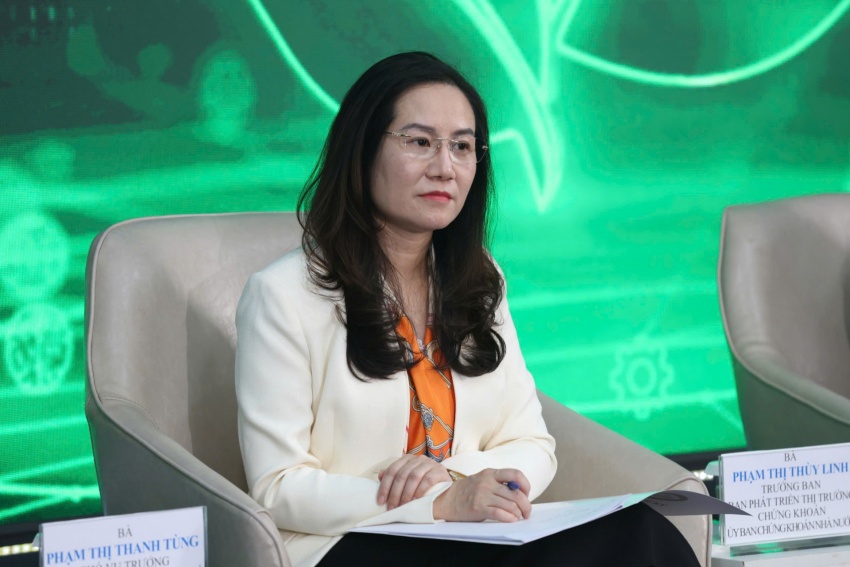 |
| Pham Thi Thanh Tung, deputy director of the Department of Credit for Economic Sectors at the SBV. Photo: Dung Minh |
Tung also highlighted a major bright spot in the policy landscape with resolutions on private sector development and Resolution No.198/2025/QH15, which stipulate an annual 2 per cent interest-rate support mechanism for private enterprises, household businesses, and individual entrepreneurs borrowing to implement green, circular, or projects compliant environmental, social, and governance (ESG) principles.
“The draft has already been appraised by the Ministry of Justice and will be submitted to the government this week, with implementation expected from early next year. This is considered an important step forward, as previously commercial banks had to rely on their own resources to offer preferential lending to this sector,” stated Tung.
Alongside bank credit, the green bond market is also gradually taking shape and expanding. Pham Thi Thanh Tam, deputy director general of the Department of Financial Institutions under the Ministry of Finance (MoF), noted that following the issuance of decision on the green project taxonomy, the green bond market has recorded impressive growth.
“As of October, outstanding green corporate bonds have reached nearly $1 billion. This shows that although green bonds were developed later, they have seen strong growth compared with previous years,” Tam said.
 |
| Pham Thi Thanh Tam, deputy director general of the Department of Financial Institutions under the MoF |
However, she also pointed out fundamental weaknesses in the current bond market, including a narrow investor base and the absence of financially strong investors with long-term capital.
“Foreign investors do participate, but they account for only a small proportion of the government bond market. The main reasons are the lack of appropriate hedging instruments for exchange-rate and interest-rate risks, coupled with Vietnam’s relatively low government bond yields compared with other countries in the region,” said Tam. “Therefore, we hope foreign investors will participate in the capital market in a long-term and sustainable manner, alongside greater consistency in macroeconomic policy mechanisms.”
Discussing the outlook for green bonds, Pham Thi Thuy Linh, general director of Department of Securities Market Development at the State Securities Commission (SSC), said that regulations on the development of green financial products, including green bonds, have been incorporated early into the legal framework, creating better conditions for enterprises to mobilise capital for environmentally friendly projects.
“However, for the green bond market to truly develop, demand is the decisive factor. Improving Vietnam’s sovereign credit rating would help reduce capital mobilisation costs for both the government and enterprises, while attracting sustainable investment flows from domestic and international investors,” stated Linh.
 |
| Pham Thi Thuy Linh, general director of Department of Securities Market Development at the SSC |
SSC leaders also noted that in the coming period, the regulator plans to submit amendments to Circular No.96 to the Ministry of Finance to update disclosure requirements in line with international practices on sustainability reporting, corporate governance, and ESG.
“The SSC has identified product diversification as a core objective. In addition to sustainable investment indices and derivative products, the regulator is studying the development of a decree on bond issuance for public-private partnerships, aimed at mobilising private capital for infrastructure and public investment, which will face substantial funding needs in the coming period,” Linh stated.
Sharing insights from his participation at COP30, Nguyen Viet Long, deputy general director, Advisory Services at EY Vietnam, shown a picture of a highly uncertain global environment shaped by geopolitics and trade tariffs.
“As a result, ESG discussions are no longer merely voluntary initiatives or branding exercises; they are now directly linked to export markets and compliance requirements. ESG regulations are increasingly becoming non-tariff barriers that Vietnamese enterprises must confront when exporting to Europe,” said Long.
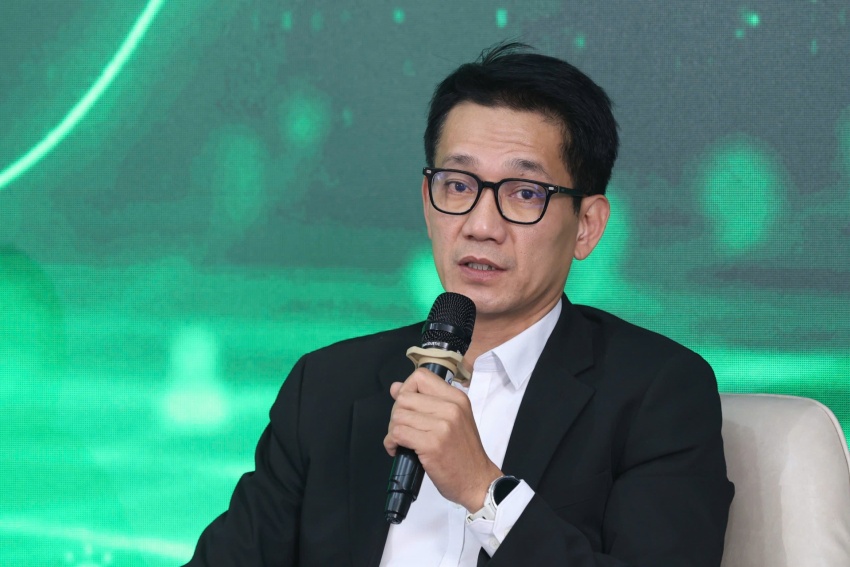 |
| Nguyen Viet Long, deputy general director, Advisory Services at EY Vietnam |
A critical issue highlighted by Long was the need to build a sufficiently robust support ecosystem.
“When international banks invest in Vietnam, assessments from independent professional organisations providing second-party opinions play a crucial role, rather than reliance solely on government authorities. This requires Vietnam to develop a strong independent evaluation ecosystem to increase supply in the green market,” he stated.
As the sole representative from a diversified conglomerate operating in key sectors such as tourism, real estate, healthcare, education, and aviation, Nguyen Thi Hai Hoa, deputy general director and head of Finance at Sun Group, shared practical insights from the perspective of a market participant, emphasising that green criteria need to be embedded from the outset.
 |
| Nguyen Thi Hai Hoa, deputy general director and head of Finance at Sun Group |
She proposed that the SBV and the MoF coordinate with local authorities to integrate green criteria at the project tendering stage.
“If green criteria are introduced only after a project has already been awarded and enterprises then have to seek external consultants to restructure it to meet sustainability standards, it is already too late,” said Hoa. “The lack of alignment on green criteria from the initial planning stage may be leading to a waste of social resources, as enterprises incur additional costs to adjust projects to comply with sustainability standards after winning bids.”
“If Vietnam can improve its domestic corporate bond market, this would become a truly effective capital mobilisation channel for enterprises. This will require swift action from state authorities, from the MoF to the SBV, to introduce mechanisms that unlock credit and bond products aligned with real business needs and the economy’s sustainable development goals,” she added.
 | Vietnam’s green transition demands collective financial action As Vietnam accelerates its green transition, mobilising diversified, long-term financial resources beyond the banking system has become a decisive factor in delivering sustainable and inclusive growth. |
 | Agribank frames bank credit as catalyst for green growth Agribank is turning bank credit into a long-term driver of Vietnam’s green growth, aligning finance with sustainable development goals. |
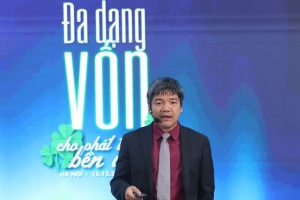 | Vietnam still has room to mobilise capital for sustainable growth As Vietnam pursues increasingly ambitious growth targets, resources for sustainable development should be understood within the broader context of the economy's financing needs, rather than confined solely to green projects. |
What the stars mean:
★ Poor ★ ★ Promising ★★★ Good ★★★★ Very good ★★★★★ Exceptional
 Tag:
Tag:Related Contents




Latest News





More News
- Carbon finance hinges on viable ventures (October 19, 2026 | 09:59)
- AI to transform the future of finance (October 19, 2026 | 09:04)
- Government proposes relaxing IPO conditions (October 19, 2026 | 08:00)
- Citi warns of intensifying competition for capital amid higher rates (October 16, 2026 | 16:54)
- Banks poised for Q3 profit growth amid margin pressure (October 16, 2026 | 16:51)
- Eximbank to strengthen corporate governance structure (October 16, 2026 | 11:32)
- Citi honours 13 banks with 2025 STP Awards (October 15, 2026 | 16:01)
- Green transition requires realistic roadmap (October 14, 2026 | 17:31)
- VIR workshop explores credit policy and carbon market development (October 14, 2026 | 11:22)
- Stronger carbon market needed to unlock climate finance (October 14, 2026 | 11:00)



Latest News





 Mobile Version