
Motivations to achieve high growth

This year holds special significance as the starting point of a new development phase. It marks the election of deputies to the 16th National Assembly and people’s councils at all levels for the 2026-2031 term, and the first year of implementing the 2026-2030 Socioeconomic Development Plan, which sets ambitious targets.
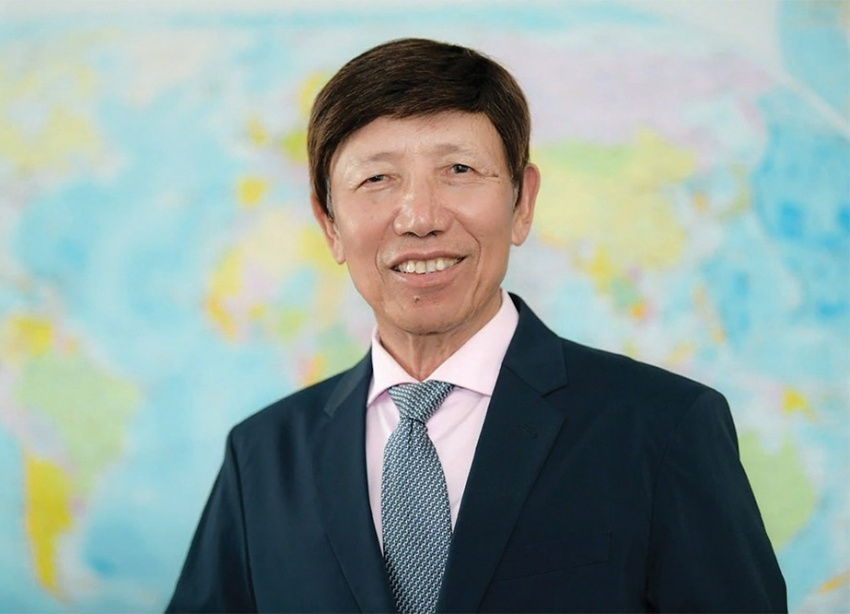 |
| Dr. Phan Huu Thang |
This year, the government requires all levels, sectors, and localities to focus on directing and managing the implementation of the national GDP growth target for 2026, striving for 10 per cent or more, while maintaining macroeconomic stability, controlling inflation, and ensuring major balances.
Foreign direct investment (FDI) is not a sufficient condition, but it is a necessary one if Vietnam is to achieve and sustain high GDP growth in the current context. After nearly 40 years of presence in Vietnam, FDI has made several specific contributions to the country’s socioeconomic development.
FDI has supplemented a large-scale source of capital that is generally of high quality. As Vietnam enters this new development phase with the goal of high GDP growth in the coming years, this implies a very high investment-to-GDP ratio (35-40 per cent). When domestic savings and the state budget fall short, FDI provides medium-to long-term capital supplementation and helps alleviate pressure on public debt.
In reality today, FDI contributes approximately 20 per cent of GDP, around 70 per cent of total export turnover, and roughly 25 per cent of total social investment.
FDI also serves as a channel for technology transfer and productivity enhancement. Vietnam should not rely solely on traditional strengths such as cheap labour or natural resource exploitation while neglecting technological innovation and productivity improvement.
These capital inflows bring advanced technology, management practices, and international standards into the country’s economy, accelerating labour productivity growth. This is a critical factor in helping Vietnam escape the middle-income trap.
In addition, FDI facilitates participation in global value chains. It provides domestic enterprises with opportunities to integrate into global supply chains and expand export markets.
Crucial contributions
Drawing from broader realities, including institutional and policy challenges as well as issues related to links in utilising FDI, various priorities emerge.
It needs to shift decisively from attracting quantity to selective attraction, prioritising high-tech projects, carbon-neutral initiatives, and those with firm commitments to technology transfer, human resource training, and linkages with domestic enterprises.
Foreign investors are needed to establish relationships with domestic firms to help them upgrade technology, standardise governance and financial management, access credit, and build a substantive supporting industry. Only when Vietnamese enterprises grow stronger can the collaboration with the FDI factor generate meaningful spillover effects.
Breakthroughs are needed in institutions and the investment environment, in reducing compliance costs, and in consistent, long-term policies. Large investors prioritise institutional quality over tax incentives.
Human capital and innovation also require heavy investment, such as in-depth education and training in AI, semiconductors, and green technologies. Strong links are wanted among universities, research institutes, foreign-invested firms, and domestic enterprises, while attracting global talent.
While FDI has been and remains an important pillar for Vietnam’s growth goal, placing it within the broader new context reveals that high growth cannot rely solely on it. Instead, it must be transformed into a catalyst for the domestic sector. Success ultimately depends on the quality of institutions, human resources, and the capabilities of Vietnamese enterprises.
If Vietnam significantly reduces broad-based FDI and retains only highly selective inflows, high GDP growth can only be achieved by creating sufficiently strong endogenous growth engines. At that point, the challenge shifts from merely attracting investment to restructuring the entire economy with a clearly defined role for FDI.
One of the priorities is to create national champions in the form of large-scale Vietnamese enterprises. Therefore, Vietnam must accept a selective industrial policy, nurturing 30-50 sufficiently large domestic enterprises in the manufacturing, logistics, energy, digital technology sector, and high-tech agriculture.
Without businesses contributing more than 1-2 per cent of GDP, double-digit growth is impossible. Some markets in the region, such as South Korea, Taiwan, and China, have all followed this path.
In addition, we need to see strong reform of the capital allocation system. Currently, capital flows into real estate (especially from private sources), while manufacturing and innovation businesses lack capital. Therefore, Vietnam needs to continue considering restructuring banks to base lending on cash flow, technology, and intangible assets, and simultaneously develop the capital market via private equity and domestic venture capital.
Leveraging inner strength
Meanwhile, we must focus on developing the domestic private economic sector substantively, not just as a slogan. To achieve this goal, the government must legalise the protection of private property rights, eliminate legal grey areas, end “give-and-take” agreements, and avoid criminalising business risks. This is because private enterprises only invest long-term when there are clear rules of the game. It is crucial to clearly define that entrepreneurial spirit is the largest source of capital, replacing FDI.
Although Vietnam currently emphasises the role of goods exports, considering it a positive direction in the context of Vietnam’s deep integration into the global economy, it is necessary to recognise that Vietnam is over-exporting its growth, while the domestic market is not small.
Therefore, Vietnam should consider gradually shifting to a consumption-driven growth model, which focuses on developing domestic retail chains with Vietnamese brands, and developing high-value services in healthcare, education, logistics, and finance.
Another crucial solution is to create a breakthrough in labour productivity. If Vietnam wants to achieve sustainable double-digit GDP growth, productivity must increase by over 6-7 per cent per year. Therefore, Vietnam should consider digitising all small and medium-sized enterprises, applying AI, widespread automation, and reforming business management through digital technology. If Vietnam can implement these measures, it will be a solution to reduce its dependence on FDI.
It is also necessary to accelerate the restructuring of the regional state and public investment. In reality, the performance of state-owned enterprises and public investment is still low and consumes a lot of resources. Therefore, Vietnam must withdraw the state-owned factor from areas where the private sector performs well, while focusing public investment on strategic infrastructure, science and technology, education and training, and healthcare.
It is understandable that if public investment does not have high productivity, it will not be possible to achieve high GDP growth in the long term.
Accepting painful institutional reforms in exchange for high growth because such growth always comes with breaking down old interests, reallocating resources, and accepting the bankruptcy of weak enterprises. International reality shows that no country achieves high growth without paying the price of reform.
Vietnam is taking a new phase of development – an era of efficient economic growth for the nation. Therefore, the orientation of attracting FDI is shifting from quantity to quality, combined with creating better conditions for the development of the private sector, is the right direction and path for Vietnam’s GDP to achieve high growth, which will help Vietnam and domestic businesses develop stronger and faster than in their own history.
What the stars mean:
★ Poor ★ ★ Promising ★★★ Good ★★★★ Very good ★★★★★ Exceptional
 Tag:
Tag:Related Contents





Latest News



More News
- Thanh Hoa urged to remove obstacles to Cong Thanh LNG project (October 23, 2026 | 10:14)
- Vietnam pledges transparent tax and customs policies for South Korean businesses (October 23, 2026 | 10:08)
- KUKA Vietnam inaugurates new Hanoi headquarters (October 22, 2026 | 09:00)
- OJI Group invests in $110 million aseptic carton packaging plant in Vietnam (October 22, 2026 | 08:23)
- EVN begins construction on the Quang Trach II LNG plant (October 22, 2026 | 07:00)
- Foreign investors pour billions into Vietnam's semiconductor sector (October 21, 2026 | 14:49)
- Hyosung TNC begins bio-BDO production in Vietnam (October 21, 2026 | 12:12)
- Ho Chi Minh City to unveil new projects worth $13.5 billion at AEF 2026 (October 21, 2026 | 11:51)
- Market upgrade is just the beginning: Vietnamese companies face tougher test to attract capital (October 20, 2026 | 16:04)
- EFTA–Vietnam Free Trade Agreement opens up opportunities to enhance supply chain (October 20, 2026 | 15:56)







 Mobile Version