
Hospitality and branded residential market seek growth

According to Mauro Gasparotti, senior director for Southeast Asia at Savills Hotels, while Vietnam remains a fundamentally resilient destination, recent geopolitical tensions are already causing short-term disruption to travel demand, with increasing cancellations, postponements, and re-routed itineraries across key international markets.
“Although global disruptions are affecting overall travel flows, the country expects to be comparatively less impacted due to its lower reliance on Europe and Middle East inbound markets and its strong positioning within short-haul demand from North Asia, particularly South Korea and China, where travellers may increasingly favour closer, more accessible destinations," said Gasparotti.
 |
| Mauro Gasparotti, senior director for Southeast Asia at Savills Hotels |
Jesper Palmqvist, regional vice president for Asia-Pacific at STR CoStar, notes that Vietnam’s hotel market continues to demonstrate resilience, with positive performance trends observed across multiple segments.
“There is on-year growth across luxury, upper-midscale, and economy categories, with the extent of improvement varying by segment. Compared with several regional markets, Vietnam has maintained relatively strong momentum. Destinations such as Phu Quoc and Danang are gradually improving their market positioning as they mature and develop further,” Palmqvist said.
According to Savills Hotels, from a supply perspective, future hotel development in the next three years will remain concentrated in coastal destinations, with Danang and Phu Quoc leading in pipeline volume.
Phu Quoc is seeing accelerated development in preparation for APEC 2027. More than 10,000 keys, equivalent to 70 per cent of existing inventory, are currently under development and are scheduled for completion by the end of 2027 to support the anticipated influx of international demand tied to the event.
“While APEC presents a significant demand catalyst, its success will depend not only on the delivery of new hotel supply, but also on the readiness of connectivity, local infrastructure, logistics capabilities, and the effective coordination across the broader tourism and service ecosystem,” added Gasparotti.
As Vietnam enters this next phase, attention is increasingly shifting from cyclical recovery to deeper structural reforms required to support long-term stability and demand creation across residential and hospitality sectors.
Do Hieu, CEO of VinaLiving, explains that in hospitality, the focus must shift towards disciplined supply management and value-driven zoning, where content, culture, and activities become core products, helping destinations generate demand and overcome seasonality.
“The greatest challenge lies in supply management. Many tourism destinations in Vietnam have expanded too rapidly and beyond actual demand, while tourism products still lack depth in terms of visitor experience. Success does not depend on the number of hotel rooms, but on the ability to create a destination ecosystem built around culture, cuisine, entertainment, and experiential offerings,” said Hieu.
Branded residences are receiving higher global interest, underpinned by sustained demand growth and expanded brand participation across key markets.
Globally, the branded residence segment continues to build a strong presence, recording a compound annual growth of 10.9 per cent, doubling the pace of hotel and real estate markets. By the end of 2025, over 900 global projects were operational, with the top 10 hotel operators collectively managing portfolios of more than 400 branded collaborations.
In Vietnam, the market has recently seen an increase in branded developments across the two key urban centres. These projects are also becoming more diversified in terms of positioning, expanding beyond the traditional luxury segment.
Nguyen Uyen, associate director, Savills Hotels, commented that Vietnam’s branded residence market is reaching an important turning point, with a strong shift from resort developments to urban projects in Ho Chi Minh City and Hanoi.
“The growth of this model is driven by several factors, especially the expansion of high-net-worth individuals and the strong trust buyers place in developments backed by international brands. As a result, branded residences are emerging as a key long‑term strategy for developers anticipating changing buyer profiles,” said Uyen.
Over the past year, Vietnam sustained a strong recovery trajectory, emerging as a standout performer amid the gradual rebound of global tourism.
The country welcomed more than 21 million international arrivals, representing a 20.4 per cent increase and significantly outperforming the broader Asia‑Pacific, which recorded growth of 5 per cent. This also marked the first time Vietnam surpassed Thailand as the leading destination for Chinese leisure travellers.
Vietnam is emerging as a solid performer across Southeast Asia, underpinned by robust RevPAR growth of 15 per cent compared to 2024, increasing occupancy, and shifting source markets, reinforcing its position as a leading destination in the region.
In 2026, the country is targeting 25 million international visitors this year, an expected 18.1 per cent on-year growth, supported by sustained demand across key source markets.
This momentum is underpinned by ongoing government efforts to enhance competitiveness, including visa policy liberalisation, expanded international air connectivity, infrastructure improvements, and strengthened destination marketing initiatives.
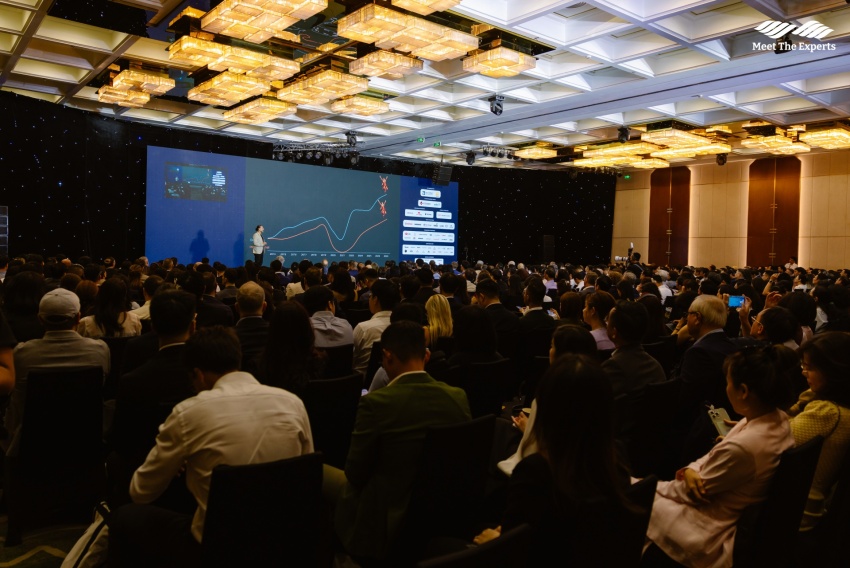 |
 | Hospitality sector on its way to full recovery The Meet The Experts (MTE) conference, a leading business gathering for Vietnam’s real estate and hospitality sectors, took place on October 24 in Hanoi, centring on the theme “Wellness Real Estate.” |
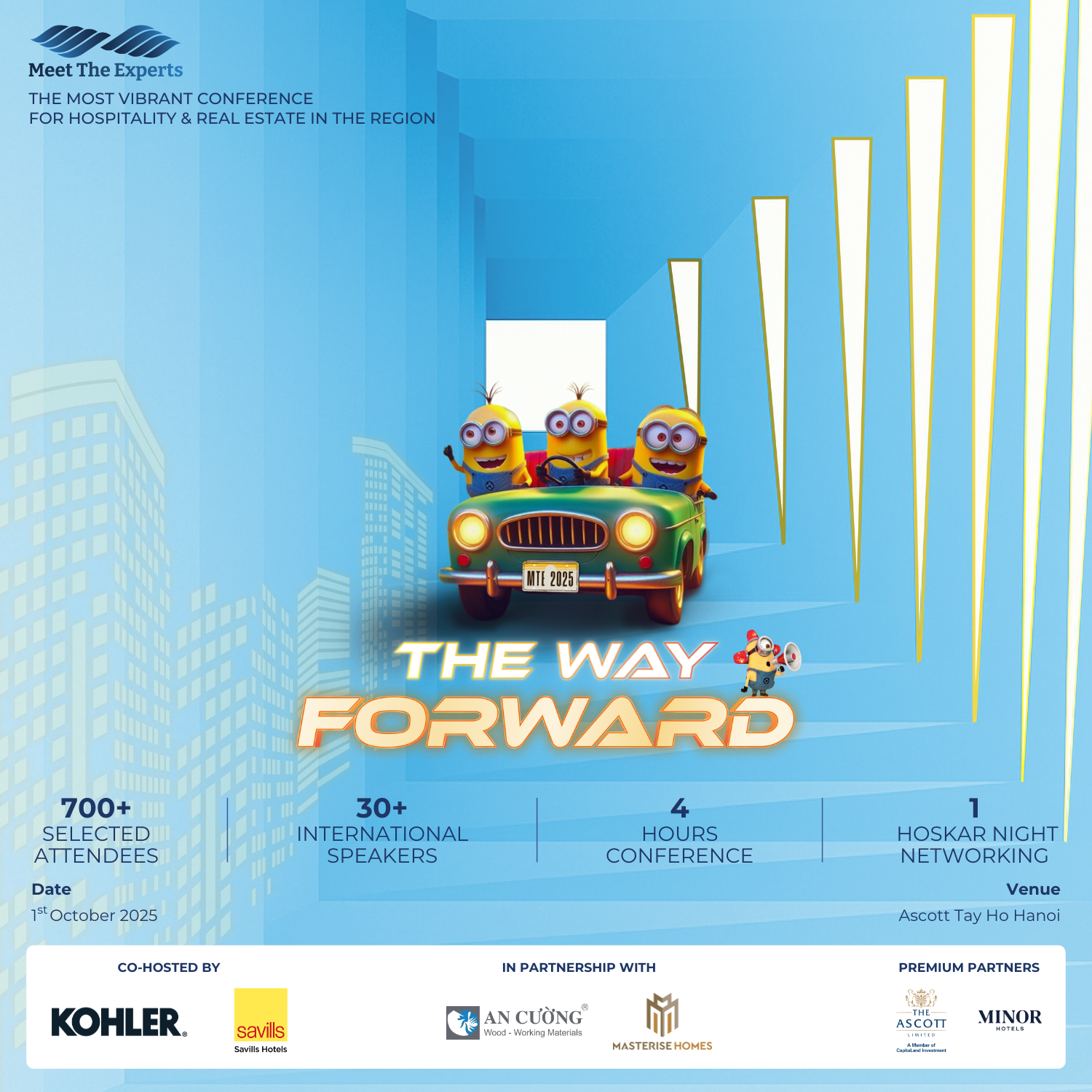 | Hospitality and real estate leaders to gather for MTE Hanoi 2025 Meet The Experts (MTE), one of the region’s leading hospitality and real estate conferences, is set to return with its Hanoi 2025 edition at a pivotal moment for Vietnam’s property and tourism sectors. |
 | Meet The Experts conference returns to boost hospitality sector Vietnam's hospitality and real estate sectors are entering 2026 with renewed momentum, supported by a record 21.2 million international arrivals and strong economic fundamentals. |
What the stars mean:
★ Poor ★ ★ Promising ★★★ Good ★★★★ Very good ★★★★★ Exceptional
 Tag:
Tag:
Related Contents


Latest News


More News
- HoREA proposes new framework for affordable commercial housing (October 08, 2026 | 17:01)
- NSRP navigates global energy supply volatility (October 08, 2026 | 16:59)
- Hong Hac City event to explore Bac Ninh's urban transformation (October 08, 2026 | 15:27)
- Robotics inspires Vietnam’s next generation of engineers (October 08, 2026 | 15:18)
- VIR seminar focuses on taking domestic suppliers into global supply chains (October 08, 2026 | 14:50)
- Raising construction materials supply chain standards amid green transition (October 08, 2026 | 14:00)
- From risk to reputation: Jason Ho on what makes a bank worthy of trust (October 08, 2026 | 14:00)
- Building Vietnam’s next chapter of FDI growth (October 08, 2026 | 12:15)
- Vietnam to foster links between foreign and domestic sector (October 08, 2026 | 11:00)
- Vietnam shifting focus to building high-quality FDI ecosystem (October 08, 2026 | 10:45)


Latest News



 Mobile Version