
Hanoi conference to explore AI, resilience, and integration

Those themes will take centre stage at an international conference in Hanoi on October 22-23, where green innovation and digital resilience will be examined as pathways to enhancing business competitiveness and regional economic development.
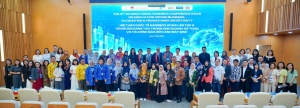
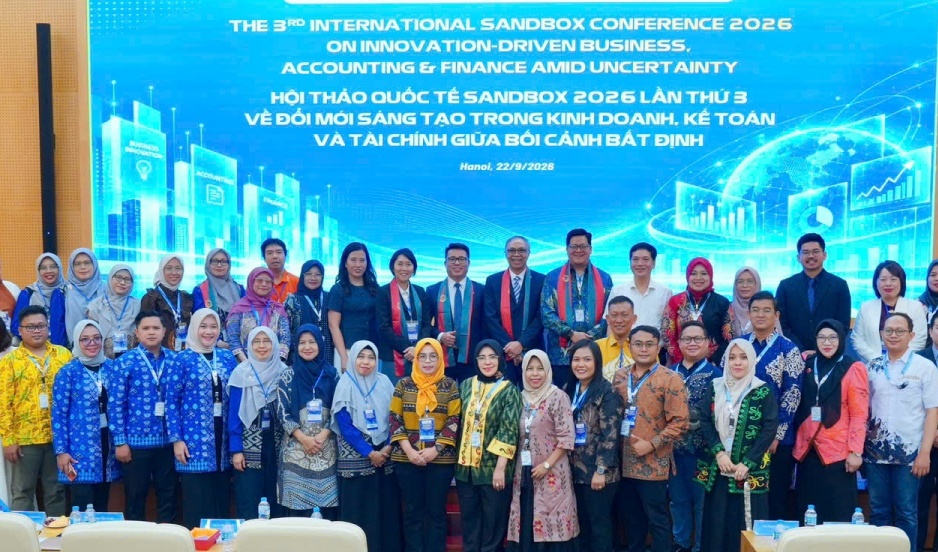
Jointly organised by the University of Economics and Business (UEB) under Vietnam National University, Hanoi, and Indonesia's President University, the event will explore the reshaping of integration and enterprise resilience through AI, supply chains, trade, and family business governance.
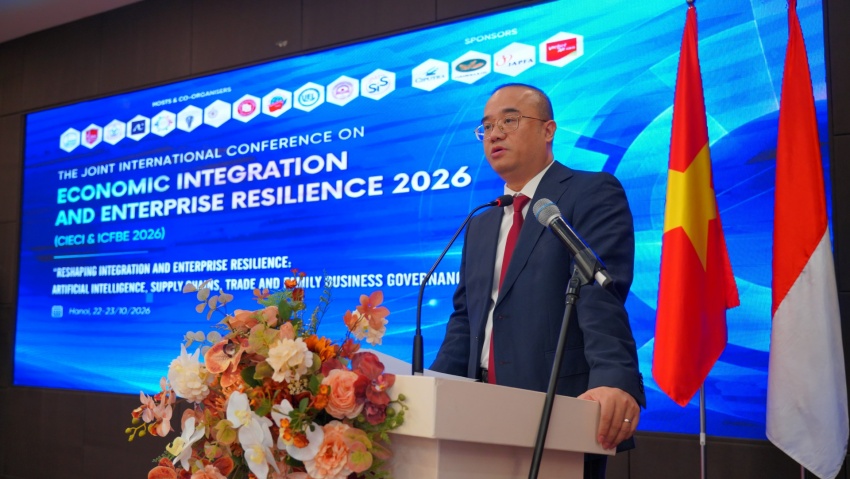 |
| Nguyen Truc Le, rector of the UEB. Photo: UEB |
Vietnam’s GDP was estimated to have grown by 9 per cent in the first nine months of 2026, while merchandise exports increased by 24.5 per cent on year, according to figures cited by Nguyen Truc Le, rector of the UEB, at an international conference. However, the foreign-invested sector, including crude oil exports, accounted for 80.7 per cent of the country’s merchandise exports over the same period.
"The figures point to strong economic momentum, but also raise questions about how the benefits of international integration can translate into stronger capabilities among domestic enterprises. How can Vietnam’s international integration translate into stronger capabilities and wider opportunities for domestic enterprises?" Le asked.
"Aggregate growth figures alone cannot show how a small supplier improves its technology, how a family business enters a new market, or what skills workers need to benefit from AI," he noted. "These questions need to be examined alongside national economic performance."
Amid geopolitical tensions, shifting global supply chains, and rapid technological advances, the ability to adapt and strengthen internal capabilities is becoming increasingly important for businesses. For ASEAN and the wider Asian region, the challenge is not simply to sustain growth, but to achieve higher productivity, stronger industrial capabilities, quality employment, and broader opportunities for innovation.
Didiek Hartantyo, chairman of the President University Foundation in Indonesia, said economic cooperation and integration were no longer merely options, but strategic necessities. "However, cooperation must move beyond commitments in principle and translate into practical action through stronger institutions, closer collaboration between universities and businesses, and a workforce equipped to navigate an increasingly complex economic environment," he said.
One important pathway, according to Prof. Anuj Kumar, global country head at Rushford Business School in Switzerland, is to combine green innovation with digital resilience to strengthen competitiveness and regional economic development.
"Green innovation is not solely about reducing environmental harm. It can also generate economic value by improving resource efficiency, lowering costs, and opening up new markets," he said.
Practical measures include adopting renewable energy, improving energy efficiency, reducing production waste, developing circular supply chains, designing environmentally friendly products, and using sustainable materials. Water conservation and cleaner logistics can also contribute to more efficient operations.
Kumar believes reducing energy and material consumption, as well as waste, can help businesses control costs. Meanwhile, green products and services can create opportunities to access new markets, while stronger environmental performance can build trust among customers, investors, and regulators. At the regional level, green industrial clusters can help attract capital, talent, and suppliers.
"However, investing in green solutions does not automatically guarantee immediate returns. Results depend on how these solutions are implemented and whether businesses can realise their economic benefits under specific operating conditions," he explained.
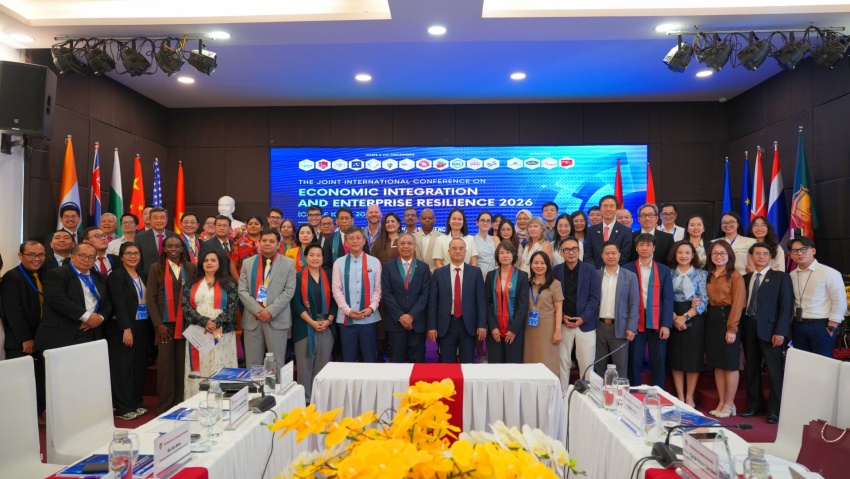 |
| Photo: UEB |
Alongside green innovation, digital resilience is essential to maintaining business operations when disruptions occur. According to Kumar, digital resilience extends beyond adopting technology to encompass the ability to anticipate risks, withstand disruption, recover quickly, and adapt to change.
Businesses need to use data and forecasting tools to identify potential risks, establish cybersecurity systems, back up data, and develop contingency plans. Incident-response procedures are also necessary to restore services quickly. Continuous learning, skills development, and process redesign are equally important as business conditions evolve.
"The greatest benefits emerge when green innovation and digital capabilities develop together, rather than being pursued as separate initiatives. Digital tools can help businesses monitor, measure, and optimise the performance of green systems, while green innovation provides a clear sustainability objective for investment in digital technologies," Kumar said.
Smart grids, precision agriculture, traceable supply chains, and circular manufacturing are examples of this complementary relationship. In manufacturing and logistics, clean energy and smart monitoring systems can help reduce emissions and improve supply-chain reliability. In agriculture, precision farming and weather-data services can reduce waste and improve production efficiency.
"For small and family-owned businesses, affordable digital tools combined with more efficient energy and resource use can improve productivity and help maintain operations during disruption," he added. Nevertheless, the goal should not simply be to introduce new technologies, but also to strengthen local capabilities and broaden access to economic opportunities.
To turn green innovation and digital resilience into long-term drivers of growth, Kumar outlined five policy priorities: developing green infrastructure; closing digital gaps; equipping workers and small businesses with green and digital skills; mobilising long-term finance; and strengthening governance, particularly in cybersecurity, data protection, and performance measurement.
"The importance of assessing progress through a balanced set of economic, environmental, digital, and inclusion indicators, rather than relying solely on the number of technology projects or the scale of investment. Measures of productivity, quality employment, energy consumption, emissions, connectivity, and access to opportunities in rural areas can provide a clearer picture of the actual benefits," he said.
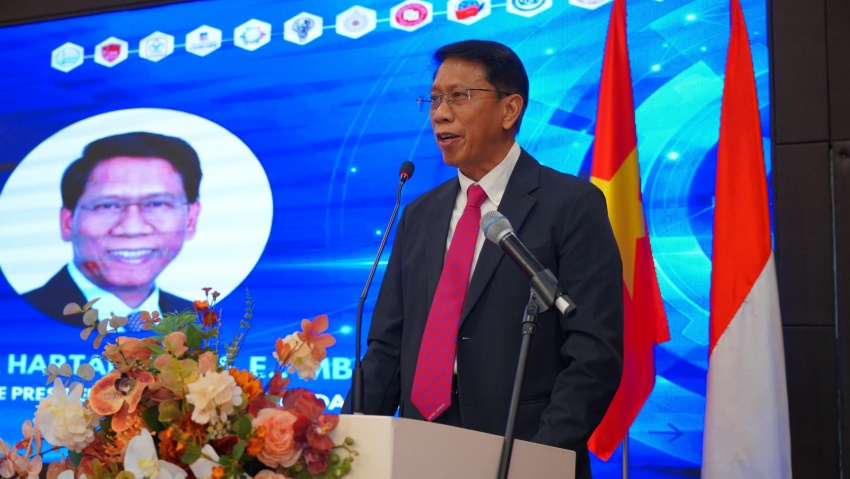 |
| Didiek Hartantyo, President University Foundation. Photo: UEB |
Another issue highlighted by the speakers was the role of education and university-business collaboration in strengthening competitiveness. Didiek Hartantyo from the President University Foundation, said universities should go beyond delivering academic knowledge and awarding degrees to become active partners in economic development, innovation, and workforce development. Meaningful collaboration can turn knowledge into innovation, research into practical solutions, and human capabilities into sustainable economic value.
"Family businesses face additional challenges, including generational succession, professionalising governance, and adapting to digital transformation while preserving their core values. Long-term success requires capable leadership, transparent governance, entrepreneurial thinking, and the ability to respond to changing market conditions," he said.
Meanwhile, Le from UEB stressed the need to examine how trade and AI policies can help developing economies benefit from international integration, enable domestic enterprises to participate more deeply in supply chains, and support effective AI adoption while managing risks involving data security, accuracy, and human oversight.
"Cooperation between universities and businesses should also address workforce development and specific management challenges," he said.
 Government urged to expand public procurement to create innovation |
 Vietnam urged to turn sustainability plans into action |
 AI must create measurable business value |
What the stars mean:
★ Poor ★ ★ Promising ★★★ Good ★★★★ Very good ★★★★★ Exceptional
 Tag:
Related Contents





Latest News
More News
- Two Vietnamese midwives earn IBCLC certification in breastfeeding counselling (October 23, 2026 | 10:10)
- BPC Roundtable Conference 2026 to open in Ho Chi Minh City (October 21, 2026 | 14:46)
- AMATA congratulates Kao Vietnam on 30 years (October 21, 2026 | 14:17)
- Deputy Minister of Finance meets Gujarat delegation in Hanoi (October 21, 2026 | 12:11)
- Vietnam and US discuss financial cooperation and preparations for APEC 2027 (October 21, 2026 | 12:07)
- Vietnam and Liechtenstein sign double taxation avoidance agreement (October 19, 2026 | 18:08)
- Creative Young Entrepreneur 2026 showcases five young businesses (October 19, 2026 | 17:59)
- IEAE Hanoi 2026 to spotlight smart electronics trends (October 19, 2026 | 17:44)
- Vietnam and EFTA member states sign free trade agreement (October 19, 2026 | 13:10)
- TC-HICT handles over 8.2 million TEUs since 2018 launch (October 17, 2026 | 16:56)








 Mobile Version