
Exporters face growing challenges as ocean freight rates climb

According to the Drewry World Container Index (WCI) – a benchmark tracking container freight rates across eight major global shipping routes – the average cost of transporting a 40-foot container rose 23 per cent in just one week to $3,433 per container.
The increase was driven primarily by steep rate hikes on trans-Pacific and Asia-Europe routes.
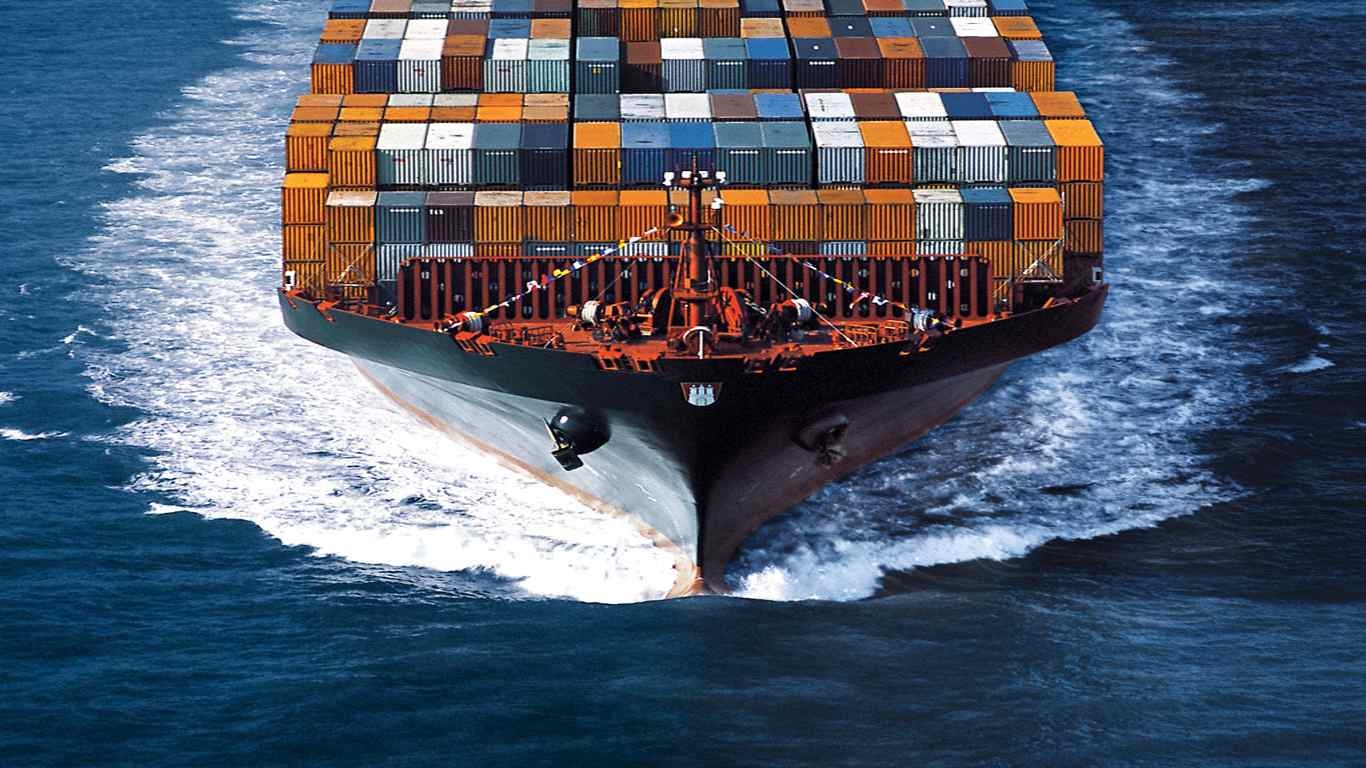 |
| Higher ocean freight rates on US and EU routes are increasing pressure on exporters |
On the Shanghai-Los Angeles route, freight rates climbed 31 per cent to $4,565 per 40-foot container, while rates on the Shanghai-New York route increased 20 per cent to $5,505 per container.
This represents one of the sharpest rate increases ever recorded on shipping routes to the US West Coast.
Over the past 14 weeks, freight rates from Asia to the US West Coast have risen approximately 108 per cent, while rates to the US East Coast have increased nearly 99 per cent.
Escalating transportation costs are becoming a major challenge for exporters, particularly in key sectors such as furniture, textiles and garments, footwear, and processed agricultural products, all of which have significant export exposure to these markets.
Vinahe Co., Ltd., based in Binh Phuoc ward, Dong Nai city which exports cashew nuts to the United States, Europe and the Middle East, said that the suspension of services by several shipping lines on certain international routes has forced vessels bound for Europe and the Middle East to alter their itineraries and avoid the Suez Canal. As a result, both shipping costs and transit times have increased significantly.
The cost of shipping a 20-foot container to Turkey has now risen to around $5,500, more than 50 per cent higher than previous levels. Delivery times have also doubled, from roughly 30 to 60 days.
“Taking longer alternative routes has increased transportation costs while also extending the time required to recover capital from export transactions,” said Nguyen Hoang Dat, the company’s director.
Market research organisations believe transportation demand is being fuelled by efforts to accelerate shipments ahead of the possibility of adjustments to US tariff policies from July 2026.
In addition, import demand associated with preparations for the 2026 FIFA World Cup is adding pressure to the global logistics system.
Beyond demand-related factors, geopolitical tensions in the Middle East continue to be a major driver of rising freight costs.
The risk of disruptions in the Strait of Hormuz and the Red Sea has prompted many shipping lines to continue rerouting vessels around Africa rather than returning to traditional Suez Canal routes.
This has absorbed additional fleet capacity, lengthened transit times and kept freight rates elevated.
Persistently high ocean freight rates are creating mounting difficulties for exporters, particularly in the second half of the year, when demand for goods linked to the holiday season typically increases.
A representative of a garments and textiles company said orders were facing the risk of decline due to the dual impact of potential tariff increases in the US market and escalating ocean freight costs.
Shipping market analysts expect the current upward trend in freight rates to continue at least through the end of July, as transportation demand continues to grow while shipping capacity remains largely unchanged.
For exporters, many forecasts suggest that oil prices could remain elevated throughout the second half of the year, making it unlikely that ocean freight rates will ease significantly in the near term.
Many textile and garment manufacturers currently have order placements filled through the end of the third quarter and, in some cases, into the fourth quarter.
However, the Vietnam Textile and Apparel Association warns that risks remain as input costs, logistics expenses and transportation costs continue to rise while selling prices have not increased at the same pace, squeezing corporate profit margins.
Recent developments in ocean freight rates indicate that the global shipping market is entering its peak season earlier than usual. They also reflect the increasingly visible impact of geopolitical developments, trade policies and consumer demand on international supply chains.
For local exporters, the upward trend in freight rates is not only increasing logistics costs but also undermining competitiveness in the final months of 2026, creating additional challenges in achieving business targets.
Vietnam’s exports during the first half of 2026 have continued to post strong double-digit growth, reaching $215.66 billion, up 19.5 per cent on-year.
However, the World Bank has cautioned that risks stemming from the prolonged conflict in the Middle East could keep oil prices elevated, disrupt supply chains and weaken export activity. At the same time, uncertainty surrounding global trade policies is increasing risks for Vietnam’s key export sectors.
 | Vietnamese exporters adapting to Middle East disruptions Rising Middle East tensions are increasing logistics costs and delaying shipments, but some Vietnamese firms are leveraging the disruption to expand into new markets. |
 | Seafood exporters deliver strong Q1 though challenges persist Vietnam's leading seafood producers posted strong first-quarter earnings and export growth, but rising trade barriers, compliance costs and market uncertainty continue to cloud the industry's outlook for 2026. |
 | Textile exporters navigate growth amid tariff uncertainty Vietnam’s garments and textiles exports maintained growth during the first five months, but rising costs, thinner margins and uncertain US trade policies are emerging as key risks. |
What the stars mean:
★ Poor ★ ★ Promising ★★★ Good ★★★★ Very good ★★★★★ Exceptional
 Tag:
Tag:






Latest News






More News
- Sojitz in Vietnam: 40 years from individual projects to a business cluster 'KATAMARI' (October 08, 2026 | 09:00)
- Coteccons targets 'Quality Growth' with 25 per cent dividend plan (October 07, 2026 | 13:00)
- Vietnam Education Forum opens UK Education Mission's Hanoi visit (October 07, 2026 | 12:27)
- Tax authorities deactivate TINs of nearly 180,000 businesses (October 07, 2026 | 12:08)
- World Bank raises Vietnam's 2026 GDP growth forecast to 7.4 per cent (October 07, 2026 | 11:41)
- Vietstock 2026 to spotlight livestock innovation and green transition (October 07, 2026 | 09:00)
- Vietnam’s GDP grows over 9 per cent in first nine months (October 05, 2026 | 18:45)
- Vietnam earns $56.3 billion from agro-forestry-fishery exports (October 05, 2026 | 18:32)
- DSV balances resilience and decarbonisation in supply chains (October 05, 2026 | 18:20)
- Electronics exports reach $175.4 billion in the first nine months (October 05, 2026 | 18:12)



Latest News





 Mobile Version