
Europe backs Vietnam’s push for climate-resilient cities

At the Vietnam Urban Sustainability Summit 2025, hosted by the Ministry of Construction in partnership with the Central Commission for Policy and Strategy on November 5, development partners from Switzerland and France urged Vietnam to rethink the way it builds, plans, and governs its cities.
They called for a shift from short-term, reactive responses to a long-term approach that strengthens resilience through good governance, human capacity, and climate adaptation.
Julien Seillan, country director of the Agence Française de Développement (AFD) in Vietnam, echoed the “people-first resilience” message, stressing that climate change has become an urgent and inescapable reality for Vietnamese cities.
Referring to the devastating floods caused by Typhoon Matmo in October and others, Seillan remarked that such extreme events are now the new normal.
“We must move from responding to crises after they occur to preventing them through better planning and investment,” explained Seillan. “Urban development and resilience must be treated as two sides of the same strategy. Every new road, building, or drainage system should be designed to protect, not expose, communities to risk.”
He reaffirmed AFD’s strong partnership with the Ministry of Construction in developing urban resilience indicators, integrating climate adaptation into planning, piloting resilient city models, and building institutional capacity.
“Our goal is to ensure that the next generation of urban and regional master plans systematically integrates hydrological analysis, exposure mapping, and climate projections,” he said.
 |
| Julien Seillan, country director of the Agence Française de Développement |
Seillan also highlighted the Team Europe approach for Vietnam’s cities, with the EU providing grant funding through the WARM Facility and the CRUIV Project to support more than 12 provinces in embedding climate adaptation into urban infrastructure.
“These initiatives perfectly reflect the spirit of Team Europe, acting together for greener, safer, and more resilient Vietnamese cities,” he said. “Thanks to this joint effort, more than 12 provinces are receiving technical and financial support to integrate climate adaptation and disaster risk management into urban planning and infrastructure investments, while also building the capacity of local institutions.”
Amid record-breaking floods across Vietnam, Tran Van Giai Phong, senior national programme officer at the Embassy of Switzerland in Vietnam, warned that the recent disasters from the northern mountains to the Mekong Delta are a powerful reminder that urban resilience is not an abstract concept but a matter of human safety and national competitiveness.
“Resilience is about people’s safety, a city’s ability to compete, and the shared future of its citizens,” he said. “Resilience begins with governance, not infrastructure. Cities that are well governed recover faster, plan better, and protect their people more effectively.”
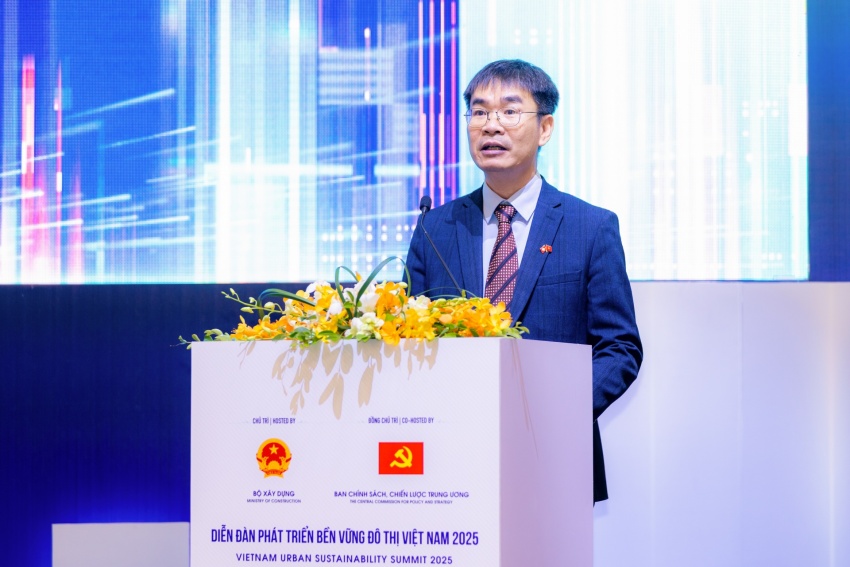 |
| Tran Van Giai Phong, senior national programme officer at the Embassy of Switzerland in Vietnam |
Phong further stressed the value of adaptive, people-centered planning, pointing out that local communities are often the first to detect vulnerabilities.
“Listening to those voices early and often helps avoid costly mistakes later,” he said. “Digital tools should serve citizens, guided by clear rules, shared standards, and skilled users who can apply them for the public good.”
On financing, Phong urged a long-term perspective that looks beyond construction to sustainability.
“Financing resilience is not only about building new projects but about sustaining what already exists,” he explained. “True resilience is ultimately human. The more we invest in people, the more sustainable every reform and every project becomes.”
The messages from Switzerland and France converged on a shared vision: building Vietnamese cities that are not only larger and more modern, but also smarter, safer, and more livable with cities prepared not just to withstand the next storm, but to thrive beyond it.
“Resilience is not built in a single day, but every day, through consistent commitment, transparent governance, and trust between citizens and their government,” stated Phong.
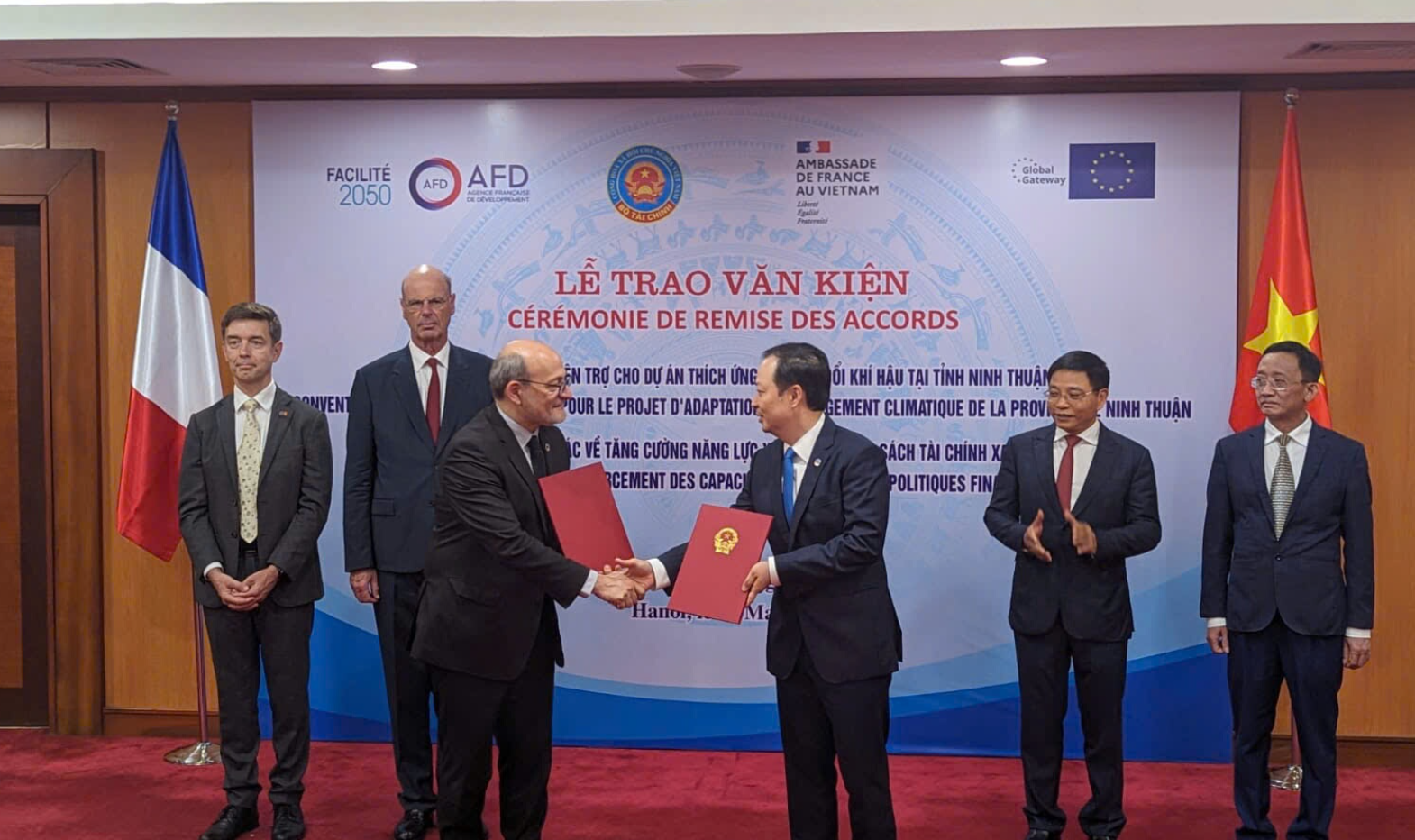 | France and EU back climate-resilient infrastructure in Ninh Thuan As part of French President Emmanuel Macron’s official visit to Vietnam, two key financing agreements were signed between the Ministry of Finance and the French Development Agency (AFD) on May 26, reinforcing the EU's commitment to climate resilience in one of Vietnam's most drought-prone regions. |
 | Resilient industrial system within reach A new focus on private sector development should create the best conditions for businesses in industrial real estate and eco-industrial parks to grow more sustainably. |
 | Jabil builds a sustainable future from the inside out Jabil, a global leader in engineering, supply chain, and manufacturing solutions, understands its responsibility as a good steward of natural resources with positive contributions to global environmental and social challenges. |
What the stars mean:
★ Poor ★ ★ Promising ★★★ Good ★★★★ Very good ★★★★★ Exceptional
 Tag:
Tag:Related Contents
Latest News


More News
- GreenYellow and Vina Paper partner on rooftop solar project (October 05, 2026 | 09:00)
- Consultation workshop refines Vietnam's clean hydrogen strategy (October 04, 2026 | 08:00)
- JBIC considers new financing options for Vietnam’s energy projects (October 03, 2026 | 08:00)
- Vestas to supply 16 turbines for two new Vietnam wind farms (October 01, 2026 | 07:00)
- Inter-sectoral cooperation on Montreal protocol (September 30, 2026 | 17:20)
- EV battery recycling rate proposed at 8 per cent from 2029 (September 29, 2026 | 16:00)
- Bankability remains hurdle for Vietnam's JETP projects (September 29, 2026 | 12:08)
- Binh Minh Plastics extends clean water project to border communities (September 29, 2026 | 10:57)
- Coca-Cola Vietnam expands packaging collection programme (September 25, 2026 | 08:15)
- Pacifico Energy secures sea survey licence for offshore wind project in Lam Dong (September 24, 2026 | 18:02)









 Mobile Version