
Building trust is vital for green finance transition

 |
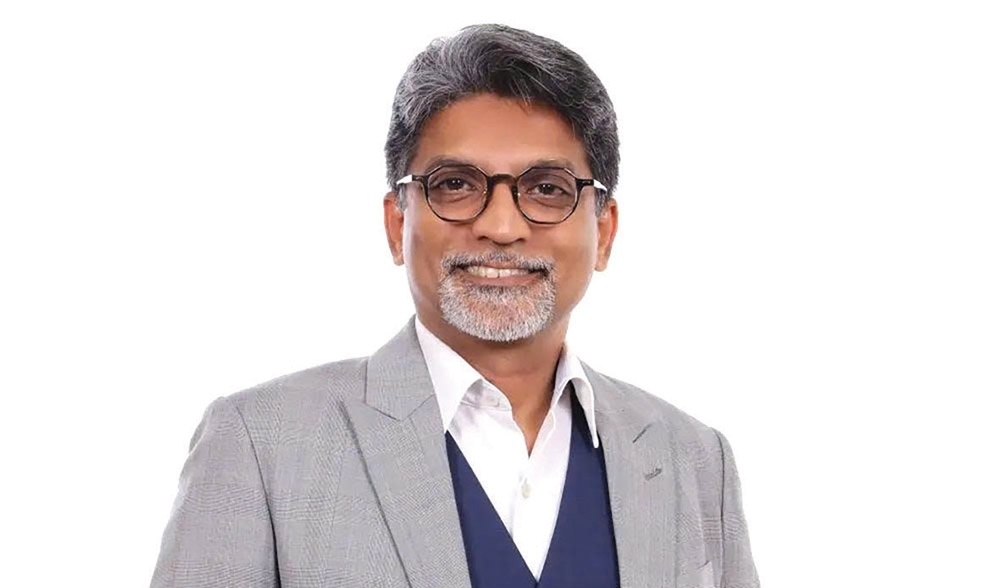
| To Quoc Hung |
Many businesses are now required to comply simultaneously with multiple frameworks and reporting requirements set by individual investors and banks. What is the greatest risk if these frameworks are not properly harmonised?
The greatest risk is not the cost of reporting itself, it is what that cost to execute the strategy related to the requirement of the report.
When a business is chasing standards plus a different questionnaire from every bank and investor, its scarcest resources which could be management attention, capital, skilled people, get concentrate on producing documents rather than into changing the business those documents are supposed to describe.
The report becomes the product. That is precisely the “high compliance, low value” trap. You could end up with a great, instrumented report with low recognition.
Vietnamese businesses should not begin with the framework, as that could be the mistake almost everyone makes.
I believe that organisations should begin with their own materiality. That could be a single, honest assessment of what genuinely matters to your business and your stakeholders. At the level of the underlying data, these frameworks overlap in areas such as emissions, energy, water, workforce and governance. They diverge mainly in lens and presentation, not in substance.
Besides that, businesses, investors, the professional community, and government should agree upon and recognise a common standard. This could raise the recognition of the framework and also raise the value of the report. The organisations should have frequent communication and build strong networks and ecosystems in accepting sustainability frameworks.
Additionally, the business could consider building one data foundation strategy. This could be a single source of truth, with consistent boundaries and methodology held to the same discipline as your financial data, because environmental, social, and governance data is heading towards audit and assurance.
Use IFRS S1 and S2 as the spine, since the ISSB baseline is where global capital markets are converging. For Vietnam specifically, sequence it to reality requirement. We can start with what is already required under legislation, and with what your most important customer or lender demands.
The principle beneath all of this is straightforward. We should treat the report as the product of running the business well, not as the product itself. It depends on the decisions, the discipline of disclosure forces you to make including reducing the energy wasting, de-risk the supply chain, the capital that grows cheaper because your data is credible.
What is the most significant gap in the current systems for data collection, measurement and verification that must be addressed for the Green Taxonomy to be implemented effectively in practice?
The biggest challenge is the absence of consistent, decision-useful and verifiable data according to the specific framework.
Today, many companies can report sustainability-related information, but the underlying data is often fragmented across departments, collected using different methodologies, and in some cases not subject to the same standard to create. Besides that, the limit of historical data also creates challenges for the business to build the baseline.
In my view, the most significant gap is the lack of robust measurement and assurance infrastructure. Many organisations still struggle with fundamental questions such as the data that should be collected, how it should be measured, who owns it, how frequently it should be updated, and how accuracy can be verified. Without clear answers, it’s difficult to compare projects and businesses.
How will the roles of accountants and auditors evolve in helping bridge this gap?
Addressing this challenge requires more than regulation. It requires investment in data governance, digital reporting systems, common methodologies, and independent verification mechanisms. Companies need a reliable audit trail for relevant data, just as they do for financial data. The focus should be on choosing consistent strategy, framework and creating systems that produce consistent, transparent and comparable information over time.
This is where the roles of accountants and auditors will evolve significantly. Traditionally, accountants have been responsible for measuring financial performance and auditors for providing assurance on financial statements. Going forward, both professions will play a critical role in ensuring the credibility of sustainability information.
Accountants will increasingly play a central role in managing environment and climate-related data, designing reporting processes, establishing internal controls, defining measurement methodologies and integrating suitable metrics into management decision-making. Their role will expand from reporting historical financial results to helping organisations measure broader drivers of long-term value creation.
 | Developing suitable talent for greener financial ambitions Vietnam’s ambition to develop international financial centres is sharpening the focus on talent capable of navigating sustainable finance and evolving standards. To Quoc Hung, country manager of ACCA Vietnam, spoke with VIR’s Khanh Linh about how the country can strengthen its green finance talent pipeline. |
 | Accounting oversight to strategic decision-making Initiatives by the Association of Chartered Certified Accountants (ACCA) and its partners have played a significant role in enhancing green capabilities and knowledge within the accounting and auditing sector. To Quoc Hung, country director at ACCA Vietnam, spoke with VIR’s Hazy Tran about the increasingly pivotal role of accounting and auditing in strategic decision-making. |
 | ACCA supports SMEs in meeting sustainability reporting standards At VIR's sustainable development conference on November 12, To Quoc Hung, country manager at ACCA Vietnam, committed to supporting the development of a green workforce in driving the green-digital transition within small- and medium-sized enterprises in Vietnam. |
What the stars mean:
★ Poor ★ ★ Promising ★★★ Good ★★★★ Very good ★★★★★ Exceptional
 Tag:
Tag:Related Contents



Latest News





More News
- Nam A Bank named in top 10 largest listed banks in Southeast Asia (October 13, 2026 | 09:46)
- Citi appoints Michael Zezas as global head of research (October 12, 2026 | 17:23)
- From carbon value to greener capital (October 12, 2026 | 09:15)
- From cost advantage to ecosystem strength (October 12, 2026 | 09:00)
- Corporate treasury on the cusp of AI transformation (October 12, 2026 | 08:00)
- Vietnam strengthens global credit standing with R&I upgrade to BBB (October 09, 2026 | 16:56)
- From risk to reputation: Jason Ho on what makes a bank worthy of trust (October 08, 2026 | 14:00)
- Building Vietnam’s next chapter of FDI growth (October 08, 2026 | 12:15)
- Policy loans open new paths for people rebuilding their lives (October 07, 2026 | 17:24)
- FTSE upgrade opens door to $2 billion in passive fund inflows (October 07, 2026 | 12:12)








 Mobile Version