
Future-ready finance talent supports growth goals

Vietnamese finance professionals appear more purpose-driven and entrepreneurial than many peers globally. Is this just a temporary trend, or something bigger?
I see this as a long-term structural shift, and the data supports that. In Vietnam, around 73 per cent of finance professionals say they want future roles with a stronger social impact, while a similar proportion aspire to run their own business. Both figures are well above the global average, where entrepreneurial ambition stands at around 54 per cent. The consistency of these findings across the workforce suggests a lasting shift rather than a temporary generational trend.
 |
| Sharath Martin |
Two factors are driving this change. First, Vietnam has a young and ambitious workforce entering the profession with different expectations of career development. Second, the country’s economic transformation is creating new opportunities. As Vietnam moves up the value chain and integrates more deeply into global markets, finance professionals increasingly see opportunities to innovate, build businesses and contribute to the country’s long-term development.
Workforce expectations are changing rapidly. How should organisations adapt their talent strategies to attract and retain professionals?
The central insight is that purpose, sustainability, career ambition and workplace expectations are increasingly intertwined for Vietnam’s next generation of finance professionals. Rather than being separate considerations, they now shape how individuals assess employers and career progression.
Across Southeast Asia, more than three-quarters of finance professionals say an organisation’s reputation on social and human rights issues influences where they choose to work, underlining the growing importance of purpose in talent decisions.
At the same time, mobility across Asia-Pacific remains elevated, with around half of finance professionals expecting their next career move to involve changing employer. While this reflects the dynamism of fast-growing markets such as Vietnam, it also means retention has become a defining challenge for organisations.
Against this, employers are pushed to rethink how they engage and retain talent. Leadership is expected to demonstrate a clear link between the finance function and wider value creation, while workplace culture must be grounded in authenticity, as superficial environmental, social, and governance commitments quickly undermine trust.
Career development is also becoming more fluid, with professionals seeking broader, less linear pathways and exposure to strategic, advisory, sustainability and technology-related roles.
However, organisations continue to make recurring mistakes, including treating retention as a financial issue, failing to provide clear career pathways, and underestimating the importance of purpose and culture. These shifts carry implications beyond talent management, directly influencing investment appeal.
AI is reshaping the accounting and finance profession. How should finance professionals prepare for these changes in the coming years?
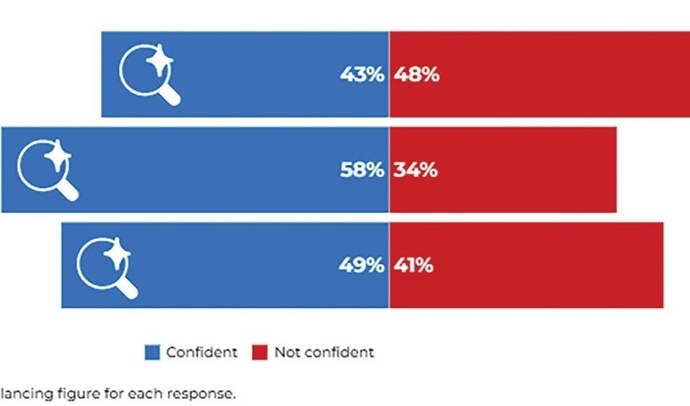
The concern is real and worth taking seriously. Across Southeast Asia, about half of finance professionals remain worried about AI’s impact on their jobs, particularly younger professionals, as the technology is already highly effective at automating routine entry-level tasks.
At the same time, confidence in adaptation remains strong: more than 8 in 10 believe they can learn and apply AI skills, and many are already using AI in their work. The key issue is therefore not whether AI will reshape the profession, but the speed of adjustment by both professionals and employers.
Over the next 5-10 years, the accounting and finance profession will be redefined, moving from recording and reporting financial value towards creating and protecting broader value, including social and environmental outcomes. AI will accelerate this shift by automating processing tasks and freeing up capacity for more strategic, advisory and sustainability-focused roles, particularly in fast-growing markets such as Vietnam.
Success will depend on three skill sets. The first is human capabilities, including judgement, ethics, scepticism and trust-building. The second is technology fluency, not building AI systems, but working with them effectively, prompting, interpreting outputs and applying them responsibly. The third is broader business skills, including communication, strategic thinking and collaboration, enabling finance professionals to act as partners rather than processors.
Sustainability will also move closer to the centre of the finance function as global investors increasingly demand credible reporting and assurance. Professionals who combine financial expertise with AI capability and sustainability knowledge will be most valuable.
For Vietnam, this transition is closely linked to competitiveness, as investors prioritise markets with AI-ready finance talent. The priority is clear: embrace AI, strengthen human skills, and build sustainability capability early.
What the stars mean:
★ Poor ★ ★ Promising ★★★ Good ★★★★ Very good ★★★★★ Exceptional
 Tag:
Tag:Related Contents





Latest News






More News
- Sojitz in Vietnam: 40 years from individual projects to a business cluster 'KATAMARI' (October 08, 2026 | 09:00)
- Coteccons targets 'Quality Growth' with 25 per cent dividend plan (October 07, 2026 | 13:00)
- Vietnam Education Forum opens UK Education Mission's Hanoi visit (October 07, 2026 | 12:27)
- Tax authorities deactivate TINs of nearly 180,000 businesses (October 07, 2026 | 12:08)
- World Bank raises Vietnam's 2026 GDP growth forecast to 7.4 per cent (October 07, 2026 | 11:41)
- Vietstock 2026 to spotlight livestock innovation and green transition (October 07, 2026 | 09:00)
- Vietnam’s GDP grows over 9 per cent in first nine months (October 05, 2026 | 18:45)
- Vietnam earns $56.3 billion from agro-forestry-fishery exports (October 05, 2026 | 18:32)
- DSV balances resilience and decarbonisation in supply chains (October 05, 2026 | 18:20)
- Electronics exports reach $175.4 billion in the first nine months (October 05, 2026 | 18:12)



Latest News






 Mobile Version