
WWF, Dong Thap launch second phase of climate resilience project

 |
On March 27, the Climate Resilient by Nature (CRxN) initiative was launched in Tram Chim, Dong Thap province, in collaboration with Dong Thap Department of Agriculture and Environment. Funded by the Australian government through the Mekong Climate Resilience Partnership, the next phase will restore 1,750 hectares of critical freshwater ecosystems and support nearly 2,000 vulnerable residents in Dong Thap and Tay Ninh.
Le Ha Luan, director of Dong Thap Department of Agriculture and Environment, said the province is shifting from conventional agriculture to climate-smart approaches to address climate challenges and sustain livelihoods.
"Nature-based solutions are the key to restoring the natural flood dynamics of the Mekong Delta, which is essential for long-term sustainability," he said. "Through our partnership with WWF-Vietnam, Dong Thap is committed to scaling up successful practices and securing financial support to make them permanent."
According to a 2023 forecast by the Intergovernmental Panel on Climate Change, approximately 40 per cent of the Mekong Delta could be inundated by a one-metre sea-level rise, threatening the livelihoods of more than 17 million people. In response, the initial phase of the CRxN saw WWF-Vietnam successfully pilot nature-based solutions, that supported communities to adapt to changing flood dynamics.
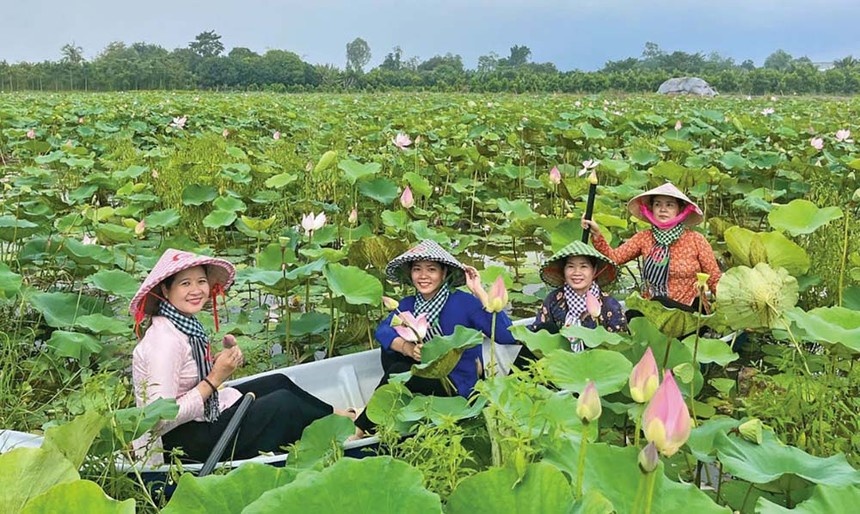
By introducing innovative flood-based livelihood models such as floating rice cultivation and integrated lotus-fish farming, the scheme proved that ecological restoration and economic growth can go hand-in-hand. These scientifically backed models restored the natural floodplains, boosted local incomes, and contributed to a 25 per cent reduction greenhouse gas emissions.
Gillian Bird, Australia’s Ambassador to Vietnam, stated, “We’re excited to partner with Vietnam to support a more inclusive and resilient Mekong subregion. By building on the strong foundation of our earlier work, we will have a positive impact on local people’s lives and the planet, by restoring ecosystems, supporting sustainable livelihoods and building resilience to climate shocks.”
Running through to 2029 across Dong Thap and Tay Ninh, Phase II marks a transformative shift from piloting climate-resilient farming models to scaling proven solutions that restore ecosystems and strengthen community resilience, enabling people and nature to thrive together. This phase will primarily target marginalised communities in the buffer zones of the Lang Sen Wetland Reserves and Tram Chim National Park.
Vuong Quoc Chien, regional programme manager of WWF-Greater Mekong, said, “The success of Phase I was made possible by the commitment and expertise of all our partners and communities. As we enter Phase II, our focus is on strengthening collaboration to drive landscape‑level restoration, where healthier wetlands, resilient livelihoods, and long‑term climate security reinforce one another. This shared vision is what will enable the Mekong’s people and ecosystems to thrive well into the future.”
Charlotte Sterrett, senior manager of Community Resilient & Adaptation at WWF-Australia stated, "Phase II of Climate Resilient by Nature programme marks progression from piloting solutions to building pathways for scale. By making value of high-integrity locally led nature‑based solutions visible, we can unlock investment that sustains community-led approaches long after project cycles end."
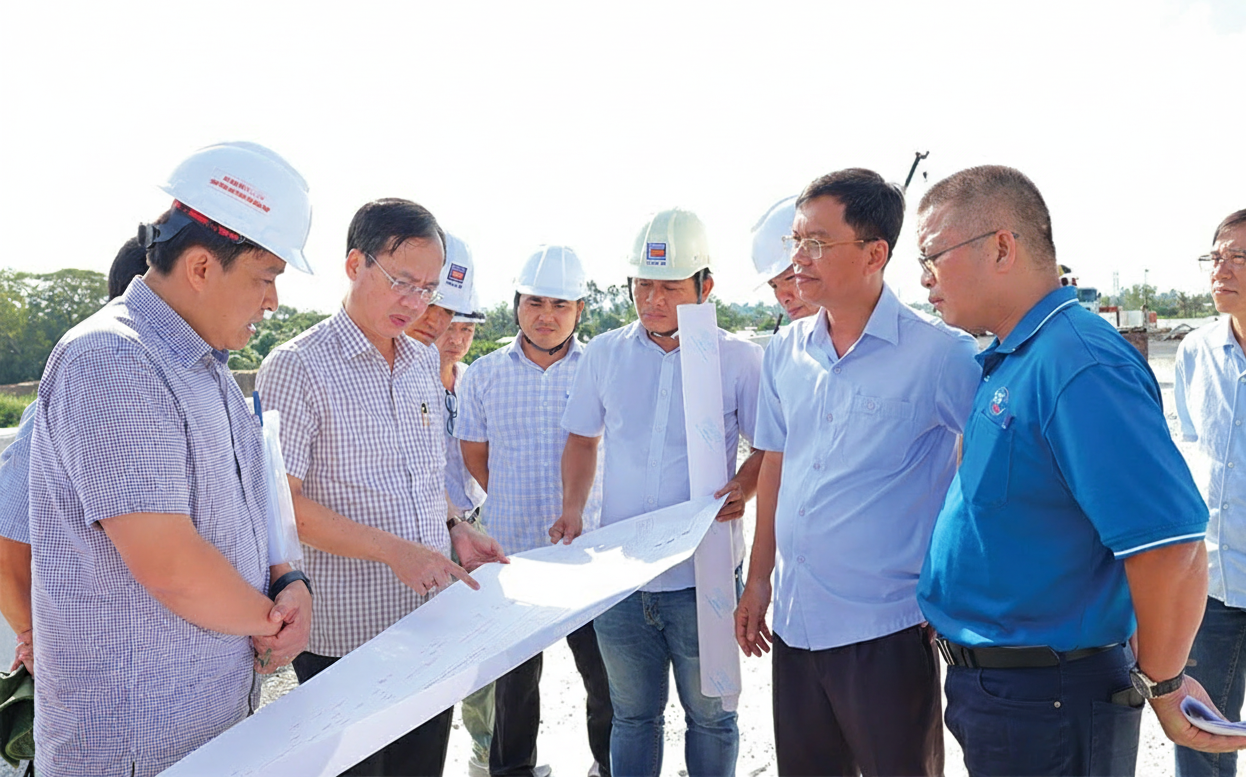 | Dong Thap asserts key status as Mekong Delta gateway Dong Thap is driving economic transformation after merging with Tien Giang province, aiming to become the Mekong Delta’s strategic gateway through infrastructure upgrades, investment growth, and decisive government reform. |
 | Can Tho poised to become Mekong Delta growth engine Can Tho continues to attract major investors, aiming to tap the city’s strategic location, resources, and growth potential. |
 | Japanese technology set for Mekong Delta rice cultivation The Japan International Cooperation Agency is supporting an initiative to adopt advanced Japanese technology in high-quality, low-emission rice cultivation in the Mekong Delta. |
What the stars mean:
★ Poor ★ ★ Promising ★★★ Good ★★★★ Very good ★★★★★ Exceptional
 Tag:
Tag:Related Contents


Latest News


More News
- JBIC considers new financing options for Vietnam’s energy projects (October 03, 2026 | 08:00)
- Vestas to supply 16 turbines for two new Vietnam wind farms (October 01, 2026 | 07:00)
- Inter-sectoral cooperation on Montreal protocol (September 30, 2026 | 17:20)
- EV battery recycling rate proposed at 8 per cent from 2029 (September 29, 2026 | 16:00)
- Bankability remains hurdle for Vietnam's JETP projects (September 29, 2026 | 12:08)
- Binh Minh Plastics extends clean water project to border communities (September 29, 2026 | 10:57)
- Coca-Cola Vietnam expands packaging collection programme (September 25, 2026 | 08:15)
- Pacifico Energy secures sea survey licence for offshore wind project in Lam Dong (September 24, 2026 | 18:02)
- Vietnam secures $221 million in UN development programmes for 2027-2031 (September 23, 2026 | 17:39)
- Carlsberg Vietnam shows how resource efficiency can shape green industrial growth (September 18, 2026 | 09:03)


Latest News



 Mobile Version