
Women-led businesses to enhance capacity

 |
| Women-led enterprises account for around 20–25 per cent of businesses in Vietnam. Photo: VCCI |
The Ministry of Finance (MoF) in coordination with the Embassy of Canada in Vietnam, launched the Advancing Growth, Innovation, and Leadership for Enterprises (AGILE) project on February 6. The initiative marks a new step in Vietnam–Canada cooperation, aiming to support enterprises in adapting to climate change and transitioning towards a greener growth model.
The project targets women-led small and medium-sized enterprises (SMEs) as key beneficiaries. According to Sam Landon, senior programme director at the World University Service of Canada, which is implementing the initiative, AGILE will prioritise strengthening the capacity of domestic business support organisations.
“The initiative provides financial resources and creates space for enterprises, support organisations, and investors to pilot gender-responsive financial models. The goal is to build a more autonomous and climate-resilient ecosystem, particularly for women-led businesses,” Landon said.
AGILE will be implemented nationwide from now to 2029, with a total budget of $7.2 million.
The MoF kicked off the Shifting Investment Flows Towards Green Transformation (SHIFT) scheme on January 27, with six international organisations taking part and coordination by the German Development Agency.
SHIFT targets key stakeholders, including private enterprises, with a particular focus on SMEs and women-led businesses.
“Priority is given to these, which often face greater barriers in accessing long-term finance. SHIFT also aims to translate green ambitions into tangible investments by supporting enterprises, especially in piloting, deploying, scaling up, and replicating clean energy solutions,” said Chu Duc Lam, director general of the Department of Finance and Economics at the MoF.
“Pilot models will help demonstrate the technical and commercial viability of green technologies, while strengthening confidence among financial institutions to accompany corporate clients in adopting more sustainable solutions.”
Women are playing an increasingly important role in Vietnam’s economy. According to the Vietnam Chamber of Commerce and Industry, women account for 63 per cent of the workforce and are widely represented across sectors such as education, healthcare, and services. 51 per cent of enterprises have women among their owners, while around 20-25 per cent are women-led – a relatively high proportion in the region and projected to reach at least 30 per cent by 2030.
These targets are reinforced by the National Strategy on Gender Equality for 2030, which aims to raise the proportion of female directors and business owners to at least 30 per cent by 2030. Complementing this, the Programme to Support Women’s Entrepreneurship for 2026–2030 seeks to assist 50,000 women-led enterprises in accessing concessional credit and innovation funds, with the figure rising to 75,000 in the 2031–2035 period.
According to an RMIT study on women entrepreneurship in Vietnam in 2025, women are at the helm of over 20 per cent of businesses in Vietnam, with the rate of women-led or owned businesses expected to reach at least 30 per cent by 2030. In line with Vietnam’s net-zero commitments by 2050, many female entrepreneurs are leading efforts in sustainable production, waste reduction, and green supply chains.
“Despite their growing role in the economy, the vast majority of women-owned businesses are still operating on a micro or small scale, and obstacles for women entrepreneurs persist. The study highlights the urgent need to address these challenges through training, financial inclusion, and cultural shifts to ensure a thriving ecosystem for women entrepreneurs in the decades to come,” the research noted.
Meanwhile, Dinh Thi Thu Hoai, vice president of the Hanoi Women Entrepreneurs Association, said women needed to elevate their leadership skills, financial management, strategic business planning, and brand building. In addition, during the digital and technological transformation process, they need support in applying technology to production and business to increase productivity and expand markets.
“Another important support is access to finance and resources. They need to overcome difficulties in capital, legal procedures, and fundraising skills. In addition, it is necessary to create networking and connections networks, which build communities of women entrepreneurs, connecting with large supply chains and international business opportunities,” she said.
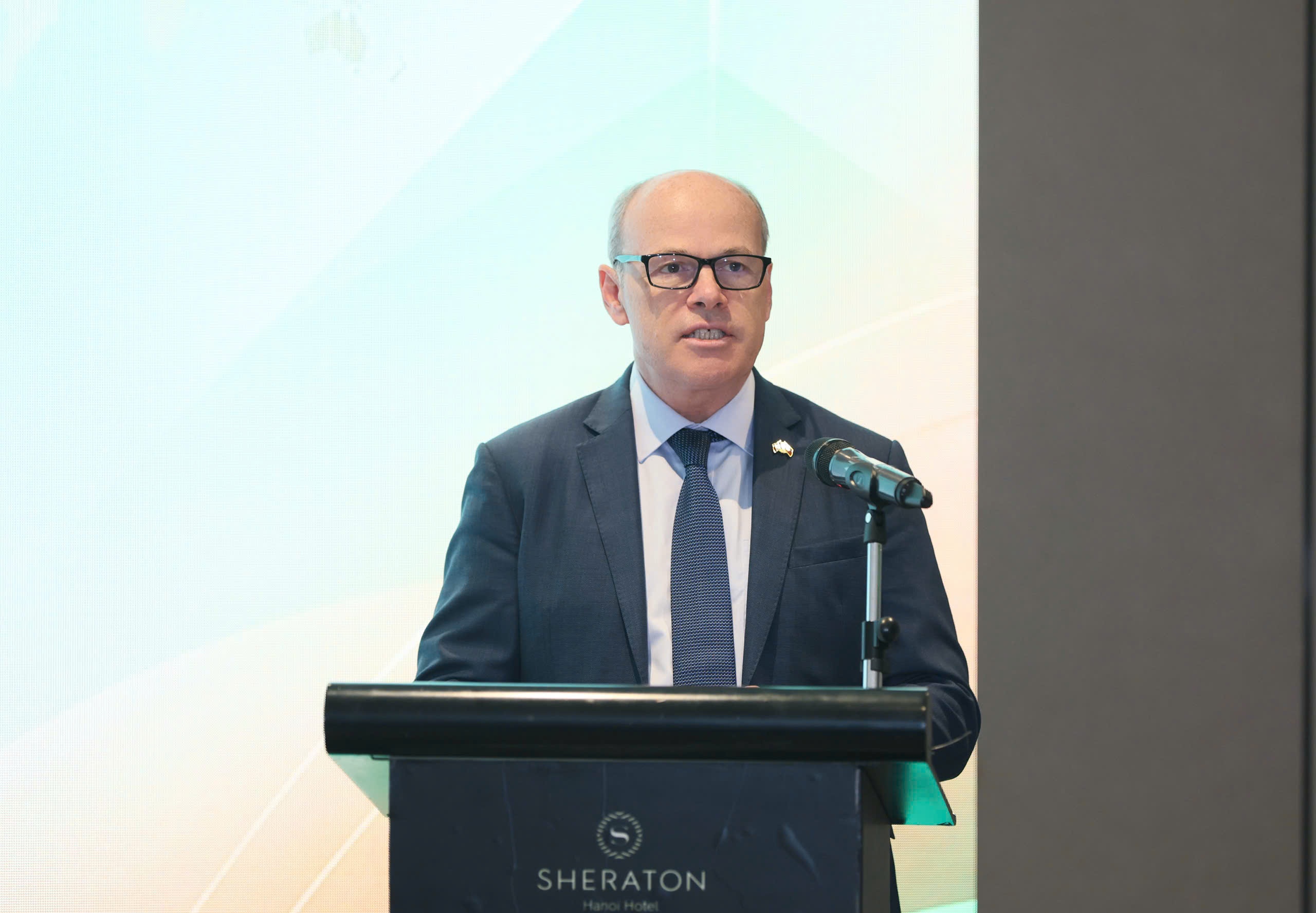 |
| Jim Nickel, Canadian Ambassador to Vietnam |
Over the last year, we have experienced significant geopolitical competition and economic uncertainty. While there have been many challenges, Canadians have also been reminded of the importance of building strong global partnerships.
AGILE responds to a clear need, strengthening Vietnam’s business support and investment ecosystem so that enterprises, particularly climate- and gender-responsive ones, can grow, innovate, and attract the capital required to scale. By helping enterprises become investment-ready, the scheme can unlock capital more effectively, accelerate the adoption of climate solutions, and reduce the vulnerability of communities most affected by climate change, particularly women working in climate-sensitive sectors.
What makes the initiative particularly innovative is its ecosystem approach. Canadian partners will work with local enterprise support organisations to strengthen their capacity to provide high-quality business development services, helping enterprises become investment-ready and better connected to sources of capital.
At the same time, AGILE will generate new opportunities for Canadian and international investors to engage with Vietnam’s dynamic market. By strengthening green value chains, promoting gender-responsive enterprises, and expanding access to green finance, the project supports Vietnam’s green transition and deeper integration into regional and global markets.
The initiative will support Vietnam’s energy transition and the growth of green finance. Canada stands ready to address climate change challenges, generate financial returns alongside meaningful development impact, and expand trade and investment opportunities between Canada and Vietnam. We remain committed to supporting Vietnam’s ambition to become a hub for impact investment in Southeast Asia.
 |
| Do Thanh Trung, Deputy Minister of Finance |
Vietnam is currently home to more than one million active enterprises and over five million household businesses, contributing approximately half of GDP, more than 30 per cent of total state budget revenue, and generating around 82 per cent of employment in the private sector.
Of these, women-owned enterprises are playing an increasingly important role in fostering innovation, encouraging inclusive development, and enhancing national competitiveness.
However, women owners continue to face significant barriers, particularly in accessing finance, obtaining specialised technical support, and scaling up operations. Many early-stage enterprises encounter challenges due to unproven business models, unclear product–market fit, and limited data to support innovation. These factors heighten investment risks and constrain capital flows into critical sectors such as climate adaptation and mitigation.
Although both domestic and international investors are showing growing interest in the Vietnamese market, gaps remain in market information, the availability of high-quality, investment-ready projects, and effective mechanisms to connect local enterprises with investors. Notably, the potential of women-led enterprises in the green economy has yet to be fully realised.
In line with commitments to green, inclusive, and people-centred development, strengthening support for women-owned enterprises is not only a matter of gender equality, but also a strategic solution to advance sustainable growth.
With a commitment to accompanying the business community, the Ministry of Finance has introduced various initiatives to develop a comprehensive support ecosystem, including training, advisory services, technical assistance, and resource mobilisation, with priority given to enterprises contributing to green growth.





What the stars mean:
★ Poor ★ ★ Promising ★★★ Good ★★★★ Very good ★★★★★ Exceptional
 Tag:
Tag:Related Contents




Latest News





More News
- EuroCham confidence index holds at 78.3 despite operational hurdles (October 16, 2026 | 17:27)
- Shrimp and rice firms face rising standards in export markets (October 16, 2026 | 09:00)
- SCG and Prime Group add value to the ecosystem (October 15, 2026 | 15:55)
- Project readiness key to unlocking green finance (October 15, 2026 | 12:35)
- Sovereign AI and human oversight key to secure digital government (October 15, 2026 | 12:32)
- MEXC Ventures partners with Corelia Academy: Bringing digital asset education closer to Vietnamese students (October 15, 2026 | 09:00)
- Global design expertise meets a more sophisticated Vietnam market (October 15, 2026 | 09:00)
- Vietnam growth nears double digits, UOB raises forecast (October 14, 2026 | 17:39)
- Smart factories need skills, finance and trust to scale (October 14, 2026 | 17:33)
- Sanofi-Aventis Vietnam appoints new head of Vaccines and country lead (October 12, 2026 | 17:21)











 Mobile Version