
VIR’s 27-year journey for high standard journalism


 |
| Since its inception, VIR has grown into one of the leading business journals of Vietnam |
VIR has experienced 27 years of development since its first issue came out on September 27, 1991, when the country began to develop based on the market economy model and integrate into the world’s economy, and when foreign direct investment (FDI) began to take root in the country. VIR has made important contributions to Vietnam’s investment promotion activities. It has become a bridge between domestic and foreign investors, and state agencies, especially the Ministry of Planning and Investment (MPI).
Laying a firm foundation
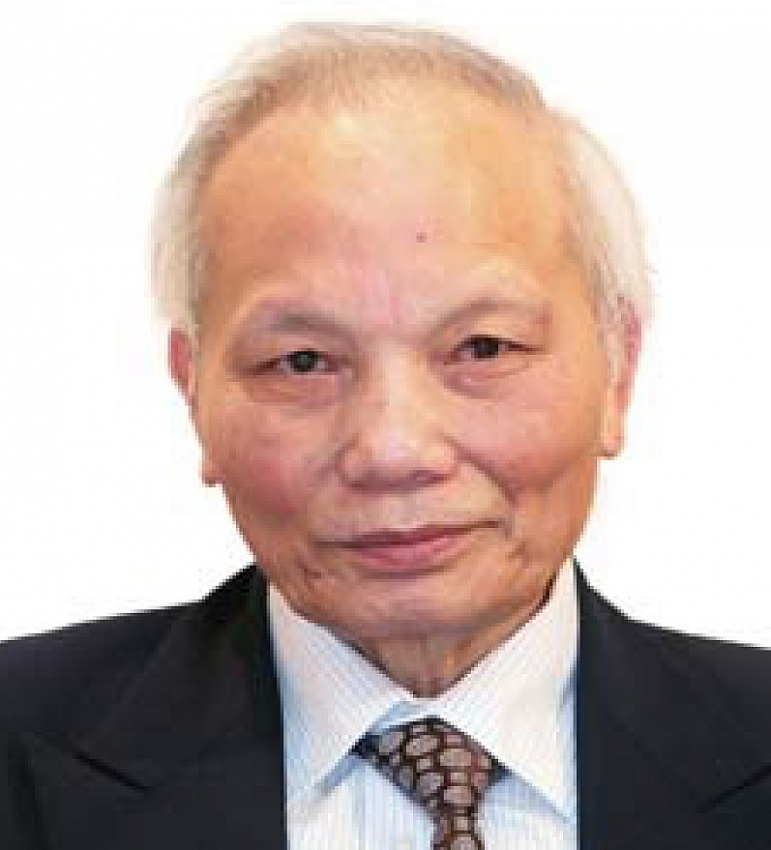 |
| Professor Nguyen Mai |
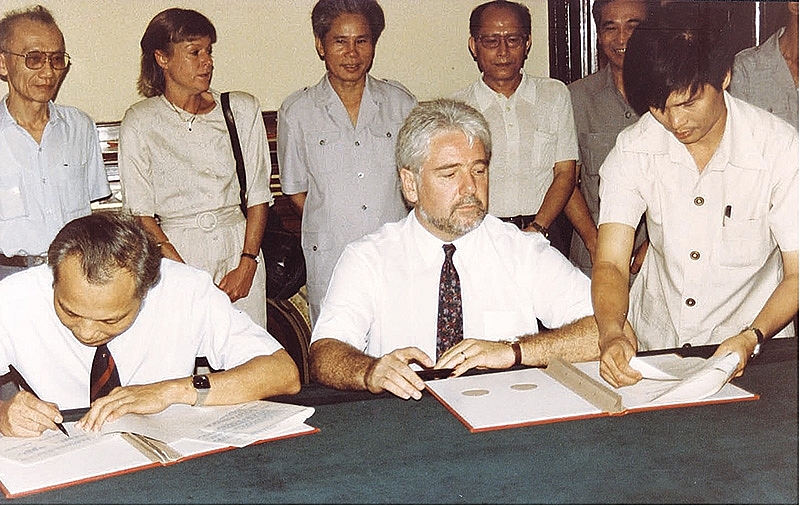
During the first five years (1991-1995), VIR was the press office of the State Commission for Cooperation and Investment (SCCI), of which I was the vice chairman. Then I was assigned to be the editor-in-chief of the newspaper. As per the orders of the SCCI’s leadership, I signed a business co-operation contract with Vietnam Investment Review Ltd., Co. established by a group of Australian journalists in Hong Kong and licensed by the SCCI for publication.
Under the contract, the Vietnamese side was in charge of the newspaper’s content and editing, while the Australian side was responsible for international news, translating Vietnamese articles into English, printing, distribution, advertising, and marketing.
In the first two years, the foreign side paid $23,000 to the Vietnamese side every month. The sum gradually increased from the third year on. After that, if the foreign side earned profit, the Vietnamese side was annually given 15 per cent of total after-tax profits.
Through the co-operation with the Australian side, VIR’s Editorial Board killed two birds with one stone: first, we had two newspapers, one in Vietnamese and one in English, and second, we had sufficient finance to feed VIR and make savings. Young Vietnamese reporters could learn from their foreign colleagues quickly, and we had a group of professional Vietnamese journalists a few years later.
In 1993, some Vietnamese people in France co-operated with VIR to publish the Vietnam Scoop newspaper, written in French. However, this newspaper was closed in 1995.
By late 1995, the SCCI merged with the State Planning Commission to become the MPI. Thus, VIR became the MPI’s press office. Also at that time, I transferred the editor-in-chief position to Deputy Minister of Planning and Investment Tran Xuan Gia.
I highly appreciate the co-operation of the Australian journalists in Vietnam Investment Review Ltd., Co., as well as other reporters of the newspaper. I also treasure the great efforts of the Vietnamese reporters, which have helped elevate VIR’s prestige in Vietnam.
International integration
In 1991, besides VIR, there were four other newspapers which co-operated with foreign partners, namely Vietnam Economic Times, Vietnam News, Fashion, and The World and Vietnam Report.
At a meeting of the Party’s Secretariat chaired by Party General Secretary Do Muoi, I attended as a representative of the SCCI, which was the FDI state management body, and also as VIR’s editor-in-chief. The event saw a debate about whether Vietnam’s press should continue co-operating with foreign partners. A leader of a newspaper said he had just attended an international communications conference, at which opinions had been that hostile forces were using the media to harm developing nations. Thus, he said, Vietnam’s press had to take great caution in co-operating with foreign partners.
However, Dao Duy Tung, then a Politburo member and permanent member of the Party Secretariat, said that due to difficulties in promoting the Party and the state’s policies abroad, some newspapers like VIR, which was distributed in many nations, had to be considered a good way to do this job and further the country’s international integration. Tung stressed that it was quite necessary to take great caution when co-operating with foreign partners, but opportunities to promote the country’s prestige had to be seized by boosting co-operation with foreign partners.
The then-Party leader Do Muoi asked me, “You signed a business co-operation contract with Vietnam Investment Review Ltd., Co. and became VIR’s editor-in-chief. So I ask you, who is the manager of the English newspaper?” I responded, “We are the manager.” Then he continued, “Who edits the newspaper?” I answered, “I am responsible for approving the content of all articles in the newspaper. However, it should be admitted that with the same information, the foreign side’s articles offer better quality and attract more readers.” After that, he concluded, “If the Vietnamese side oversees the content of the newspaper, the newspaper can continue on.”
The meeting ended. Nguyen Dy Nien, the then-Deputy Minister of Foreign Affairs, shook my hand, showing our mutual understanding about an important policy of the Party and the government.
Taking off to fly high
While it initially started out with two newspapers, one in Vietnamese and one in English, VIR has become a press office with many publications, such as Dau tu, VIR, Timeout, Dau tu chung khoan, and Bat dong san, as well as many other types of specialised publications.
VIR has also become professional in organising large events such as the M&A Forum, and the “Swing for the Kids” golf tournament.
VIR no longer limits itself to FDI stories, as it did in the first five years of its development, but has also covered many stories about socioeconomic development, domestic investment, stock markets, property, and mergers and acquisitions activities.
This has proved the creativity of the press office’s leaders over the past generations. They have adapted the newspaper to the country’s new development requirements, with a renewal and expansion of topics, making great contributions to Vietnam’s press development.
Though expanding itself to include information about many economic sectors which would need greater efforts, VIR has always attached importance to ensuring the highest quality of all articles, with the most important standards: respect to truth, objective comment, and proposing solutions for issues.
That’s why VIR has gained a large readership which believes in the newspaper’s news and comments.
Currently, the number of reporters, editors, and staff of VIR is far higher than in the past. They have become more professional, using more modern equipment for their work.
Over the past few years, VIR has grown from strength to strength, with more success stories in terms of quality and social activities such as offering scholarships to needy and good pupils and the annual “Swing for the Kids” golf tournament. This has helped increase VIR’s prestige in the Vietnamese press world.
The year 2015 marked a generational transfer of the press office’s leadership. After nearly a decade of managing VIR, editor-in-chief Nguyen Anh Tuan transferred his position to Le Trong Minh, who has been actively working for VIR since 1994.
With my strong belief in the existing Editorial Board, I hope that VIR will continue growing stronger and stronger, so that it will not only be able to keep its existing high position in Vietnam’s press, but will also be able to gradually rise to a regional level, with a firm position in the press of the ASEAN region.
 | To our most valued readers This week, Vietnam Investment Review (VIR) – the press office of the Ministry of Planning and Investment – will officially celebrate its 27th anniversary |
What the stars mean:
★ Poor ★ ★ Promising ★★★ Good ★★★★ Very good ★★★★★ Exceptional
 Tag:
Tag:Related Contents




Latest News



More News
- Japanese business outlook in Vietnam turns more optimistic (January 28, 2026 | 09:54)
- Foreign leaders extend congratulations to Party General Secretary To Lam (January 25, 2026 | 10:01)
- 14th National Party Congress wraps up with success (January 25, 2026 | 09:49)
- Congratulations from VFF Central Committee's int’l partners to 14th National Party Congress (January 25, 2026 | 09:46)
- 14th Party Central Committee unanimously elects To Lam as General Secretary (January 23, 2026 | 16:22)
- Worldwide congratulations underscore confidence in Vietnam’s 14th Party Congress (January 23, 2026 | 09:02)
- Political parties, organisations, int’l friends send congratulations to 14th National Party Congress (January 22, 2026 | 09:33)
- Press release on second working day of 14th National Party Congress (January 22, 2026 | 09:19)
- 14th National Party Congress: Japanese media highlight Vietnam’s growth targets (January 21, 2026 | 09:46)
- 14th National Party Congress: Driving force for Vietnam to continue renewal, innovation, breakthroughs (January 21, 2026 | 09:42)







 Mobile Version