

VIFC shouldn't try to be Dubai, says VinaCapital chief economist

 |
VIFC should open gradually, starting with a narrow pool of reputable firms while strengthening its executive and supervisory bodies, anti-money laundering (AML) enforcement, and beneficial-ownership transparency.
At the same time, reforms should be passed that make it easier to do business outside VIFC, since it ultimately interacts with the economy beyond its ring-fenced boundaries.
The establishment of Qatar Financial Centre (QFC) shows how a phased launch coupled with economic reforms implemented over time can translate into wider economic benefits.
After initially attracting banks and insurers, the QFC expanded into legal, consulting, and management-office services, and by 2020 activity inside the QFC generated nearly 2 per cent of Qatar’s GDP and supported more than 15,000 jobs. In contrast, Dubai International Financial Centre (DIFC) has had some well-publicised issues including the 2018 collapse of Abraaj, which was headquartered in the DIFC and was once one of the Middle East’s most prominent private-equity firms; that firm collapsed amid a massive fraud investigation, although there were some notable successes including a REIT launched in 2014.
India’s International Financial Services Centre at Gujarat International Finance Tec-City (GIFT), which launched in 2015, is arguably the closest parallel to VIFC. Like Vietnam, India is a large, fast-growing emerging Asian economy, and GIFT was built as a ring-fenced IFC with the explicit goal of on-shoring financial activity that Indian corporates had previously been conducting offshore, and of channelling inbound foreign capital into the domestic economy rather than serving as a parking area for private wealth in the mould of Dubai or Qatar. That makes GIFT, rather than the Gulf centres, Vietnam’s closest working peer, and because it is roughly a decade ahead of VIFC on the same road, its successes and stumbles are particularly instructive for Vietnam.
Two key lessons from the GIFT for VIFC stand out. First, India established a single, unified regulator for GIFT consolidating powers that had been split across four separate domestic regulators; Vietnam’s oversight today remains divided across the State Bank of Vietnam, the State Securities Commission, and the Ministry of Finance, so rationalising regulation for the VIFC from day one would reduce friction. Second, the GIFT’s build-out proceeded product-by-product and took years to gain real traction, as can be seen in the chart above, reinforcing the case for VIFC’s deliberately phased rollout.
VIFC officially launched in February. As noted above, key legal infrastructure components were finalised earlier this month, and the top priority will be facilitating the entry and exit of funds by licensing commercial banks in the centre. Once the initial foundational elements are established, particularly banks, fund management companies, and corporate bonds, we expect to see a 'Cambrian explosion' of financial products including aviation and maritime finance, green finance, carbon markets, fintech, and digital assets.
Trade finance, energy finance, and supply chain finance are natural next steps because they connect directly to Vietnam’s role in global supply chains, although there is also an enormous need to finance infrastructure development in Vietnam. However, to realise all of that potential, VIFC will need to build on its initial foundations with clear product-specific regulations, strong supervisory institutions, credible dispute resolution.
Moreover, it also needs a deeper pool of bankers, fund managers, lawyers, accountants, compliance officers, AML/KYC specialists, regulators, and arbitrators; and especially, growing the supply of bankable projects and credible issuers, with audited financials, transparent disclosure, reliable cash flows, and enforceable contracts.
Progress on these fronts will strengthen VIFC, improve Vietnam's wider financial system, and lower the cost of capital for infrastructure, energy, logistics, housing, and small and medium-sized enterprises. It will also enable the introduction of more financial products and services in the country.
Looking ahead, VIFC can serve as a controlled policy sandbox for innovations such as tokenised securities, AI-driven compliance tools, and blockchain-based settlement, which – if successfully tested on a limited basis – could later be rolled out across Vietnam’s broader economy.
In short, VIFC can serve as a 'beachhead' for the proliferation of wider reforms in the broader financial system and broader economy.
Finally, VinaCapital has been working closely with prospective members and foreign investors, as well as with VIFC’s executive team, to help establish investor-friendly guidelines for its future operations.
Fortuitously, Vietnam is opening its IFC in a phased manner and offering a wide range of benefits to institutions inside the centre, while concurrently implementing major reforms outside.
Those reforms include expediting the approval of major infrastructure and corporate projects in which VIFC members will soon be able to participate, plus a series of capital market reforms that should deepen liquidity and help lower Vietnam’s cost of capital.
VIFC is a purpose-built channel for foreign capital to help close Vietnam’s estimated $1.5 trillion funding gap to industrialise the country. Although it is legally structured like Dubai’s DIFC, it is not meant to compete with it. Economically, it resembles New York during the US’s industrialisation, aiming to finance industry and infrastructure.
Success will depend on a deliberately phased rollout beginning with reputable banks and asset managers, the steady build-out of supervisory institutions and professional talent, a credible pipeline of bankable projects, and critically, parallel reforms in the wider economy beyond the ring-fence.
Managed well, VIFC can act as a beachhead for broader financial and economic reform, while lowering Vietnam’s cost of capital and widening the range of financial products available to foreign investors.
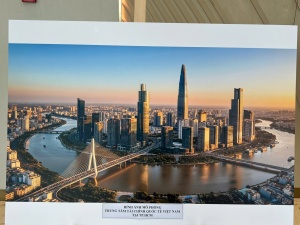 | VIFC in Ho Chi Minh City attracts $19 billion in commitments More than $19 billion in committed capital is awaiting regulatory approval to be disbursed into Ho Chi Minh City's International Financial Centre. |
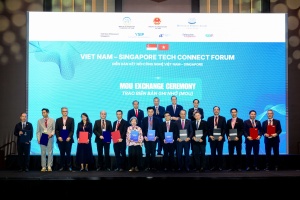 | VIFC-HCMC, Touchstone Partners, Temasek Foundation to collaborate on green economy On May 29, the Vietnam International Financial Centre in Ho Chi Minh City, Touchstone Partners and Temasek Foundation signed a trilateral strategic collaboration agreement to mobilise financial resources to advance technology development, contributing to Vietnam’s green transition. |
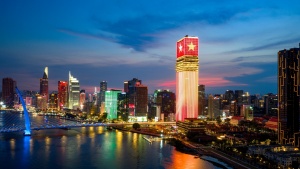 | VIFC set to raise the bar for Ho Chi Minh City’s office market Vietnam's International Financial Centre is expected to add substantial office space to Ho Chi Minh City's market while raising competitive standards across the sector. |
What the stars mean:
★ Poor ★ ★ Promising ★★★ Good ★★★★ Very good ★★★★★ Exceptional
 Tag:
Tag:Related Contents




Latest News




More News
- Partnerships streamline pathways for investors in Vietnam (September 08, 2026 | 08:58)
- Vietnam can lead the way in AI regulatory system (September 04, 2026 | 09:00)
- Vietnam's next cycle: capital shifts from low-cost manufacturing to higher-value investment and M&A (August 26, 2026 | 14:51)
- Significant steps made in related-party transactions (August 21, 2026 | 15:51)
- New challenges for workforce data and HR policy management with PIT changes (August 17, 2026 | 10:32)
- Leading in AI: from pilot initiatives to enterprise value (August 10, 2026 | 07:00)
- Programme launched to develop new Vietnamese business leaders (July 28, 2026 | 13:50)
- Vietnam must build talent and innovation to attract quality investment (July 09, 2026 | 08:00)
- AI-ready workforce key to Vietnam's next decade, analysts say (July 01, 2026 | 15:55)
- Highly skilled workforce and fiscal incentives key to driving high-tech growth (June 17, 2026 | 16:17)



Latest News




 Mobile Version