

Safe operations ensured during energy transition

The central region is often described as the backbone of power transmission. Could you elaborate on its role and preparations for dry-season operations?
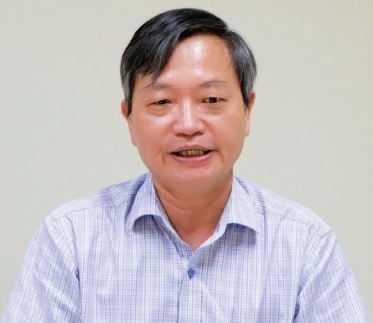 |
| Le Dinh Chien |
The central region holds a uniquely strategic position in Vietnam’s power system, acting as a bridge that transmits electricity from local generation sources, including hydropower, thermal power, and renewables, to the north.
Amid heightened volatility in global fuel prices, oil, gas, and coal, driven by geopolitical factors, the importance of domestic energy sources, particularly hydropower and renewables in the central region, has become even more pronounced.
To ensure safe operations during the dry season, which typically runs from the beginning of the year through August, we have established dedicated steering committees and implemented coordinated directives from Vietnam Electricity and the National Power Transmission Corporation. All transmission lines and substations have undergone thorough, on-site inspections.
Ahead of the peak heat period, we also signed coordination agreements with local authorities, forest rangers, and forestry units to prevent wildfires, one of the most serious threats to grid safety. Even a small spark can trigger fires that severely disrupt transmission operations. At substations, periodic testing has reached nearly 97 per cent completion and is on track to be finalised within March.
What are the key challenges in practice, particularly regarding new regulations and infrastructure development?
One major challenge stems from new provisions under Decree No.62/2025/ND-CP, which assign responsibility for trimming trees outside transmission corridors, if they pose a risk of falling onto power lines, to residents.
Previously, the power sector could provide compensation and carry out such work. Now, persuading residents to take proactive action has become significantly more difficult. In reality, certain trees, such as acacia, may stand outside the 7-metre safety corridor but can still strike 500kV lines if they fall, posing serious risks.
Administrative restructuring has also expanded and complicated management areas. We have had to strengthen coordination with local authorities and police forces to ensure energy security.
Another major challenge is the rapid expansion of transport infrastructure, particularly expressways. Within PTC2’s management area alone, there are around 62 crossing points between transmission lines and expressways.
The central region is prone to extreme weather. How does PTC2 prepare for emergencies?
We have extensive experience dealing with storms and floods, including major events like Typhoon Noru. Our guiding principle is the “four on-the-spot” approach.
Before a storm makes landfall, all personnel are mobilised and divided into smaller teams stationed at critical locations such as Tam Ky and Song Tranh. This ensures that even if transport routes are cut off, response teams can handle incidents immediately on-site.
Senior management is also directly deployed to key areas such as Danang, Quang Tri, and Quang Ngai, depending on the storm’s trajectory. In major disasters, leadership at all levels often works through the night alongside operational teams to resolve incidents.
What are the key priorities under the Power Development Plan VIII?
Under the revised plan, the central region will continue to serve as a transmission hub linking different regions. Several major projects are underway or planned, including 500kV substations in Quang Tri and Lao Bao, as well as large-scale generation centres in Quang Trach. The power sector is studying high-voltage direct current transmission lines from the central region to the North to enhance transmission capacity and system stability. At the same time, key substations, such as the 500kV
Danang substation, are being upgraded to meet future demand growth.
How is PTC2 implementing energy efficiency measures following the government’s latest directive?
We view energy efficiency as a responsibility in system operations. Currently, all PTC2 substations are equipped with rooftop solar systems for self-consumption, helping reduce internal electricity use. We are also gradually replacing older equipment with high-efficiency alternatives, significantly lowering technical losses.
In addition, we utilise thermal imaging technologies to detect early signs of poor connections on transmission lines, thereby preventing losses and potential failures.
A notable highlight is our leadership in digital transformation. All transmission line management teams now deploy unmanned aerial vehicles for inspections. These operate on pre-programmed coordinates and are equipped with thermal cameras to detect anomalies invisible to the naked eye. We also apply LiDAR technology to scan entire transmission corridors, enabling precise detection of safety clearance violations.
| PTC2 is a subsidiary of National Power Transmission Corporation, managing a network that stretches from Deo Ngang (Quang Tri province) to Quang Ngai province. The company plays a critical role in operating the transmission system across the central and Central Highlands regions. In response to rising electricity demand and the strategic direction, the corporation is implementing a wide range of transmission grid projects to support high economic growth. In 2026, PTC2 is implementing 14 projects with total planned disbursement of $12.8 million, including upgrading the 500kV switchyard configuration and expanding capacity at Danang substation; enhancing transmission capacity across multiple 220kV lines and substations; and installing surge arresters for outgoing feeders at 110kV substations under PTC2 management. |
What the stars mean:
★ Poor ★ ★ Promising ★★★ Good ★★★★ Very good ★★★★★ Exceptional
 Tag:
Tag:Related Contents


Latest News





More News
- Vietnam can lead the way in AI regulatory system (September 04, 2026 | 09:00)
- Vietnam's next cycle: capital shifts from low-cost manufacturing to higher-value investment and M&A (August 26, 2026 | 14:51)
- Significant steps made in related-party transactions (August 21, 2026 | 15:51)
- New challenges for workforce data and HR policy management with PIT changes (August 17, 2026 | 10:32)
- Leading in AI: from pilot initiatives to enterprise value (August 10, 2026 | 07:00)
- Programme launched to develop new Vietnamese business leaders (July 28, 2026 | 13:50)
- Vietnam must build talent and innovation to attract quality investment (July 09, 2026 | 08:00)
- AI-ready workforce key to Vietnam's next decade, analysts say (July 01, 2026 | 15:55)
- VIFC shouldn't try to be Dubai, says VinaCapital chief economist (June 24, 2026 | 14:17)
- Highly skilled workforce and fiscal incentives key to driving high-tech growth (June 17, 2026 | 16:17)








 Mobile Version