

FDI a crucial component to double-digit growth

 |
| FDI crucial to double-digit growth |
In early April, Party General Secretary and State President To Lam enacted the socioeconomic development plan on national finance, public debt repayment, and investment for the next five years, linked to the goal of striving for high growth.
This is an economic indicator and, simultaneously, a strategic orientation aimed at creating an independent, self-reliant, and strong economy in the context of deep integration into a volatile and unpredictable international environment.
This spirit necessitates the synchronised mobilisation of all resources of the economy, from the state and businesses to the people, to participate in the development process. In this overall context, external resources, especially foreign direct investment (FDI), continue to be identified as a crucial component.
The practical experience from the past four decades shows that, along with the process of perfecting the investment legal system towards uniformity among economic sectors, Vietnam has built a relatively stable, transparent, and competitive investment environment.
Thus, this capital influx has made a positive contribution to economic growth, exports, job creation, and structural transformation of industries. This clearly reflects the guiding role of the Party and the state, as well as the effectiveness of the synchronised policy and legal system implemented in recent years.
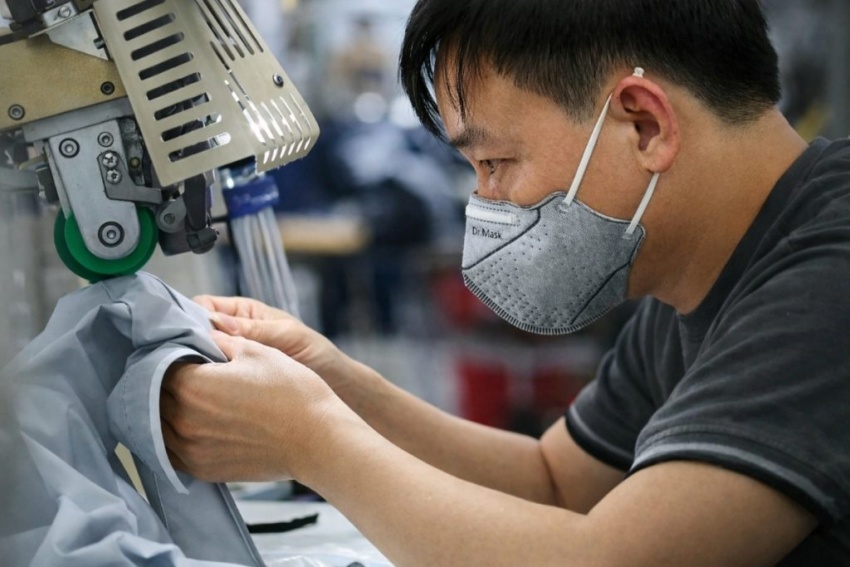
Firstly, this capital influx provides a crucial source of capital to improve Vietnam's economic growth. This capital inflow creates jobs for Vietnamese workers. To date, Vietnam has over four million direct employees in foreign-invested enterprises (FIEs).
In addition, they have a significant ripple effect and create many indirect jobs for the Vietnamese economy. Through working in these firms, local workers also receive advanced foreign business knowledge and management skills from foreign investors, thereby improving their own capabilities.
Furthermore, such enterprises contribute to boosting exports, expanding foreign economic relations, and enhancing the countries' competitiveness in the process of international economic integration. The group’s export turnovers account for approximately 75 per cent of the country's total export value in recent years.
Another important contribution is that FDI attraction activities contribute to the transfer of advanced and high-tech technologies to Vietnam. This is an effective technology transfer channel that many countries, especially developing countries, are interested in and have enacted many policies to encourage to achieve the goal of strengthening national technological capacity.
Through attracting international investment, Vietnam has the opportunity to receive core technologies from developed countries. Many economic sectors have adopted and accessed modern technologies from around the world, such as banking, postal and telecommunications services, oil and gas, and transportation.
However, entering a new phase of development, the requirement is not only to maintain the momentum of attracting investment, but also to improve the quality. This means that this capital influx should not only aim to supplement capital, but must become a driving force for transformation towards a green and digital growth model, contributing to the formation of a highly independent and self-reliant green economy.
In the process of realising the growth target, the importance of improving the quality of FDI from quantity to quality continues to be asserted, and there is a need to strengthen cooperation with leading global corporations and organisations.
Attracting digital technology research and production centres to Vietnam, and creating conditions for domestic businesses to participate deeply in the global value chain and bring digital technology products to the international market.
However, this capital inflow can create short-term growth momentum; if it lacks selectivity and effective management, it can lead to negative consequences such as environmental issues, transfer pricing, technological dependence, and competitive pressure on domestic businesses.
This is perhaps the most important challenge that Vietnam needs to overcome. For decades, the effectiveness of attracting FDI has often been measured by registered capital, disbursed capital, the number of projects, and the number of workers. These are necessary indicators, but not sufficient.
To improve this situation, the next phase requires a new evaluation system. How much actual technology does this project transfer to Vietnam? What percentage of localisation has been achieved? How many Vietnamese engineers and scientists have been trained? What role do domestic enterprises play in the supply chain for simple auxiliary components or high-value modules?
As Vietnam strives to perfect policies and raise the quality and efficiency of foreign investment, we must shift from simply counting the quantity of capital to evaluating the quality of high-tech technology that can actually be adopted and utilised.
Vietnam's goal of double-digit growth, leading to becoming a high-income developed country by 2045, cannot be achieved simply by being the world's assembly plant. That path requires Vietnam to climb higher in the global value chain, and high-tech FDI, properly attracted and effectively managed, is one of the most important steps on that journey.
 | Foreign-invested sector export turnover soars Foreign-invested enterprises generated $134.88 billion in exports in the first four months of this year, up 25.8 per cent on-year, and accounted for 80 per cent of Vietnam’s total export turnover. |
 | Vietnam reforms strengthen FDI appeal Vietnam’s evolving reform agenda has strengthened its appeal to foreign investors. Giles Cooper, Partner at Allens in Hanoi, explains how sustaining momentum will hinge on policy clarity and consistent enforcement. |
What the stars mean:
★ Poor ★ ★ Promising ★★★ Good ★★★★ Very good ★★★★★ Exceptional
 Tag:
Tag:Related Contents

Latest News



More News
- Significant steps made in related-party transactions (August 21, 2026 | 15:51)
- New challenges for workforce data and HR policy management with PIT changes (August 17, 2026 | 10:32)
- Leading in AI: from pilot initiatives to enterprise value (August 10, 2026 | 07:00)
- Programme launched to develop new Vietnamese business leaders (July 28, 2026 | 13:50)
- Vietnam must build talent and innovation to attract quality investment (July 09, 2026 | 08:00)
- AI-ready workforce key to Vietnam's next decade, analysts say (July 01, 2026 | 15:55)
- VIFC shouldn't try to be Dubai, says VinaCapital chief economist (June 24, 2026 | 14:17)
- Highly skilled workforce and fiscal incentives key to driving high-tech growth (June 17, 2026 | 16:17)
- KPMG and Anthropic to redefine client services with artificial intelligence tie-up (May 25, 2026 | 08:00)
- Practical issues to be addressed for TV and radio regulations (May 12, 2026 | 14:48)


Latest News




 Mobile Version