

Vietnam unveils sweeping financial strategy overhaul to boost growth

Deputy Prime Minister Nguyen Van Thang signed Decision No.1119/QD-TTg on June 23, amending and supplementing several provisions of Decision No.368/QD-TTg dated March 21, 2022, which enacted the Financial Strategy through 2030.
 |
| Vietnam aims to build a modern and transparent tax system, supporting growth and ensuring sustainable state budget revenues |
Under the amendments, several objectives and policy measures have been revised. The state budget revenue mobilisation target for 2026-2030 has been raised from 16-17 per cent of GDP to 18 per cent, while the target share of domestic revenue has increased from 86-87 per cent to 87-88 per cent.
The expenditure structure has also been refined, with development investment spending set to account for around 40 per cent of total state budget expenditure. Meanwhile, the budget deficit ceiling has been lifted from around 3 per cent to 5 per cent of GDP through 2030, and the national external debt ceiling increased from 45 per cent to half of GDP.
To support average annual GDP growth of at least 10 per cent during 2026-2030, Decision 1119 introduces a series of policy measures centred on institutional reform, removing impediments to unlock productive capacity and mobilise resources, and improving the investment and business environment.
Vietnam will continue refining its legal and institutional framework to support a new growth model, accelerate economic restructuring and industrialisation, and position sci-tech, innovation, and digital transformation as the economy's primary growth engines.
The government will also step up efforts to remove regulatory obstacles, accelerate administrative reform, standardise and digitise public services, strengthen data sharing across government agencies, and develop mechanisms to better manage surplus state-owned land and property assets, reducing waste and improving efficiency.
Decision 1119 emphasises the need to develop an efficient state sector that genuinely plays a key role in maintaining macroeconomic stability, safeguarding major economic balances, providing strategic direction and guiding overall economic development.
The decision also calls for stronger development of the private sector through effective implementation of policies contained in relevant resolutions issued by the Politburo, the National Assembly and the government. Priority will be given to measures aimed at improving private enterprises’ access to financial resources and credit.
Vietnam will continue to attract foreign investment selectively while reforming foreign direct investment (FDI) policies by shifting the focus from tax incentives toward alternative incentive mechanisms, including performance-based and post-investment incentives.
In parallel, the government plans to introduce breakthrough and competitive policy frameworks to mobilise and efficiently use resources for emerging economic models.
Priority areas include growth poles, key economic regions, economic corridors, special economic zones, technology zones, free trade zones, international financial centres, the national data centre, high-speed railways, nuclear power, solar energy and offshore wind power projects, among others.
The decision places particular emphasis on implementing an appropriately expansionary fiscal policy, targeted at supporting double-digit economic growth in the coming years. It also calls for the development of a modern and transparent tax system capable of encouraging growth while ensuring sustainable state budget revenues.
Decision 1119 also aims to strengthen the effectiveness and efficiency of state budget management and administration, enforce strict expenditure savings and prioritise resources for development investment spending to support key growth drivers.
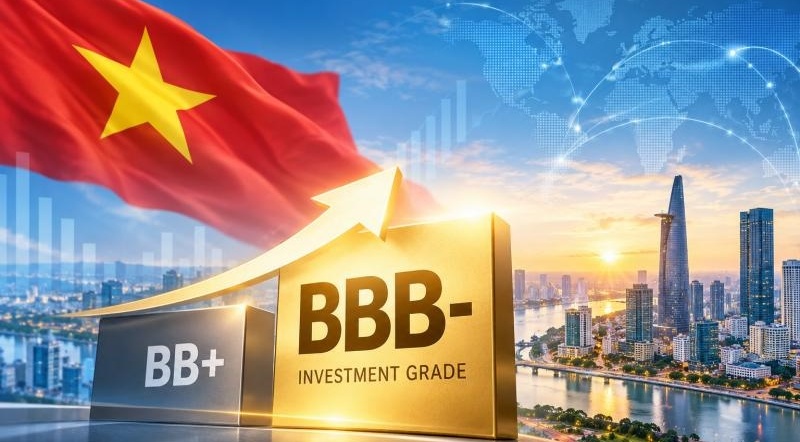
The new decision also calls for effective implementation of the Law on Public Debt Management, enhanced public debt risk management, greater transparency in debt reporting, gearing efforts to help Vietnam achieve investment-grade sovereign credit ratings as soon as possible.
In addition, the government will introduce timely measures to regulate production, stabilise supply and demand, closely monitor and manage prices, particularly for essential goods, while encouraging exports and expanding into new markets, especially countries recently upgraded to strategic partnership or comprehensive strategic partnership status with Vietnam
Decision 1119 aims to have Vietnam’s investment environment among the top three in ASEAN and among the world’s top 30 economies by 2028.
By 2030, the country aims to have 50 companies ranked among Southeast Asia’s 500 largest enterprises and between one and three companies included among the world’s 500 largest corporations.
 | Experts flag gaps as national financial strategy under review Financial specialists are urging targeted reforms to ensure Vietnam stays on track with the goals set out in its financial strategy to 2030. Their latest assessments highlight gaps that could hinder progress without timely policy adjustments. |
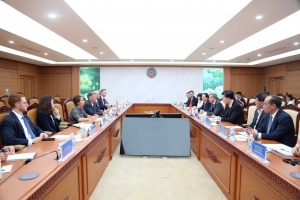 | Vietnam and US Treasury deepen financial cooperation On June 15, at the headquarters of Vietnam’s Ministry of Finance, Minister of Finance Ngo Van Tuan received a delegation from the US Department of the Treasury, led by Robert Kaproth, Deputy Assistant Secretary of the Treasury. |
 | VIFC set to raise the bar for Ho Chi Minh City’s office market Vietnam's International Financial Centre is expected to add substantial office space to Ho Chi Minh City's market while raising competitive standards across the sector. |
What the stars mean:
★ Poor ★ ★ Promising ★★★ Good ★★★★ Very good ★★★★★ Exceptional
 Tag:
Tag:
Related Contents





Latest News



More News
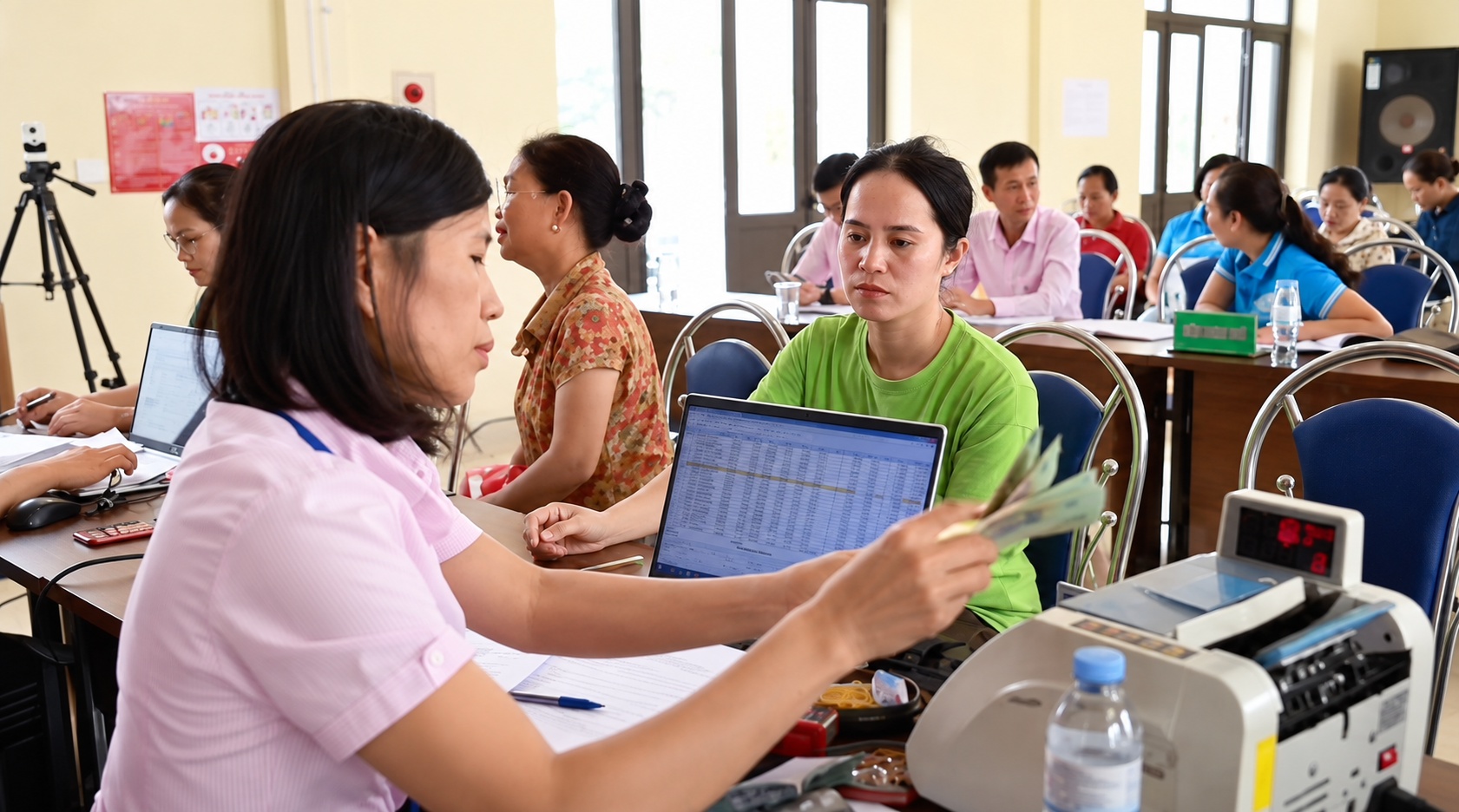
- From loans to women’s economic empowerment (October 06, 2026 | 17:58)
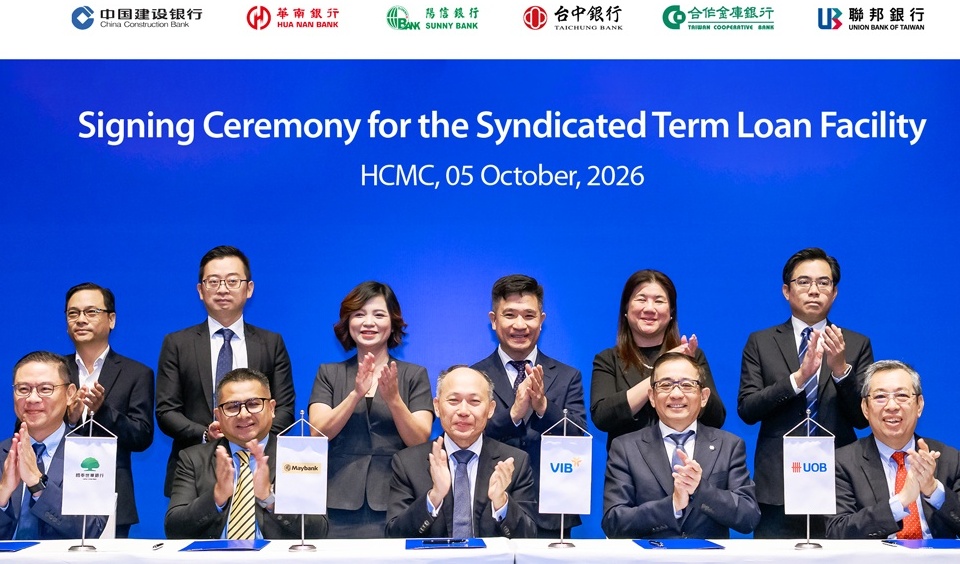
- VIB named Outstanding Retail Bank 2026, targets transaction banking (October 06, 2026 | 10:52)
- FTSE upgrade paves way for stronger stock market development (October 05, 2026 | 18:44)
- coLoan to empower women through inclusive green finance (October 05, 2026 | 18:42)
- Techcombank CEO: AI no longer a tool but a new operating foundation (October 05, 2026 | 18:11)
- Banks sustain profit growth as funding costs squeeze margins (October 02, 2026 | 22:22)
- Nam A Bank delivers strong breakthrough in 2026 (October 02, 2026 | 19:00)
- Policy credit builds sustainable livelihoods from the grassroots (September 29, 2026 | 07:48)
- VIB deploys Front Arena treasury and foreign exchange trading system on AWS (September 28, 2026 | 16:46)
- Nam A Bank receives $60 million loan from FMO (September 28, 2026 | 12:37)


Latest News




 Mobile Version