
Vietnam steps up expressway funding efforts

On September 29, the Ministry of Construction held a conference on investment promotion for expressway development during 2026-2030.
According to Minister of Construction Tran Hong Minh, in addition to state budget funding, Vietnam has mobilised approximately $17.8 billion, through the public-private partnership (PPP) model since 2021 to invest in 17 build-operate-transfer (BOT) projects.
“The result demonstrates the practical appeal of transport infrastructure to investors when projects are implemented within an appropriate institutional and policy framework,” he said.
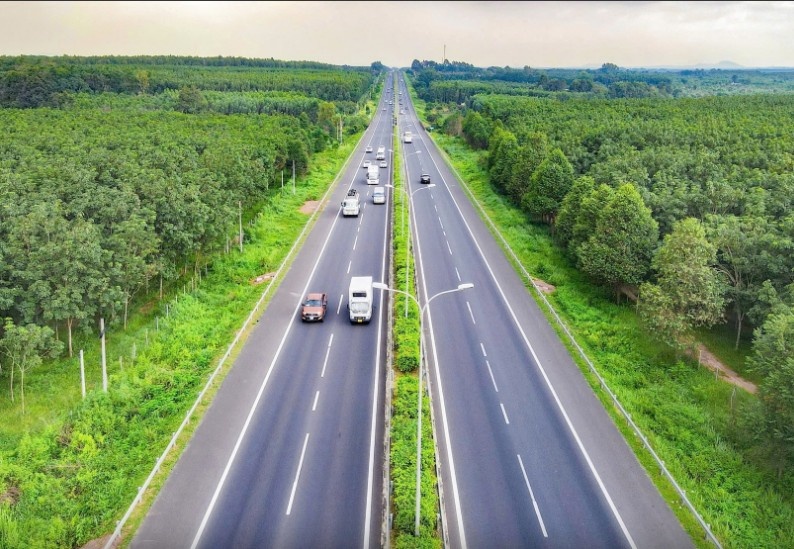 |
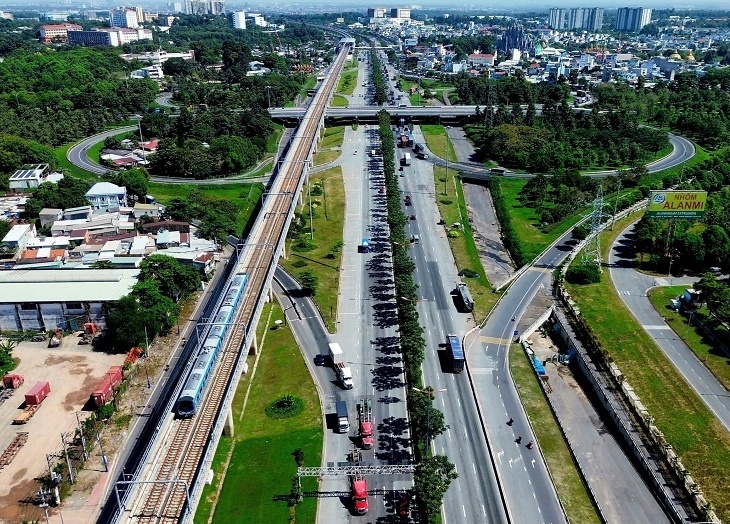
| Photo: baodautu.vn |
The minister noted that during 2026-2030, Vietnam is expected to construct 2,829 km of new expressways while expanding and completing 1,187 km of existing ones. Total capital requirements are estimated at $50.7 billion.
Of this amount, approximately $16.9 billion has been balanced and allocated from the state budget and investor commitments, leaving approximately $33.8 billion, to be further mobilised.
The significant resource gap highlights the need to further diversify capital mobilisation channels, with the private sector identified as an important source of funding alongside public investment.
Minister Hong Minh said this represents a major challenge but also creates considerable investment opportunities for the business community and credit institutions.
The conference lifted exposure on a pipeline of 29 projects that have been prioritised for investment promotion and calls for investment under the PPP model, with total estimated investment equivalent to about $36.9 billion.
The project portfolio is considered one of the largest efforts to mobilise non-state resources for transport infrastructure in the forthcoming period.
The portfolio was studied and selected based on projects under the Action Programme for the implementation of the Resolution of the 14th National Party Congress, projects whose investment policies have been approved by the National Assembly, and routes requiring expansion in line with expressway standards to improve traffic safety, increase traffic capacity and meet transport demand.
A key focus is the full expansion of sections of the North-South eastern expressway network, including Mai Son-Cam Lo and Quang Ngai-Dau Giay; the expansion of Ring Road 3 in Ho Chi Minh City from four lanes to six to eight lanes in line with the approved planning; the completion of major ring roads such as Hanoi Ring Road 5; and the development of routes connecting the East-West economic corridor, the Central Highlands and the Mekong Delta region.
Given the substantial capital mobilisation requirements, businesses, banks and consulting organisations attending the conference highlighted the need to diversify funding sources for PPP projects.
Nguyen Viet Long, deputy general director of Consulting at Ernst & Young Vietnam Limited, said that in addition to bank credit, the corporate bond market needs to be unlocked to provide additional long-term capital for infrastructure.
According to data compiled by Ernst & Young, corporate bonds in Vietnam currently account for around 10-11 per cent of GDP, significantly lower than in South Korea and Malaysia.
“If the bond channel for PPP projects is developed effectively, this source of capital can supplement bank credit. However, bonds cannot replace bank credit. During the initial stage of a project, credit remains important; once a project is completed, operates stably and has a verified cash flow, bonds can become an appropriate refinancing channel,” he said.
Tran Hoai Nam, deputy director of VietinBank’s Corporate Banking Division, opined that banks need to closely monitor projects throughout their entire lifecycle, from construction to operation.
“During construction, banks pay particular attention to site clearance, delays, increases in total investment, the capacity of EPC contractors and their ability to fully contribute the required equity. Once a project enters operation, the focus shifts to traffic volume, revenue, pricing and fee policies, and debt repayment capacity,” Nam said.
He proposed further improving the risk-sharing mechanism, accelerating the determination of revenue shortfalls, auditing revenue and ensuring timely budget allocations in cases where the state is required to fulfil obligations under PPP contracts.
Ho Minh Hoang, chairman of Deo Ca Group - a major contractor in the southern region, said PPP should not simply be understood as the state assigning a project to a company and leaving the company to arrange the necessary financing on its own.
According to Hoang, the state and businesses need to jointly design the project structure from the outset, classifying each route section according to traffic volume, revenue and its capacity to recover investment.
“For routes with strong traffic volumes and revenues, private resources can be mobilised to the maximum extent. For projects with lower traffic volumes, the state needs to participate at an appropriate level to ensure feasibility,” he sais.
Hoang also proposed a ‘PPP++’ approach, under which, in addition to the state, investors and banks, construction companies, financial investors, and suppliers of materials, equipment and technology could also participate in the project value chain.
 | Three large-scale expressway projects soon to be constructed Investment preparations are in full swing from the government, relevant ministries, and sectors, regarding highway construction projects during the next five years, focusing on three massive expressway projects undertaken by the Ministry of Transport between Bien Hoa-Vung Tau, Khanh Hoa-Buon Ma Thuot, and Chau Doc-Can Tho-Soc Trang-Tran De. |
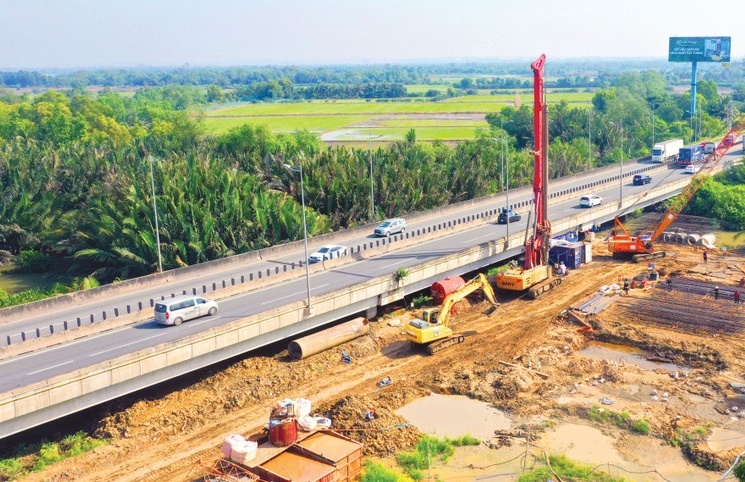
 | Major progress being made on expressway developments Fresh progress is being made on construction sites across Vietnam to achieve the goal of completing 3,000km of expressways by the end of 2025. |
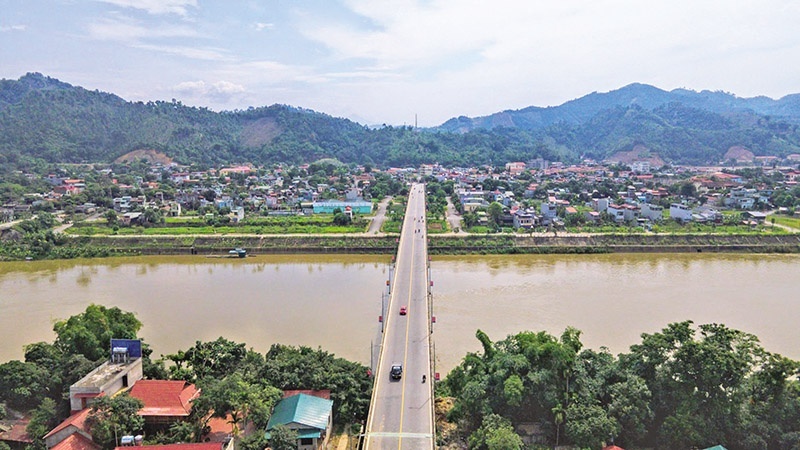
 | Government pushes to complete four expressway projects in 2025 Deputy Prime Minister Nguyen Hoa Binh led a government delegation to the central province of Binh Dinh on June 7 to work with local authorities, contractors, and investors working on four expressway projects, seeking solutions to complete them in 2025. |
 | Infrastructure contractors post strong profit growth amid investment boom Infrastructure contractors are reporting stronger profits as major project wins and rising public investment create new growth opportunities, despite mounting pressures. |
What the stars mean:
★ Poor ★ ★ Promising ★★★ Good ★★★★ Very good ★★★★★ Exceptional
 Tag:
Tag:


Latest News



More News
- EFTA–Vietnam Free Trade Agreement opens up opportunities to enhance supply chain (October 20, 2026 | 15:56)
- Dong Thap province steps up industrial expansion and infrastructure connectivity (October 19, 2026 | 08:56)
- Vung Ang LNG Terminal looks for candidates for $1 billion EPC contract (October 16, 2026 | 17:53)
- Work on digital technology building begins in Hanoi (October 16, 2026 | 17:46)
- Vietnam CFA showcase highlights $120m funding need for climate ventures (October 16, 2026 | 17:14)
- Long-delayed LNG power projects may be replaced in revised PDP VIII (October 14, 2026 | 11:59)
- Foreign investors seeking a synchronised manufacturing ecosystem (October 14, 2026 | 11:51)
- Localities report breakthrough results in FDI in first nine months (October 14, 2026 | 11:45)
- Why Asian FDI is flowing into northern Vietnam’s industrial parks (October 14, 2026 | 09:03)
- Hung Yen unveils adjusted master plan with three economic zones (October 13, 2026 | 11:30)










 Mobile Version