
Vietnam-Russia energy cooperation: a strategic pillar in global transition

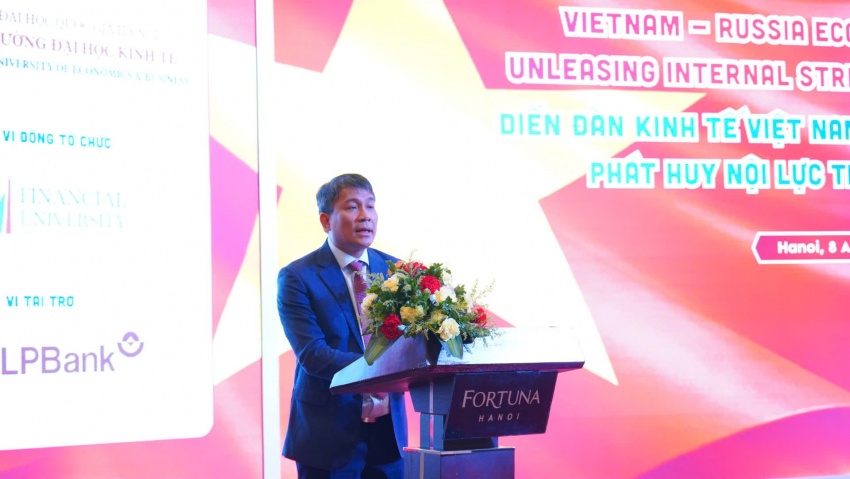 |
| Permanent Deputy Minister of Foreign Affairs Nguyen Minh Vu |
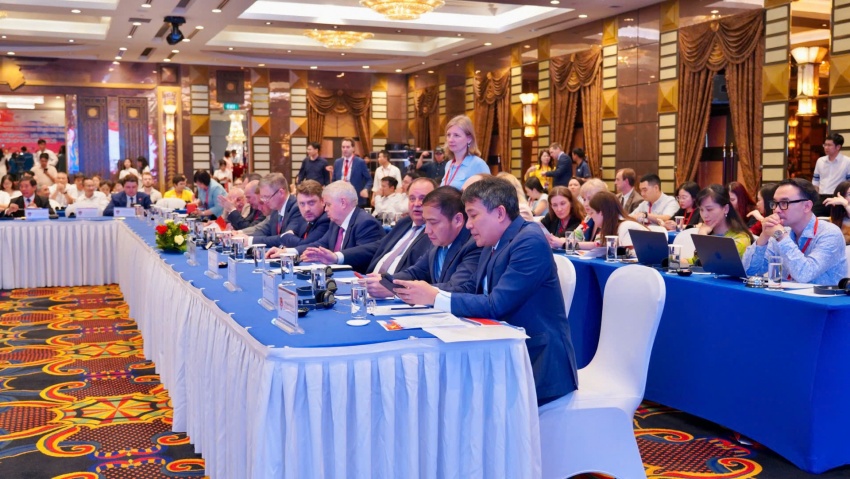
This was a key message at the Vietnam-Russia Economic Forum 2026 held in Hanoi on April 8.
More than an academic platform, the forum provided important policy insights aimed at advancing trade and investment ties, particularly in the energy sector, widely regarded as the strategic backbone of bilateral relations.
Opening the forum, Permanent Deputy Minister of Foreign Affairs Nguyen Minh Vu said that amid profound global changes, Vietnam-Russia cooperation needs to be approached in a new way, shifting from traditional forms of cooperation to a model driven by innovation, sci-tech, and development.
"Education and science are not only important areas of cooperation but also strategic pillars that can help both countries strengthen their internal capabilities, develop a highly skilled workforce, and adapt to the rapid transformations of the global economy. He also underscored the need to enhance practical and implementable cooperation mechanisms, closely linking policy, research and the market in order to generate long-term value for both sides," he said.
Assoc. Prof. Nguyen Truc Le, party secretary of the University of Economics and Business (UEB) under Vietnam National University, Hanoi, noted that the world was undergoing profound and increasingly unpredictable transformations, including supply chain disruptions, volatility in energy and financial markets, rising geopolitical competition and the rapid emergence of digital and green technologies.
“In this context, international cooperation cannot stop at general statements, it must move towards structured cooperation with concrete projects capable of delivering measurable value,” he said.
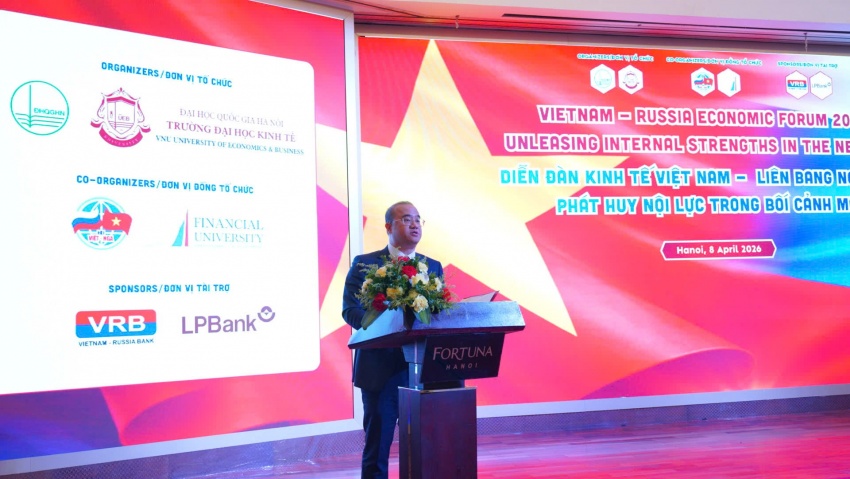 |
| Assoc. Prof. Dr. Nguyen Truc Le, party secretary of UEB |
Le said that, Vietnam-Russia trade and investment ties need to be upgraded in both quality and sustainability. Beyond expanding scale, there is a need to enhance standards compliance, reduce barriers and strengthen participation in global value chains.
He also emphasised the importance of energy cooperation and energy security as a long-term strategic area, requiring a practical approach that is resilient to risks and feasible in both institutional and technological terms.
Konstantin Simonov from the Financial University under the government of the Russian Federation highlighted a clear shift in global energy consumption towards Asia, a region with fast economic growth and rising energy demand.
“Oil, coal and natural gas will remain the dominant energy sources for many years to come,” he said, noting that Europe’s experience shows renewable energy alone cannot yet serve as a reliable primary energy source.
For Vietnam, rapid economic growth is driving a sharp increase in energy demand. Oil imports have risen significantly, and gas imports are expected to grow further in the coming years. Meanwhile, developments in the Middle East continue to raise concerns about the reliability of global energy supply.
Against this backdrop, Russia is emerging as a dependable energy partner. In 2025, Russia accounted for 18 per cent of oil exports to China and 32 per cent to India, leading figures that surpass many other major suppliers like Middle-east countries.
“This demonstrates Russia’s capacity to ensure stable energy supply over the long term, particularly for fast-growing Asian economies such as Vietnam,” Simonov said.
Nguyen Quynh Trang from UEB pointed out that energy-related products remain central to Vietnam’s imports from Russia. Coal imports reached nearly $1 billion in 2024, meeting around 10 per cent of Vietnam’s demand, while fertilisers accounted for $228 million. Imports of crude oil and petroleum products have also increased significantly, especially since mid-2024. In addition, Russia supplies essential industrial inputs such as metals and chemicals for Vietnam’s manufacturing sector.
“In a context where global supply chains remain unstable, maintaining and expanding trade cooperation with Russia helps Vietnam secure reliable inputs for production,” she said.
Beyond trade, Trang emphasised that Vietnam-Russia economic relations could play a crucial role in Vietnam’s broader strategy of diversifying partners. “In an increasingly fragmented global economy, strengthening ties with Russia will enhance Vietnam’s resilience and strategic autonomy,” she added.
The Vietnam-Eurasian Economic Union Free Trade Agreement is seen as a key instrument for advancing bilateral cooperation.
According to experts, the agreement not only facilitates export expansion but also enables businesses from both sides to integrate more deeply into each other’s value chains. Russia can serve as a gateway for Vietnamese goods to access the Eurasian market, while Vietnam provides a strategic entry point into ASEAN.
However, to fully realise these benefits, both sides need to improve financial and payment mechanisms, while reducing technical barriers to create a more enabling business environment.
 |
Beyond traditional sectors, Vietnam-Russia cooperation is expanding into high technology and new energy fields. Nguyen Thi Anh Tuyet also from UEB highlighted cooperation as a key strategy for enhancing resilience in a multipolar world. “Diversifying strategic partners helps reduce dependence on a single source while mitigating geopolitical and supply chain risks,” she said.
Russia brings strengths in technology, experience and large-scale infrastructure, while Vietnam offers a fast-growing market, a strategic location and strong demand for energy transition.
Based on these complementarities, several promising areas of cooperation have been identified, including civil nuclear energy, power system stability, carbon capture and storage, hydrogen and workforce development.
However, Tuyet stressed that cooperation must meet critical conditions, including compliance with international environmental standards, alignment with Vietnam’s net-zero commitment by 2050, and the avoidance of long-term technological dependence. “Technology transfer must go beyond equipment provision, it should focus on building domestic capabilities through training and joint research,” she noted.
The forum concluded with a shared view that Vietnam-Russia cooperation holds substantial untapped potential, particularly in energy, where the two economies demonstrate strong complementarities.
In a volatile global environment, developing concrete, feasible projects will be key to transforming potential into real outcomes. “Vietnam should not remain a passive recipient of technology and capital, but position itself within a reconfiguring global energy architecture,” Tuyet said.
With a solid foundation of traditional ties and complementary strengths in resources, technology and market dynamics, Vietnam-Russia cooperation is expected to enter a new phase, one that is more practical, effective and aligned with the sustainable development goals of both countries.
 | Finding a homegrown growth driver for Vietnam To reach double-digit growth next year, the country must forge new growth drivers like transparent institutions, advanced technology, green transition, and high-quality people, while ensuring growth improves livelihoods. |
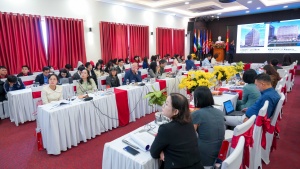
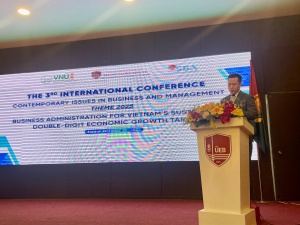 | Universities urged to drive next phase of growth Universities are increasingly recognised as key drivers of economic growth through innovation, research, and stronger links with business and government. |
 | AI offers fresh direction for accounting, finance, and corporate governance The rise of AI is redefining the roles of accounting and finance. Financial professionals are no longer just bookkeepers but must now forecast, analyse, and measure sustainable value, becoming “architects” of transparency and green growth. |
What the stars mean:
★ Poor ★ ★ Promising ★★★ Good ★★★★ Very good ★★★★★ Exceptional
 Tag:
Tag:Related Contents






Latest News

More News
- Quang Tri province to tighten delayed power projects (October 13, 2026 | 10:34)
- $600 million Ho Chi Minh City - Long Thanh expressway expansion under pressure (October 09, 2026 | 16:00)
- Hung Yen’s regional GDP beats expectations (October 09, 2026 | 15:25)
- VIR seminar focuses on taking domestic suppliers into global supply chains (October 08, 2026 | 14:50)
- Building Vietnam’s next chapter of FDI growth (October 08, 2026 | 12:15)
- Vietnam to foster links between foreign and domestic sector (October 08, 2026 | 11:00)
- Vietnam shifting focus to building high-quality FDI ecosystem (October 08, 2026 | 10:45)
- VIR seminar to explore innovative global supply chains in Hanoi (October 07, 2026 | 12:04)
- Vietnam’s registered FDI surpasses $50 billion in nine months (October 07, 2026 | 10:30)
- Samsung Electro-Mechanics to add $1.85 billion semiconductor investment in Thai Nguyen (October 06, 2026 | 18:23)






 Mobile Version