
Vietnam and South Korea seek to deepen film industry cooperation

The forum, “Cooperation and Development Strategies through the Film Industry,” was jointly organised by Ho Chi Minh City People’s Committee and the Consulate General of South Korea in the city.
It brought together nearly 100 delegates, including representatives from government agencies, film organisations, industry experts, directors, producers, and businesses from both countries.
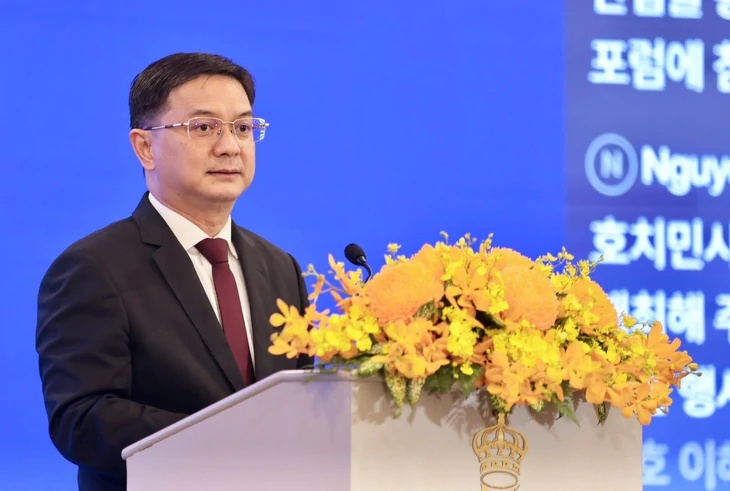 |
| Nguyen Manh Cuong, Vice Chairman of Ho Chi Minh City People’s Committee, speaks at the forum. Photo: Hoang Trieu/SGGP |
“Following the merger with Binh Duong and Ba Ria-Vung Tau, the city now offers a wider range of filming locations, from beaches, forests, mountains, and waterways to architectural landmarks and modern urban spaces. These advantages provide opportunities to develop film studios, production services, and attract domestic and international film crews,” Cuong said.
After joining the UNESCO Creative Cities Network in film in 2025, Ho Chi Minh City is implementing its commitments for 2026-2030, with a focus on workforce development, expanding creative spaces, and organising international film festivals.
Cuong stated that the city would continue to improve its investment environment and connect businesses and film organisations from both countries to boost co-production, expert exchanges, technology cooperation, and film distribution.
Kwon Tae-han, deputy consul general of South Korea in Ho Chi Minh City, said film companies from the two countries could work together to identify stories and talent, with cooperation extending from script development and investment to production and international distribution.
“To implement these projects, it is necessary to clarify co-production procedures and profit-sharing principles, strengthen copyright protection, and facilitate filming permits and access to locations,” he said.
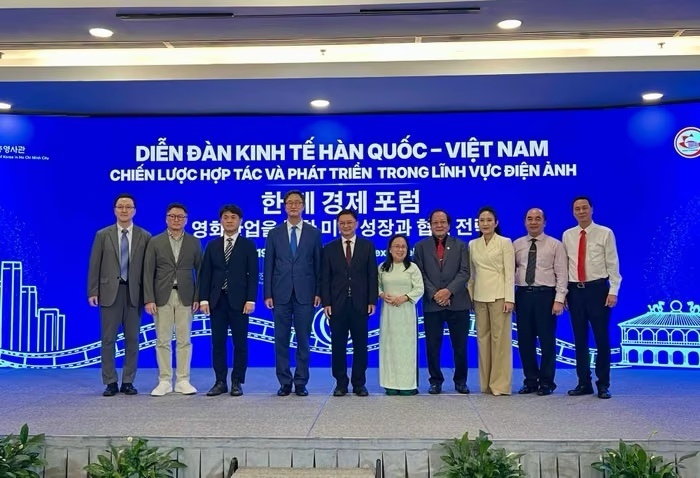 |
| Photo: Hoang Trieu/SGGP |
Drawing on South Korea’s experience, Do Lenh Hung Tu, chairman of the Vietnam Cinema Association, proposed establishing a national-level focal point to boost film exports and help businesses access market information, participate in film markets, encourage their productions, and sell distribution rights overseas.
He said film exports should be incorporated into the broader strategy for developing cultural industries and boosting Vietnam’s national image.
“Producers need to study audience preferences, identify target markets from the script development stage, and work with companies specialising in intellectual property rights to develop distribution strategies,” Tu said.
He added that when participating in international film festivals, production teams should prepare catalogues of films for sale, project dossiers, promotional materials in foreign languages, and appoint professionals to negotiate with distributors and investors.
Cooperation in financing, technology, post-production, and creative talent could help bring stories reflecting Vietnamese identity to wider international audiences, he said.
Yun Ha, head of policy at the Korean Film Council, said domestic films were contributing to box-office growth in Vietnam. In South Korea, however, the concentration of investment capital among major film studios and investment funds, alongside changes in audience entertainment habits, had contributed to a slow market recovery following the pandemic.
“Several box-office hits have helped boost revenue, but a sustained recovery will depend on maintaining a diverse supply of films capable of attracting audiences back to cinemas,” Ha said.
What the stars mean:
★ Poor ★ ★ Promising ★★★ Good ★★★★ Very good ★★★★★ Exceptional
 Tag:
Related Contents




Latest News
More News
- Ho Chi Minh City seeks to attract greater investment from Singapore (November 20, 2026 | 11:56)
- Ho Chi Minh City steps up efforts to restore distinct coral species (November 20, 2026 | 11:32)
- Ho Chi Minh City proactively adapts to climate change (November 19, 2026 | 12:39)
- Vietnam promote food exports to EU market (November 19, 2026 | 12:02)








 Mobile Version