
New policy drivers to boost tourism real estate

Policymakers and industry consultants shared their thoughts at the seminar “Tourism Real Estate Market 2026: Where Hospitality Meets Cash Flow,” organised by VIR in Hanoi on June 23.
 |
| Phan Duc Hieu |
Phan Duc Hieu, member of the Economic and Financial Committee of the National Assembly
After several years of struggling with obstructions in condotels, officetels, and tourism real estate, the market has a chance to enter a new development phase. This is particularly true as a slew of legal hurdles have been resolved. Besides addressing the previous issues, it is vital to build a legal framework that embraces future business models.
Over the past few years, the National Assembly, the government, and various ministries and agencies have made enormous efforts to remove impediments in the Land Law, the Law on Housing, and the Law on Real Estate Business.
A series of specific resolutions has been issued to address long-stalled projects. Notably, Resolution No.170/2024/QH15 on special mechanisms to address problems relating to projects and land matters, while Resolution No.29/2026/QH16 expands the mechanisms for handling land law violations across over 3,300 real estate ventures. These resolutions are expected to remove lingering obstacles in the real estate market.
 |
| Bui Thu Thuy |
Bui Thu Thuy, deputy director of the Foreign Investment Agency under Ministry of Finance
Amid the challenging global economic environment, international investment flows remain cautious. Vietnam continues to stand out as a bright spot in foreign investment attraction. This not only sends a positive signal to the economy but also opens up opportunities for sectors with long-term growth potential such as tourism real estate.
Despite geopolitical and trade fluctuations and global capital flow shifts, Vietnam remains a magnet for international investors. The latest data showed that total registered foreign direct investment (FDI) reached $24.81 billion in the first five months of 2026, rising 34.9 per cent on-year. Disbursed FDI was estimated at $9.75 billion, up 9.6 per cent on-year, marking the highest five-month disbursement level.
The capital was mainly focused on the manufacturing and processing sector. Meanwhile, the real estate sector also captured much attention from foreign investors thanks to long-term growth potential and the expansion of the tourism market.
 |
| Hoang Thu Hang |
Hoang Thu Hang, deputy director of the Housing and Real Estate Market Management Department under the Ministry of Construction
The tourism real estate sector is well-positioned for positive growth, supported by an increasingly comprehensive and coherent policy framework.
In recent years, tourism real estate has experienced rapid development, while the legal framework has yet to keep pace with reality, leading to many gaps in market management and operation. The promulgation of the new Land Law and the Law on Real Estate Business has established a relatively comprehensive legal foundation for this asset class.
It is worth noting that the Land Law has clearly defined the land use rights for tourism and resort real estate ventures. According to current regulations, land for construction of tourism and resort facilities is classified as commercial service land. This is an important legal basis for investors to confidently implement projects and plan long-term investment strategies.
In addition, the land-use term is clearly defined as 50 to 70 years, enabling businesses to better plan for investment returns and operate projects more efficiently.
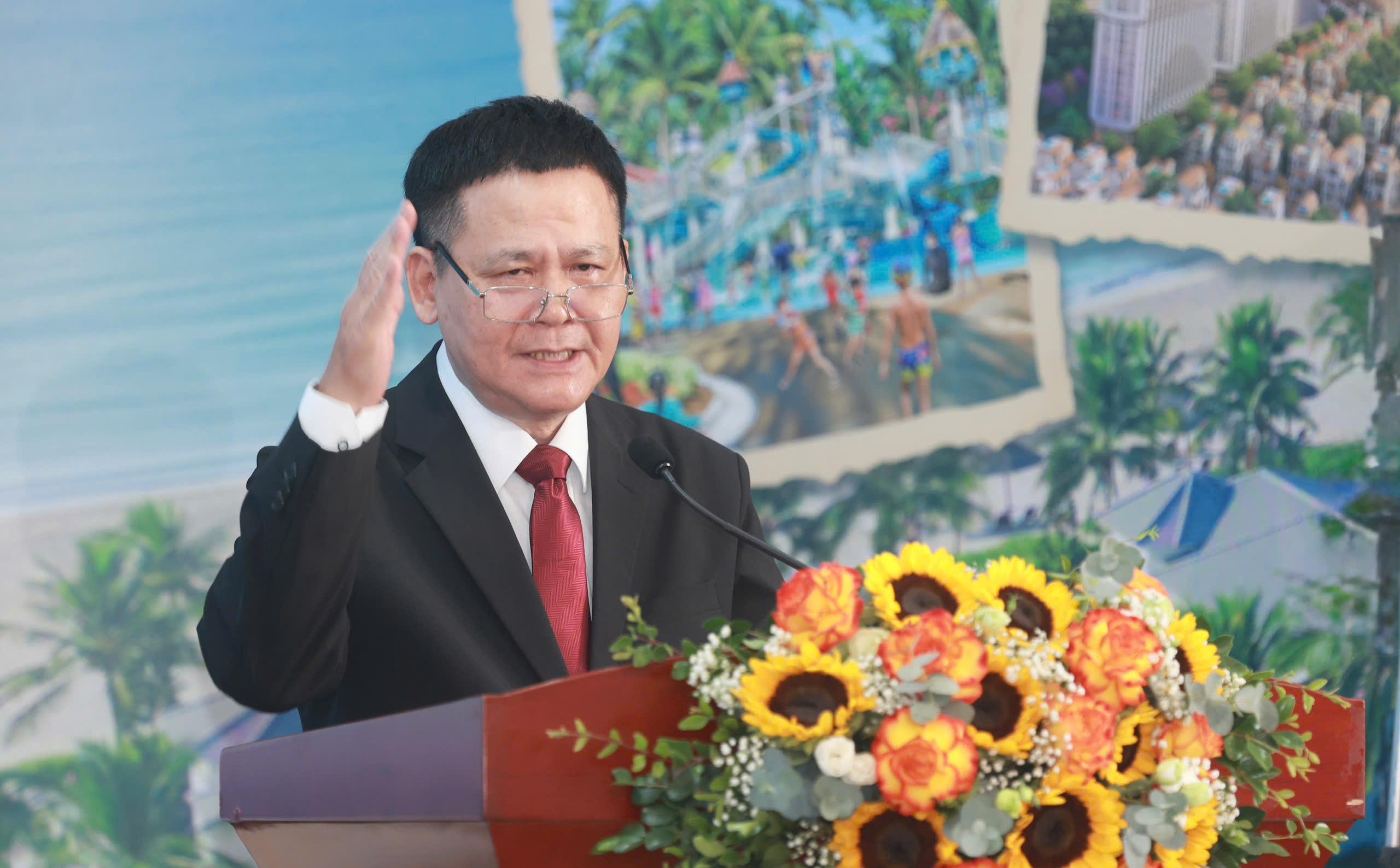 |
| Tran Kim Chung |
Tran Kim Chung, expert from Academy of Finance, former deputy director of the Central Institute for Economic Management
Despite global economic volatility, foreign capital continues to flow into Vietnam. The economic institutional system, the real estate market, and the tourism real estate sector are gradually becoming more comprehensive and coming to life. After administrative restructuring, localities are entering a new phase of operation. Meanwhile, the approval process for national, regional, and provincial master plans is being accelerated.
Against this backdrop, tourism real estate is gaining new momentum. As part of the tourism real estate development strategy following the provincial merger, Vietnam will form 7 strategic growth zones and 10 national tourism centres. Under the master plan, tourism hubs will be developed in association with cities and destinations with outstanding advantages, including Halong, Ninh Binh, Hue, Hoi An, Quy Nhon, Nha Trang, Dalat, Vung Tau, Can Tho, and Phu Quoc.
Tourism real estate will be a key highlight for the next phase of development in Vietnam’s real estate market.
 |
| Nguyen Dinh Tho |
Nguyen Dinh Tho, deputy director of the Institute of Strategy and Policy for Agriculture and Environment under the Ministry of Agriculture and Environment
After years of debate over the legal framework governing condotels, tourism villas, and resort apartments, the major inconsistencies between land regulations and real estate business laws have now been largely resolved.
However, the greatest challenge is how to gain investor trust. One of the most common concerns among investors relates to the relationship between land-use terms and the actual lifespan of real estate assets.
According to current regulations, tourism real estate projects are granted land-use terms of 50 to 70 years. In practice, many resort properties can remain operational and generate value for hundreds of years with proper maintenance and management. This mismatch has led many investors to question the long-term value of such assets.
In the long term, Vietnam could consider classifying tourism real estate into two groups: long-term ownership and limited-term ownership, similar to many countries around the world. At the same time, tax instruments should be used to regulate the market instead of relying solely on the current land use term mechanism.
 | VIR seminar explores tourism real estate outlook for 2026 VIR has held a seminar in Hanoi to explore the outlook for Vietnam's tourism real estate market, as robust tourism growth creates new opportunities and unlocks significant potential for investors. |
 | Tourism and infrastructure fuel Vietnam's real estate growth Tourism real estate has become a key component of the national strategy for developing coastal cities, the marine economy, and tourism through to 2045. |
 | Tourism real estate must create real cash flow To generate sustainable values, tourism real estate must operate as a destination ecosystem to generate real cash flow and long-term trust. |
What the stars mean:
★ Poor ★ ★ Promising ★★★ Good ★★★★ Very good ★★★★★ Exceptional
 Tag:
Tag:
Related Contents




Latest News
More News
- HoREA proposes new framework for affordable commercial housing (October 08, 2026 | 17:01)
- Hong Hac City event to explore Bac Ninh's urban transformation (October 08, 2026 | 15:27)
- Onsen in the heart of the city: a new experience at the shopping mall (October 08, 2026 | 08:00)
- Enterprises honoured as Outstanding Provider of Green Industrial Solutions (October 06, 2026 | 18:03)
- MIK Group launches House of MIK in Ho Chi Minh City (October 03, 2026 | 17:00)
- Vietnam hospitality shifts towards integrated mixed-use developments (October 03, 2026 | 10:00)
- Stavian IP accelerates its modern expansion (October 02, 2026 | 14:00)
- ESG for future-ready industrial success (October 02, 2026 | 09:00)
- Green Future Awards honour five leading industrial park developers (October 01, 2026 | 22:20)
- Green transition leaders honoured at Green Future Awards 2026 (October 01, 2026 | 22:10)







 Mobile Version