
Japanese investors pursue M&A strategies with long-term vision in Vietnam

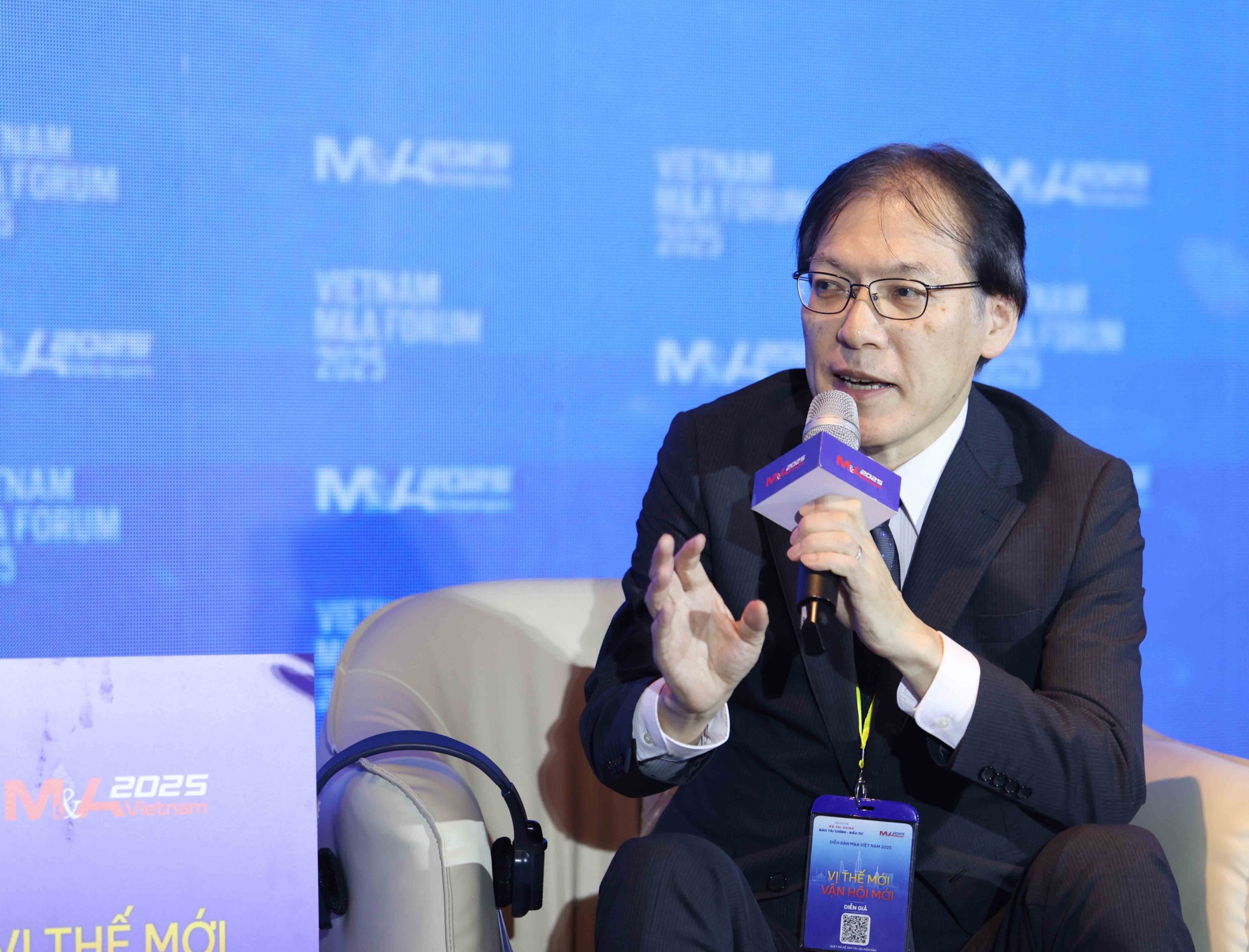 |
Speaking at the Vietnam M&A Forum 2025 in Ho Chi Minh City on November 9, Tamotsu Majima, senior director of RECOF Corporation, said, "Japanese companies always take a long-term strategic view. They often start with research, planning, risk evaluation, internal consensus building, and post-merger integration. This process will take time, but once the decision is made, their commitment is strong. In general, they do not easily change policies and exit from their investment. The other side of the coin is that they seem to be overly cautious in taking action."
Another characteristic of Japanese investors is their diversity. There are not only big conglomerates but also mid-cap listed companies and even small- and medium-sized enterprises that are keen to explore opportunities in Vietnam. Their interest spans from conventional old-fashioned businesses to innovative technology areas. Thailand is home to 6,000 Japanese companies, while Vietnam has just over 2,000, indicating ample room to grow.
"The other advantage lies in the potential network effect," Majima said. "Notably, Kokuyo has acquired Thien Long An Thinh in Vietnam, which makes the Vietnamese company one of the four pillars of Kokuyo's business – Japan, China, India, and Vietnam as centre of the ASEAN region – for both production and consumption."
Another example is Hoshizaki with the definite willingness to make Vietnam the hub of production in partnership with Searefico. The investment in Vietnam could be the final piece in the puzzle that fits with the whole picture of global strategies. Meanwhile, the Vietnamese company can grow not only in the domestic market but also internationally.
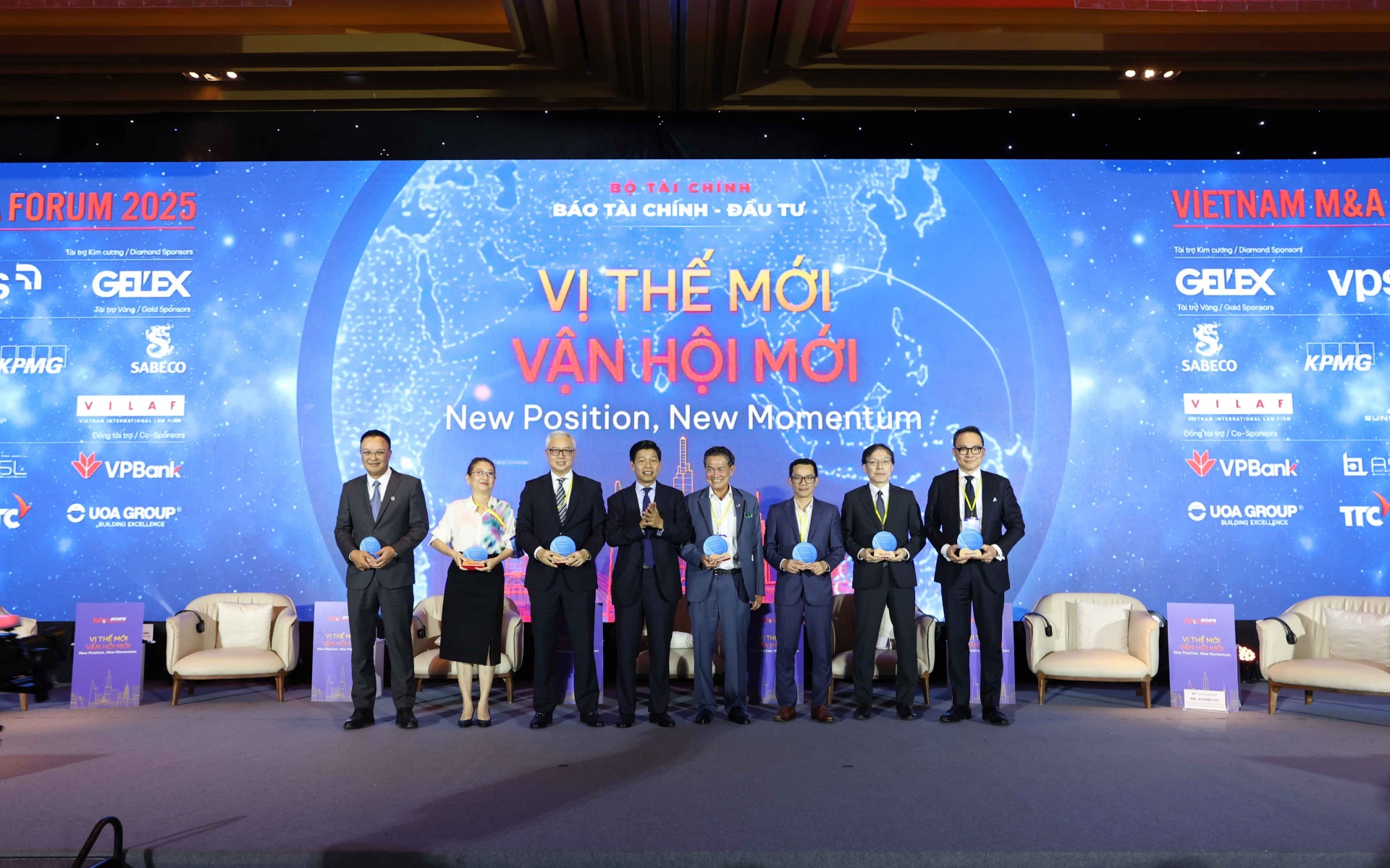 |
| Tamotsu Majima, senior director of RECOF Corporation (second to the right) |
In addition, Vietnam is emerging as one of the regional hubs for certain functions, especially manufacturing. Vietnam will attract more investment in light of rising consumption, as its 100-million population continues to flourish.
To consider whether Vietnam can become an M&A hub of ASEAN in the coming years, it is essential to look at both inbound and outbound. As for the inbound market, Japan is a closed market. Inbound transactions account for more or less 10 per cent each of some 5,000 transactions announced every year. Meanwhile, the Vietnamese market is open already. "With the steady progress in regulations, compliance, and transparency matters, Vietnam will remain the most attractive market in the region," Majima stated.
For the Koyuko–Thien Long transaction, which was announced in early December, the public tender period is scheduled in October to November next year. There should be tough regulatory hurdles, merger control, securities laws, and others. The parties may face challenges to protect the transaction over such a long term. Japanese investors expect further improvements to make these regulatory processes more predictable.
This year, Japan has also experienced a big reorganisation of the government sector, which has had some short-term impact on the transactions involving Japanese companies. It is expected that the renewed organisation will contribute to a more efficient and predictable regulatory process in relation to M&As.
As for the outbound market, some major Vietnamese corporations have started to consider investments abroad, including studying the opportunity to invest in Japan. To facilitate the goal, Vietnamese corporations will need not only strong financial capacity but also the ability to overcome regulatory hurdles and compete with Japanese and global investors to complete a transaction. This also requires a proven track record and expertise to manage the target company abroad. In the near future, dynamic and innovative Vietnamese companies can be a good match for well-established and mature Japanese companies, according to Majima.
 | Fundamentals required for M&A wins Japanese investors are taking meaningful, strategic steps in the Vietnamese market towards a long-term presence in the market. Masataka “Sam” Yoshida, head of the Cross-border Division at RECOF Corporation, talked with VIR's Thanh Van about the strategies of Japanese dealmakers in Vietnam. |
 | M&A market set to boom again in 2025 The M&A market is expected to become more dynamic in 2025 with the return of investors from Japan and South Korea across various sectors, driven by positive institutional changes and recent efforts toward dual transformation. |
 | Unpacking new momentum in Vietnam's M&A market Solutions participating at the Vietnam Mergers and Acquisitions (M&A) Forum 2025 delved into the new momentum driving Vietnam's M&A landscape, highlighting emerging opportunities and practical for executing successful transactions. |
What the stars mean:
★ Poor ★ ★ Promising ★★★ Good ★★★★ Very good ★★★★★ Exceptional
 Tag:
Tag:Related Contents




Latest News

More News
- Spain's Congalsa acquires Lenger Seafood Vietnam (September 25, 2026 | 15:52)
- Jollibee sells 11 per cent stake in Highlands Coffee for $88 million (September 24, 2026 | 17:57)
- Arsenale acquires a 33 per cent stake in premium rail operator SJourney (September 17, 2026 | 15:55)
- BIG Investment founder transfers 1.3 million shares to Brookland Group (September 10, 2026 | 12:05)
- Mekong Capital completes exit from Mutosi following acquisition by Ariston Group (September 09, 2026 | 14:33)
- Japan’s Nissha to exit investment in Vietnam’s USM Healthcare (September 09, 2026 | 12:16)
- Japanese firms maintain resilient deal activity in Vietnam (September 05, 2026 | 16:58)
- NutiFood Group plan to buy additional million shares in Quang Ngai Sugar (August 28, 2026 | 14:58)
- Singapore's Skyform invests in Enouvo (August 20, 2026 | 16:38)
- Fusion Hotel Group announces integration of Ayola and Odua brands (August 20, 2026 | 16:37)








 Mobile Version