
Industrial assets anchor Southeast Asia property market growth

In its annual Southeast Asia Outlook report released on March 11, Cushman & Wakefield stated that retail real estate is expected to strengthen in 2026, with retail sales forecast to grow by more than 15 per cent, supporting demand for modern retail space in major urban centres.
Despite data centres emerging as the largest property type by investment volume across the Southeast Asian economies of Indonesia, Malaysia, Thailand, Vietnam, and the Philippines – excluding Singapore (SEA-6) – in 2025, Vietnam's data centre market remains relatively nascent compared to regional peers.
“This suggests significant long-term growth potential, as digital infrastructure demand rises alongside the expansion of cloud services, AI applications and the country’s rapidly growing digital economy,” according to Wong Xian Yang, Head of Research, Singapore and Southeast Asia, at Cushman & Wakefield.
 |
| Picture: Shutterstock |
Vietnam recorded the strongest real GDP growth among the SEA-6 economies in 2025, expanding by 8 per cent, well above its pre-pandemic average of 7.1 per cent.
Growth was supported by strong exports, alongside robust performance in manufacturing and the services sector, reflecting resilient global demand and Vietnam’s expanding role within regional manufacturing and trade networks.
At the same time, stable domestic consumption continues to highlight the country’s underlying consumer potential. Manufacturing and trade sectors remain key beneficiaries of supply chain diversification and sustained foreign investment into export-oriented industries.
The report stated that looking ahead, macroeconomic momentum is expected to moderate slightly.
"Population growth has slowed to 0.6 per cent, while lending rates at commercial banks edged upward towards the end of the year, which may place some pressure on housing demand and consumer spending in the near term. Nevertheless, Vietnam’s economy is projected to grow 6.3 per cent in 2026, maintaining its position as one of the fastest-growing economies within the SEA-6 region," it said.
In the broader case, Southeast Asia’s real estate investment market rebounded decisively in 2025, with volumes climbing 16 per cent on-year to $21.8 billion, defying global economic headwinds and policy uncertainty.
The expansion was underpinned by accelerating capital flows into industrial and digital infrastructure assets, as investors shifted their focus towards sectors aligned with supply chain realignment and AI-driven growth.
Singapore remained the region’s largest investment market, accounting for approximately 61 per cent of total SEA volumes.
Across the other countries in the region, industrial investment sales reached $1.3 billion in 2025, rising approximately 48 per cent on-year.
Demand was concentrated in prime logistics and warehouse facilities, driven by long-term e-commerce growth, third-party logistics expansion and SEA’s increasing role as a global manufacturing hub amid ongoing supply chain reconfiguration. Singapore, Malaysia, Thailand and Vietnam benefitted from strong trade corridors and manufacturing ecosystems, while Indonesia and the Philippines were supported by resilient domestic consumption.
Data centres emerged as the largest property type by investment volume in Southeast Asia in 2025. Johor, the Malaysian state neighbouring Singapore, continued to attract spillover demand, while Thailand, Indonesia, the Philippines, and Vietnam remain relatively underserved markets with significant growth runway. Recent large-scale capital commitments underscore sustained investor confidence in the region's digital infrastructure trajectory.
SEA is projected to grow 4.3 per cent this year, maintaining its position as one of the fastest-growing regions globally.
Private consumption across SEA-6 is expected to reach $5 trillion by 2035, expanding at approximately 8 per cent annually.
With inflation easing, policy rates trending downward and unemployment levels generally stable across major economies, improving financing conditions could catalyse broader capital deployment.
“Southeast Asia’s momentum is being fuelled by investor appetite and the region’s expanding consumer base, young workforce and ambitious infrastructure build‑out,” said Anshul Jain, chief executive, India, Southeast Asia & Asia-Pacific Office and Retail, Cushman & Wakefield.
“We’re seeing stronger cross‑border capital movement, deeper participation from global corporates, and growing demand for high‑quality, sustainable space, particularly in data centres, where hyperscale expansion continues to accelerate across the region. These fundamentals are enhancing the Southeast Asia's competitiveness and will shape the next phase of real estate growth,” added Jain.
 | More than $40 billion investment recorded in Asia-Pacific commercial real estate Asia-Pacific commercial real estate investment volumes totalled $40.3 billion in Q4/2025, a 15 per cent on-year increase, according to a report from consulting firm JLL. |
 | Industrial real estate enters new cycle Entering 2026, Vietnam’s industrial real estate market is increasingly feeling the impact of geopolitical uncertainties and the global supply chain restructuring trend. |
 | Vietnam's real estate market active but cautious Vietnam’s property market is expected to remain active this year, with housing demand continuing to underpin growth despite a more cautious investment climate. |
What the stars mean:
★ Poor ★ ★ Promising ★★★ Good ★★★★ Very good ★★★★★ Exceptional
 Tag:
Tag:Related Contents
Latest News
More News
- MIK Group launches House of MIK in Ho Chi Minh City (October 03, 2026 | 17:00)
- Vietnam hospitality shifts towards integrated mixed-use developments (October 03, 2026 | 10:00)
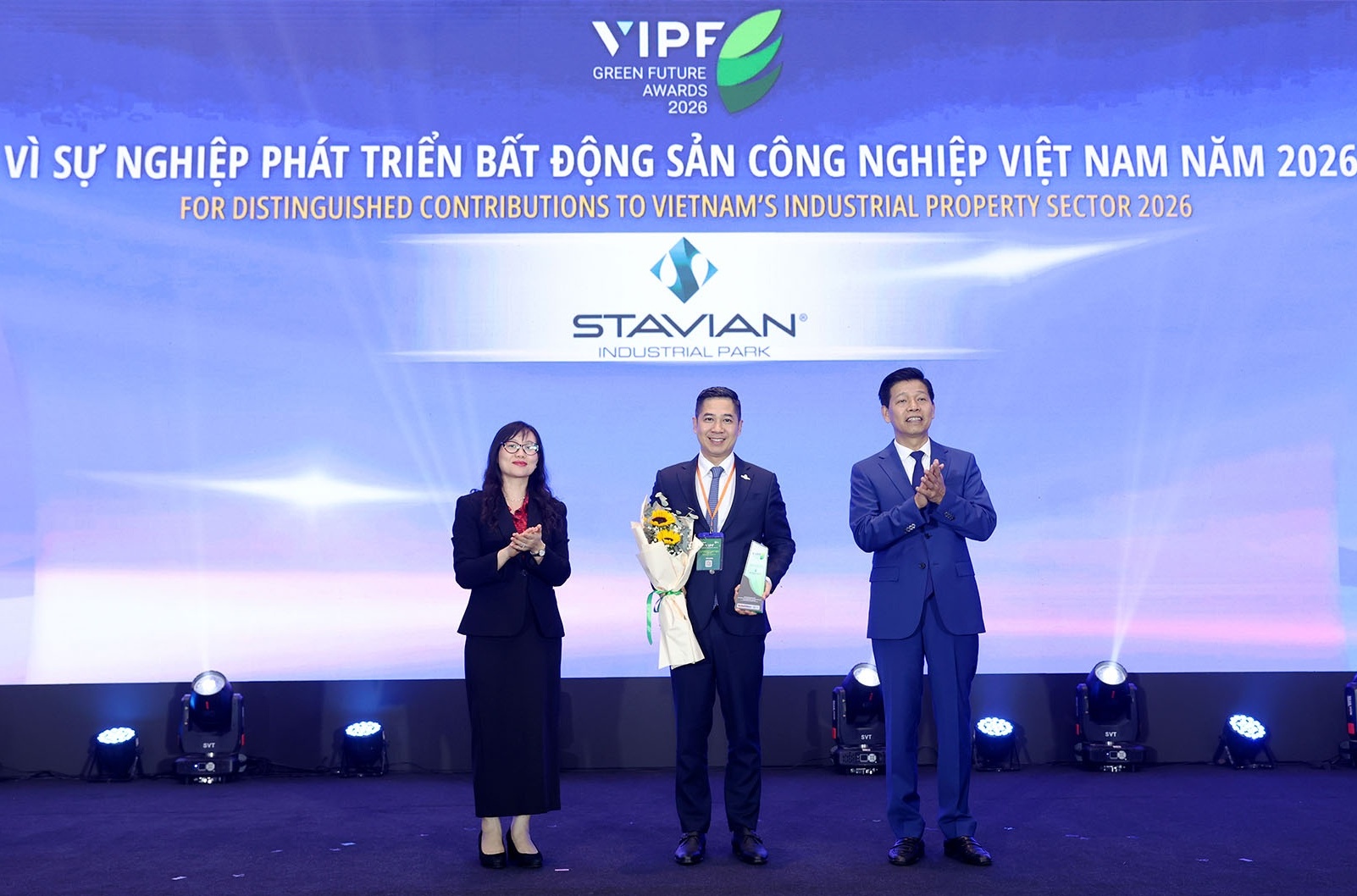
- Stavian IP accelerates its modern expansion (October 02, 2026 | 14:00)
- ESG for future-ready industrial success (October 02, 2026 | 09:00)
- Green Future Awards honour five leading industrial park developers (October 01, 2026 | 22:20)
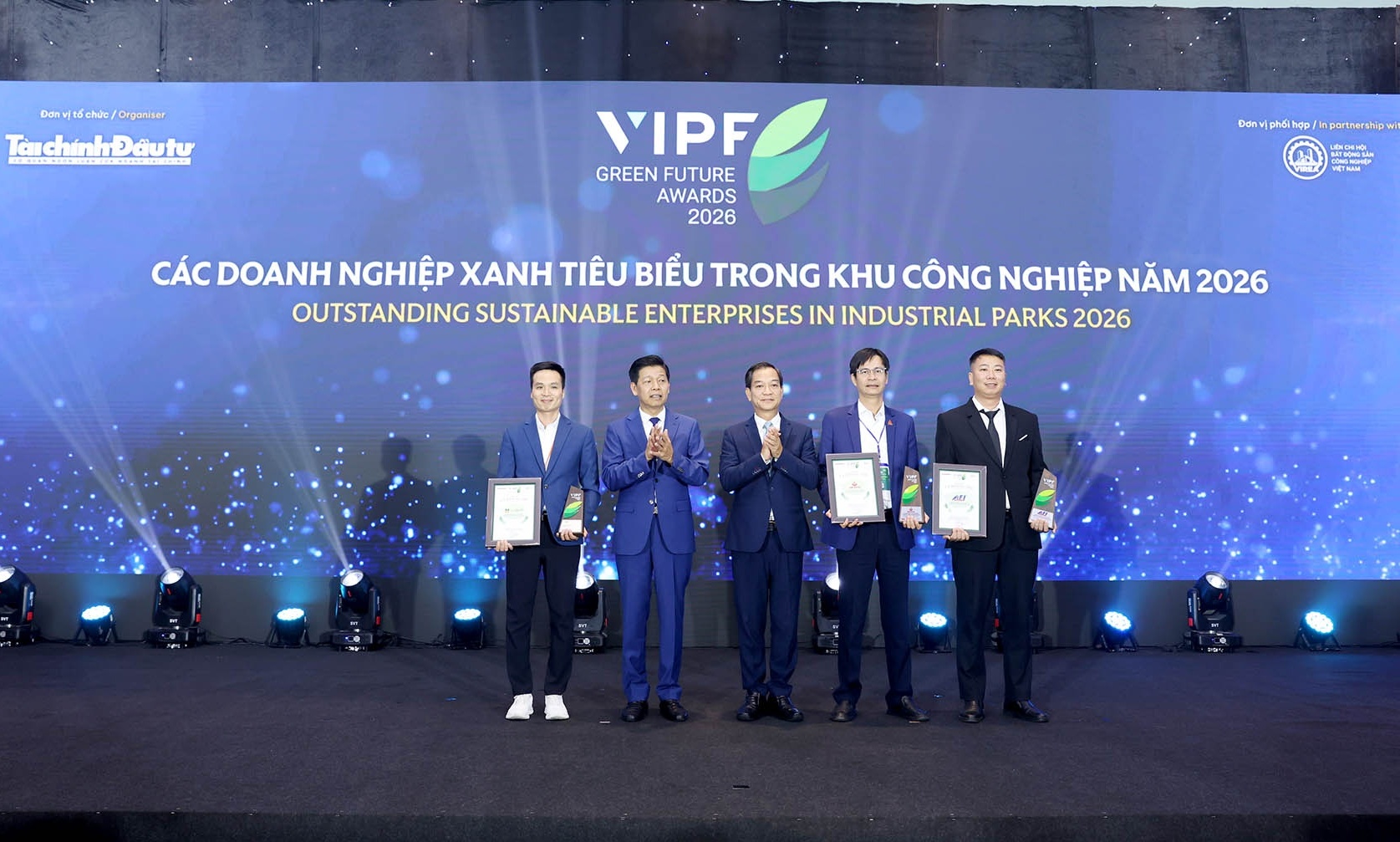
- Green transition leaders honoured at Green Future Awards 2026 (October 01, 2026 | 22:10)
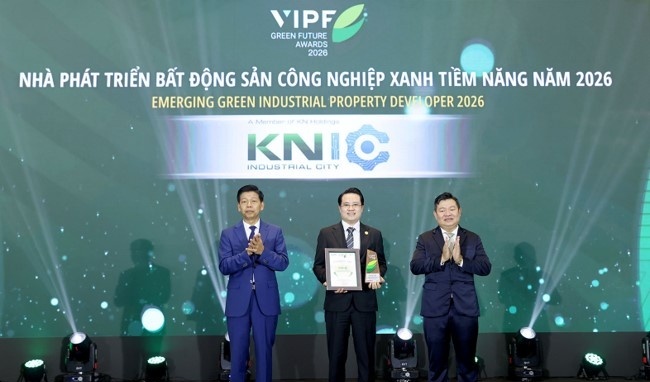
- Six developers honoured as Emerging Green Industrial Property Developers (October 01, 2026 | 22:00)
- Why logistics will define the next phase of growth (October 01, 2026 | 09:00)
- Urban Development Law takes effect on October 1 (September 30, 2026 | 17:49)
- Phu My Hung to demolish Lawrence S. Ting Building for new development (September 30, 2026 | 17:43)



Latest News





 Mobile Version