
From loans to women’s economic empowerment

Expanding economic opportunities
In Danang, policy credit is being used by many women to start or expand their production and business activities. Doan Ngoc Chung, director of the Danang Branch of the Vietnam Bank for Social Policies (VBSP), said that in 2025, the Danang Branch of VBSP disbursed loans through the Vietnam Women’s Union to 26,774 customers, with total disbursements of $78.72 million. In the first eight months, the corresponding figures were 16,369 customers and $56.52 million.
Danang is one example of a broader flow of policy credit being deployed nationwide. According to VBSP data, as of June 30, outstanding policy credit managed in coordination with socio-political organisations reached $17.88 billion, accounting for 98.39 per cent of the bank’s total outstanding loans.
Outstanding loans managed through the Vietnam Women’s Union alone reached $6.69 billion, an increase of $552.04 million from the end of 2025 and accounting for 37.40 per cent of total entrusted outstanding loans. The union manages 59,770 Savings and Credit Groups, serving nearly 2.5 million customers.
This scale shows that women are among the major beneficiaries of policy credit, with demand for financing coming not only from those who already operate production or business establishments, but also from those seeking to establish new livelihoods.
Depending on the specific programme and eligibility requirements, women can access financing for poor households, near-poor households, households that have recently escaped poverty, as well as programmes supporting job creation, job retention and expansion, alongside various other policy credit programmes.
For a woman starting a business, a loan may be used to purchase breeding stock, invest in livestock facilities, purchase inventory, or supplement working capital. For those who already have an established business model, financing can help expand its scale and generate additional income.
“The effectiveness of the capital must first stem from the borrower’s own capacity and the actual conditions of the family. A good business plan does not necessarily have to involve a large-scale model,” Chung said. “For many households, a small production facility, a small shop, a herd of livestock, a suitable production model, or a service business with stable demand can all generate significant income. What matters is that the loan is used for its intended purpose, in line with the planned business model, and has the capacity to generate income for debt repayment.”
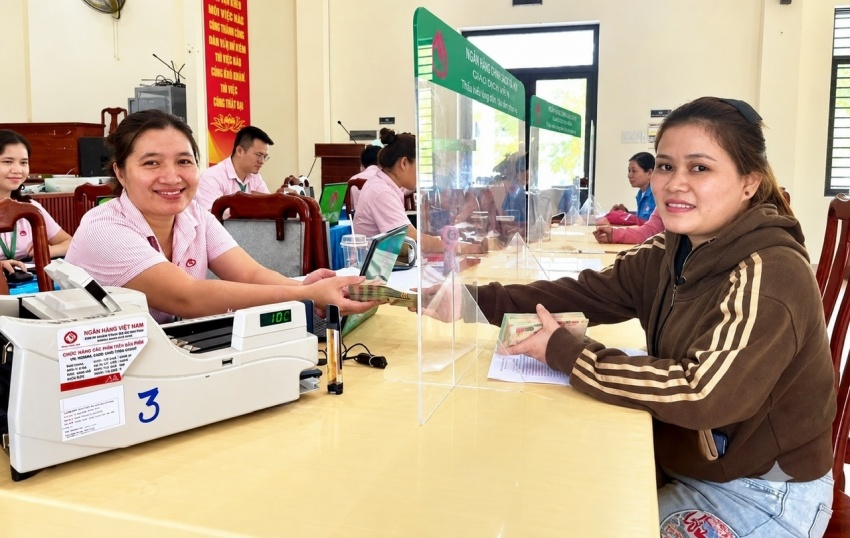 |
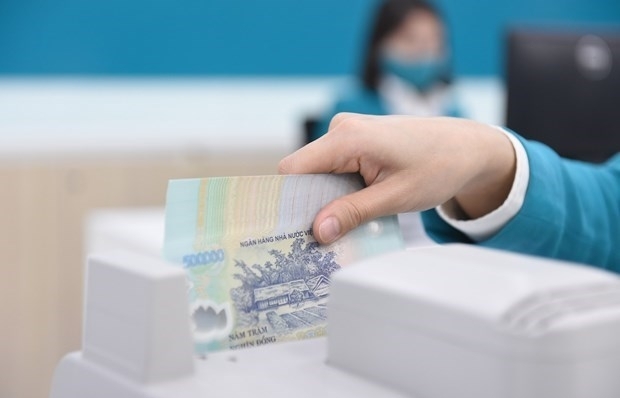
| Policy credit is expanding women’s access to finance. Photo: VBSP |
More than just a loan
For a production or business model to operate effectively, borrowers need to understand how they will use the funds, who will buy their products, and how cash flow will be generated and recycled. This is why policy credit is organised in close coordination with local authorities and entrusted socio-political organisations.
At the grassroots level, these organisations work together to communicate policy information, provide guidance, assess loan applications, conduct monitoring and accompany borrowers throughout the lending process.
The Vietnam Women’s Union plays an important role in bringing financing closer to its members. The network of Savings and Credit Groups provides an additional community-level channel through which borrowers can exchange experience, maintain savings and jointly monitor the use of funds. As of June 30, the four entrusted socio-political organisations were managing 165,185 Savings and Credit Groups, of which 87.72 per cent were rated Good.
For women, this support is particularly meaningful because many loans are directly linked to household economic activities. A small shop, livestock model, production facility or service business can be established with a relatively modest amount of capital. Once a stable income is generated, women gain greater financial resources and a stronger degree of economic independence within their households.
However, for these efforts to go further, capital needs to be embedded within a broader support ecosystem.
“Alongside access to capital, borrowers also need support in production knowledge, management, sales skills, technology adoption and market linkages. This is also an area where the Vietnam Women’s Union and other socio-political organisations can play a very effective role,” Chung said.
From a nationwide perspective, the nearly $6.7 in outstanding loans managed through the Vietnam Women’s Union, serving nearly 2.5 million customers through 59,770 Savings and Credit Groups, demonstrates how policy credit is becoming increasingly closely connected with women’s economic activities and livelihoods.
The value of this capital therefore lies not only in the amount of money reaching borrowers, but also in its ability to support sustainable economic activities, turning a small-scale model into a stable source of income, and enabling women who contribute to their household economies to become creators of additional employment for others.
 | The ‘infrastructure’ connecting VBSP with borrowers Vietnam’s policy credit system relies on a grassroots network that connects VBSP with borrowers, channels capital to communities, monitors its use and strengthens financial discipline. |
 | How policy loans help STEM students build their future For many families, policy loans do more than ease the cost of university education – they give young people the time and opportunity to build skills, earn income, and gradually become financially independent. |
 | Policy credit builds sustainable livelihoods from the grassroots Policy credit is reaching deeper into local communities, turning modest loans into productive livelihoods, jobs and income while creating a grassroots mechanism for sustainable economic development. |
What the stars mean:
★ Poor ★ ★ Promising ★★★ Good ★★★★ Very good ★★★★★ Exceptional
 Tag:
Tag:
Related Contents


Latest News




More News
- TPBank secures $50 million from DEG for green and SME lending (October 21, 2026 | 14:43)
- Citi set for record year across ASEAN Investment Banking (October 19, 2026 | 17:49)
- Vietnam and Switzerland to deepen financial cooperation (October 19, 2026 | 13:24)
- Carbon finance hinges on viable ventures (October 19, 2026 | 09:59)
- AI to transform the future of finance (October 19, 2026 | 09:04)
- Government proposes relaxing IPO conditions (October 19, 2026 | 08:00)
- Citi warns of intensifying competition for capital amid higher rates (October 16, 2026 | 16:54)
- Banks poised for Q3 profit growth amid margin pressure (October 16, 2026 | 16:51)
- Eximbank to strengthen corporate governance structure (October 16, 2026 | 11:32)
- Citi honours 13 banks with 2025 STP Awards (October 15, 2026 | 16:01)








 Mobile Version