
Beyond loans, veterans turn capital into sustainable livelihoods

The common thread among many veteran-led economic models lies less in the scale of investment than in how they began. Behind today’s fruit orchards, livestock farms and seedling nurseries is often a period of limited capital, even as the need to expand production becomes increasingly clear.
Against this backdrop, the entrusted lending programme between the Danang Veterans Association and the Vietnam Bank for Social Policies (VBSP) goes beyond simply delivering capital to borrowers. From screening and approving eligible borrowers to monitoring the use of funds and organising training and technical transfers, the process is carried out in parallel to ensure that loans are used for their intended purposes and generate the greatest possible impact.
To date, the Danang Veterans Association has an outstanding loan portfolio of $112.2 million under the entrusted lending programme, serving 38,616 borrowers. The overdue loan ratio stands at just 0.04 per cent. The figures reflect the quality of the credit portfolio and the sustainability of the entrusted lending model, in which access to capital is accompanied by support from the association throughout the borrowing and investment process.
According to Le Trung Chinh, deputy head of the Danang's Veterans Affairs Division, the association conducts open and transparent screening to ensure loans reach the right beneficiaries. It also works with relevant agencies to organise training and provide technical guidance, giving members greater knowledge to improve production.
As a result, loans help address initial funding shortages while creating conditions for many veterans to gradually develop stable economic models.
The effectiveness of this approach is most evident in individual production models, where the value of a loan is measured not simply by repayment capacity but by the changes it brings to borrowers' livelihoods.
After being discharged from the military in 1987, Nguyen Ngoc Son, born in 1965 and now living in Hamlet 3, Thanh Binh Commune, returned to his hometown facing numerous difficulties. For years, he combined agricultural production with training courses on crops and livestock, building up his knowledge and experience before deciding to expand his economic model.
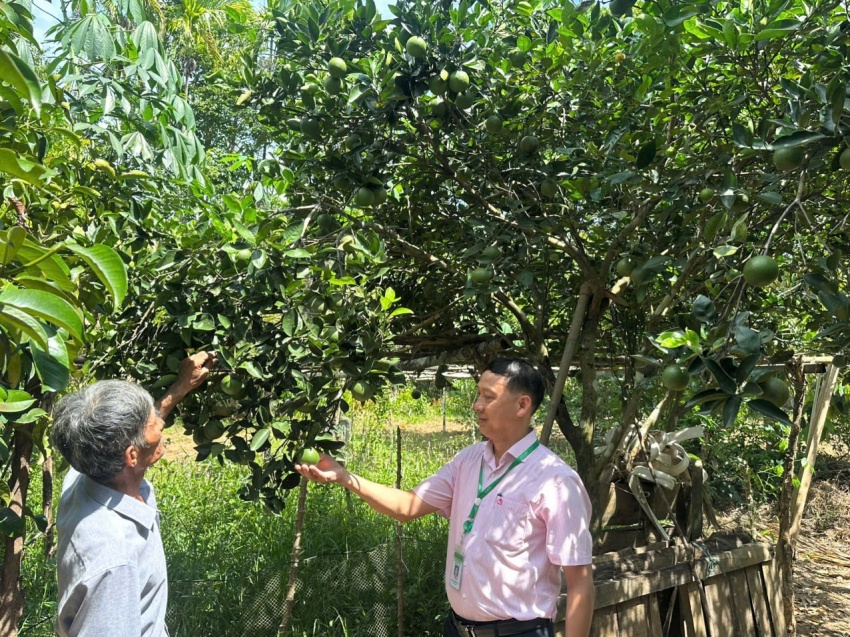 |
| Nguyen Ngoc Son combines agricultural production with training courses on crops and livestock to build up knowledge and experience before expanding his economic model. Photo: Hong Dung |
In 2021, he borrowed $4,000 from the Tien Phuoc Transaction Office of VBSP to renovate his garden, grow pepper and fruit trees, and develop livestock production. His family has since established a production model covering 1.5 hectares of fruit trees, 300 chickens, two buffaloes and three hectares of acacia forest, generating average annual income of more than $5,200.
Beyond developing his family's livelihood, Son has donated land for road construction, planted flowers along village roads and shared his production experience with other local households. His initial loan has therefore helped raise household income while enabling production knowledge to be shared more widely within the community.
Another path has been taken by Nguyen Trinh, a member of the Veterans Association in Huong Tra Ward. From a $2,000 loan in 2023, he invested in a seedling nursery covering more than 3,000 square metres, while adding his own capital to install an automated irrigation system, netting and production infrastructure.
The model now has total capital of around $24,000 and supplies hundreds of thousands of seedlings of various types to the market each year. It generates stable annual income of $4,000-4,800, while providing regular employment for two workers and seasonal jobs for five others.
The two models pursue different production strategies, but share a common starting point: relatively modest loans. Their success has been shaped by how borrowers acquire knowledge, select suitable investment directions and gradually expand production.
According to Doan Ngoc Chung, director of the Danang branch of VBSP, veteran members consistently use loans for their intended purposes, fulfil their repayment and interest obligations, and actively participate in savings and credit groups.
The experiences of these borrowers show that the impact of policy lending cannot be measured solely by the amount of capital disbursed. Its greater value lies in turning capital into viable production models, creating employment and enabling veterans to continue demonstrating initiative and responsibility in economic development and contributing to their local communities.
 | Policy lending accelerates in first half with $19 billion in loans Policy lending gathered pace in the first half of 2026 as the Vietnam Bank for Social Policies expanded concessional financing, creating jobs, supporting underprivileged groups and reinforcing the country's social security and inclusive growth agenda. |
 | VBSP brings commune banking services into digital space While preserving its nationwide commune transaction network, the Vietnam Bank for Social Policies is accelerating digital transformation, enabling customers to access policy credit services, information and transactions more conveniently. |
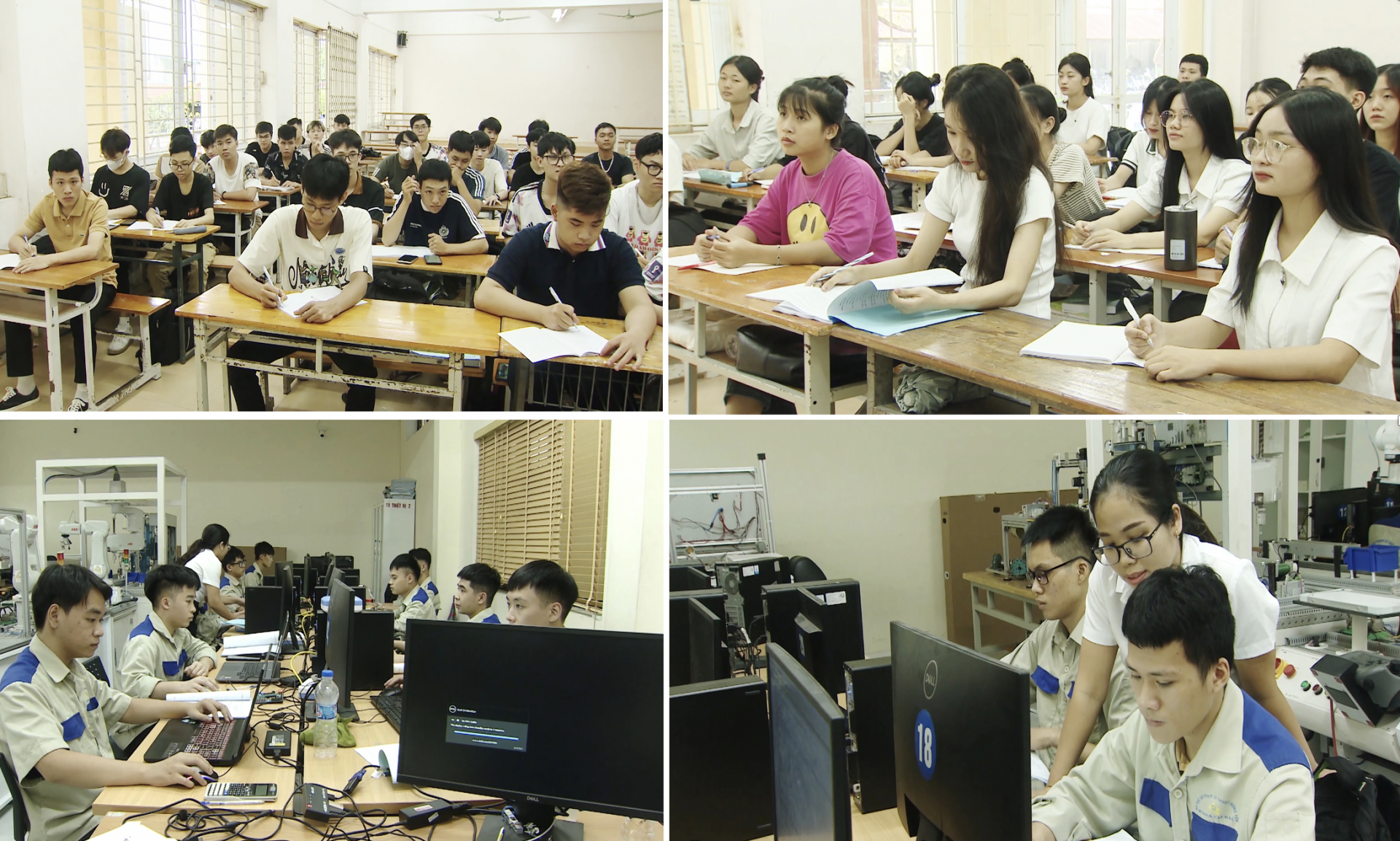 | Financing education and building future human capital Nearly two decades after its launch, Vietnam Bank for Social Policies' student loan programme has helped more than four million disadvantaged students stay in education, underscoring how concessional credit can serve not only as a social safety net but also as a strategic investment in Vietnam's future workforce. |
What the stars mean:
★ Poor ★ ★ Promising ★★★ Good ★★★★ Very good ★★★★★ Exceptional
 Tag:
Tag:
Related Contents




Latest News





More News
- Nam A Bank named in top 10 largest listed banks in Southeast Asia (October 13, 2026 | 09:46)
- Citi appoints Michael Zezas as global head of research (October 12, 2026 | 17:23)
- From carbon value to greener capital (October 12, 2026 | 09:15)
- From cost advantage to ecosystem strength (October 12, 2026 | 09:00)
- Corporate treasury on the cusp of AI transformation (October 12, 2026 | 08:00)
- Vietnam strengthens global credit standing with R&I upgrade to BBB (October 09, 2026 | 16:56)
- From risk to reputation: Jason Ho on what makes a bank worthy of trust (October 08, 2026 | 14:00)
- Building Vietnam’s next chapter of FDI growth (October 08, 2026 | 12:15)
- Policy loans open new paths for people rebuilding their lives (October 07, 2026 | 17:24)
- FTSE upgrade opens door to $2 billion in passive fund inflows (October 07, 2026 | 12:12)







 Mobile Version