
Empowering enterprises with their R&D undertakings

This trio is the main driving force for the country’s development in the new era, and are also the three main driving forces for the private economy to take on the most important driving force, the pioneering role in the country’s development.
 |
| Nguyen Manh Hung, Minister of Science and Technology |
The new Law on Science, Technology and Innovation has an important innovation, which is that sci-tech must aim for innovation to enhance national competitiveness, boost socioeconomic development, and improve people’s quality of life.
For the first time, innovation has been included in the law and placed on par with science and technology, reflecting a fundamental change in Vietnam’s development thinking.
The Party and state have a strategic orientation to shift from a country that uses technologies to mastering strategic ones. The state budget will invest with focus, priority, and allocate about 40-50 per cent of resources to carry out the tasks of mastering strategic tech and products.
The implementation of these tasks will be assigned to national enterprises and domestic research organisations, regardless of whether they are state-owned or private ones. This is the trust that the Party and the state have in Vietnamese tech enterprises.
Businesses that want to compete must innovate technology. Meanwhile, those that want to lead must carry out research and development (R&D).
The newly-passed Law on Science, Technology, and Innovation has many important innovations. Accordingly, 1 per cent of the annual state budget, or about $1 billion, will be spent to support tech innovation enterprises, mainly through a loan interest rate support mechanism.
The state establishes a national fund for technology innovation to do this.
The government encourages businesses to spend on R&D through tax policies. Previously, the state budget did not fund R&D of enterprises, but was mainly spent on institutes and universities. Now, 70-80 per cent of the state budget for science and technology will fund enterprise R&D.
Although small and medium-sized enterprises (SMEs) lack both money and manpower, the state can support the development of shared national digital platforms. Then, SMEs can use them as services without having to invest, at reasonable prices, with state support. This is the fastest way to innovate and digital transformation in SMEs.
The Ministry of Science and Technology (MoST), in coordination with the Ministry of Education and Training, assigned the Academy of Posts and Telecommunications Technology and a number of key technical universities to implement a programme to send 10,000 final-year students in IT directly to 10,000 SMEs to support the use of digital platforms for them, with each student to stay at the enterprise for a couple of weeks.
The government is directing the MoST to support the completion of digital platforms for accounting, tax declaration, online marketing, warehouse management, employee management, and others so that business households do not have to hire these types of workers when converting to enterprises.
We have about five million business households, and a very dynamic business force. If we convert them into enterprises and make good use of relevant tools, they can expand their scale, contributing to economic growth.
To form large Vietnamese enterprises, the state has a policy of assigning large national projects to national enterprises, along with the requirement of mastering technology and forming domestic industries, for example, the high-speed railway project. This is an excellent way to form large national enterprises.
To accelerate such a transformation among enterprises, the government must first digitalise its transactions with enterprises, transactions and provision of contactless public services to enterprises.
To legalise this evolution, the Central Steering Committee 57 and the government have assigned the MoST to develop and submit the Digital Transformation Law to the National Assembly for approval this year. Vietnam is among the very few countries that have their own law on this issue.
This demonstrates the strong political determination of the Party and state for digital transformation for all people and in a comprehensive manner, considering this as a breakthrough solution to create new land and new space for socioeconomic development, for national governance innovation, and for sci-tech development and innovation.
 | Three decades of pioneering R&D in alloy-coated steel NS BlueScope Vietnam has spent 30 years asserting a sharp presence in the market, writing a story of pioneering research and development. Vice president of NS BlueScope Vietnam Dang Thanh Hung shared details of the journey of the Australia-based alloy-coated steel brand with VIR’s Bao Giang. |
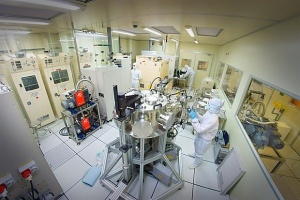 | VCCI calls for greater support for R&D costs of FDI firms The Vietnam Chamber of Commerce and Industry (VCCI) has proposed increasing the support for research and development (R&D) costs to over 50 per cent for foreign direct investment (FDI) businesses, it said in policy feedback requested by the Ministry of Planning and Investment. |
 | New SABECO R&D brewery to foster employee creativity Saigon Beer-Alcohol-Beverage Corporation last week inaugurated a cutting-edge SABECO Beer Research and Development Centre to help brewers and young engineers attain the best environment for the process of creating quality products. |
What the stars mean:
★ Poor ★ ★ Promising ★★★ Good ★★★★ Very good ★★★★★ Exceptional
 Tag:
Tag:Related Contents




Latest News





More News
- Values-driven leadership at Standard Chartered Vietnam (February 17, 2026 | 10:00)
- Foreign executives assess Vietnam business outlook for 2026 (February 16, 2026 | 09:00)
- FV Hospital CFO honoured by UK magazine (February 12, 2026 | 13:04)
- From Vietnam to the world: Pizza 4P’s global journey (January 28, 2026 | 10:58)
- Carlsberg Vietnam makes progress in diversity, equity and inclusion (January 24, 2026 | 10:17)
- New generation of CEOs and 'Think Big' mindset: thinking ahead to go the distance (January 08, 2026 | 11:03)
- Digital shift reshaping Vietnam’s real estate brokerages (December 31, 2025 | 18:54)
- Allen & Gledhill recognised as Outstanding M&A Advisory Firm (December 18, 2025 | 14:19)
- Inside Lego Manufacturing Vietnam (December 18, 2025 | 11:45)
- The next leap in Cloud AI (December 11, 2025 | 18:19)









 Mobile Version