

Copenhagen Infrastructure Partners backs Vietnam’s offshore wind ambitions

 |
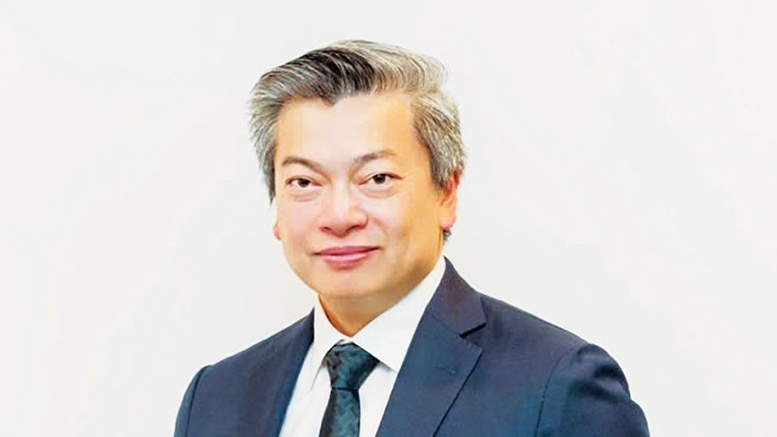
Following the recent signing of a Joint Development Agreement with PetroVietnam to advance Vietnam’s first offshore wind project, CIP is refining its strategy to drive the nation’s energy transition. In this interview, Antonioli shares insights into CIP’s priorities, the challenges ahead, and the steps needed to unlock Vietnam’s offshore wind (OSW) potential.
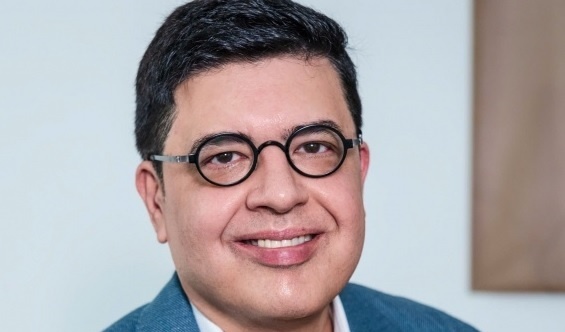
Congratulations on your new role as the senior leader of CIP and COP in Vietnam. Could you tell us a bit about your background and share your initial impressions of Vietnam’s energy landscape?
It is a privilege to take on this role at a time when Vietnam is making decisive moves in its energy transition. My background spans almost two decades in the energy industry, beginning with engineering roles at General Electric and later senior leadership positions at BP, where I focused on OSW markets across Europe and Asia, including Vietnam.
These experiences have given me a clear perspective on what it takes to bring OSW from concept to reality: a strong technical foundation, access to international finance and more crucially, a clear, transparent regulatory framework to underpin a long-term pipeline of projects. These are arguably some important requirements that international companies assess when committing to a market and, indeed, a country.
What impresses me most about Vietnam is how many of the conditions are already in place. The country benefits from world-class wind resources, favourable seabed conditions, and rapidly growing energy demand driven by the government’s ambition for sustained double-digit economic growth. At the same time, Vietnam has shown a strong commitment to cleaner energy, supported by a skilled workforce and a domestic supply chain eager to participate in OSW development.
What strengths or experience do you believe best position the company to contribute to Vietnam’s OSW development?
CIP is the world’s largest dedicated investor in green-field renewable energy, with a portfolio spanning Europe, North America, and Asia-Pacific. We have successfully delivered some of the most complex and large-scale OSW projects in the world, including Veja Mate - one of Germany’s largest OSW farms at the time of its commissioning in 2017, Changfang and Xidao - recognised for achieving one of the highest localisation ratios in Taiwan’s OSW sector, and Zhongneng - a joint venture between CIP and a state-owned corporation, combining international investment and expertise with domestic industrial capabilities to deliver one of Taiwan’s most advanced renewable energy projects.
These achievements are not just about scale, they are also about navigating new markets, building trust with governments and communities, and creating the conditions for long-term industry growth. In Vietnam, we will bring this proven know-how, from project design and bankable financing structures to stakeholder engagement and supply chain development, and tailor it to Vietnam’s unique context. Our goal is to deliver world-class OSW projects while helping to unlock Vietnam’s first wave of developments that will lay the foundation for a new sustainable energy industry.
What will your main focus be as you lead CIP and COP’s journey in Vietnam?
As the Vietnam CEO of COP, the exclusive OSW development partner of CIP, my role is to translate CIP and COP’s global OSW expertise into concrete results for Vietnam. I will lead the commercial and strategic direction of our portfolio, taking responsibility for early-stage development decisions and ensuring that every venture we pursue is bankable, capable of reaching financial close, and ready for construction. I will also be responsible for identifying new investment opportunities that support CIP’s broader long-term strategy in the country.
At the same time, I will work closely with government leaders, local partners, and other stakeholders to help shape a clear and enabling framework for investment. Equally important, I am committed to building Vietnam’s long-term capabilities through transferring international expertise, strengthening the domestic supply chain, and creating opportunities for Vietnamese professionals to lead in this emerging industry.
With the recent Joint Development Agreement between CIP and PetroVietnam, how do you view the importance of this partnership and the roadmap ahead?
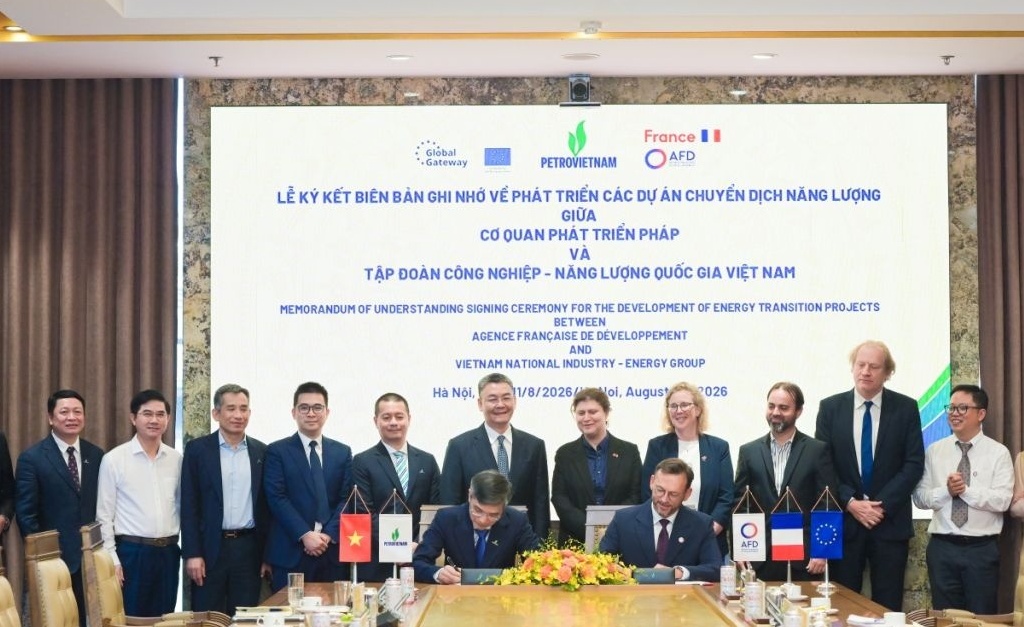
The Joint Development Agreement marks an historic step, both for CIP and for Vietnam’s energy sector. For CIP, it underscores our long-term commitment to Vietnam, bringing global expertise and capital to support the country’s clean energy ambitions. For Vietnam, it signals that international investors with OSW know-how and domestic partners with unmatched offshore engineering experience can join forces to deliver world-class projects. It is particularly meaningful that this milestone coincides with PetroVietnam’s 50th anniversary, a moment to honour its legacy in traditional energy while also embracing a new era of green energy.
Looking ahead, CIP and PetroVietnam working groups will deepen collaboration to advance an OSW project in Vietnam’s south-central region, with an expected capacity of 1-2 GW, which is poised to become one of Vietnam’s first OSW farms. At the same time, we will continue to explore new investment opportunities to support Vietnam’s energy transition and build a sustainable, diversified, and long-term portfolio.
 | Denmark's CIP ties up with Petrovietnam to develop offshore wind Denmark's Copenhagen Infrastructure Partners (CIP), through its CI GMF II Cooperatief UA fund, signed a Joint Development Agreement (JDA) with Petrovietnam to develop offshore wind ventures on August 22. |
 | Energy progress anticipated if investors remain enticed As Southeast Asia navigates its energy transition, the trio of offshore wind, battery storage, and green hydrogen emerges as game-changers. Trung Ghi, partner and head of the Energy & Utilities Practice at Arthur D. Little, talked to VIR’s Hara Nguyen about how Vietnam can build a resilient low-carbon future. |
 | Petrovietnam starts O Mon IV plant to power energy future Petrovietnam has started work on a flagship power project in the Mekong Delta city of Can Tho, pushing forward Vietnam’s gas-to-power development. |
What the stars mean:
★ Poor ★ ★ Promising ★★★ Good ★★★★ Very good ★★★★★ Exceptional
 Tag:
Tag:Related Contents





Latest News


More News
- DSV backs Vietnam's push for more sustainable logistics (August 04, 2026 | 17:10)
- Roche Pharma Vietnam appoints new general manager, reinforcing commitment to Vietnam healthcare (July 23, 2026 | 15:41)
- Constant Energy on Vietnam solar power and policy hurdles (July 22, 2026 | 08:00)
- Key points when drafting a company charter to reduce disputes in Vietnam (July 20, 2026 | 08:00)
- AkzoNobel executive on sustainability as a manufacturing growth driver (July 10, 2026 | 14:53)
- LivWell expands holistic health ecosystem for businesses and communities in Vietnam (July 09, 2026 | 16:43)
- Thai beverage group sees Vietnam as long-term growth partner (July 02, 2026 | 08:30)
- AstraZeneca chief on Vietnam's healthcare financing shift (June 30, 2026 | 16:47)
- Vietnam emerges as one of VistaJet’s fastest-growing markets (June 18, 2026 | 16:21)
- Goldwind Asia chief on driving quality growth in wind sector (June 15, 2026 | 17:54)


Latest News





 Mobile Version