A Hong Kong artist joined Bupa Global's Express Your Health campaign, highlighting new research that 85% of people agree creative activities can support mental and physical health.
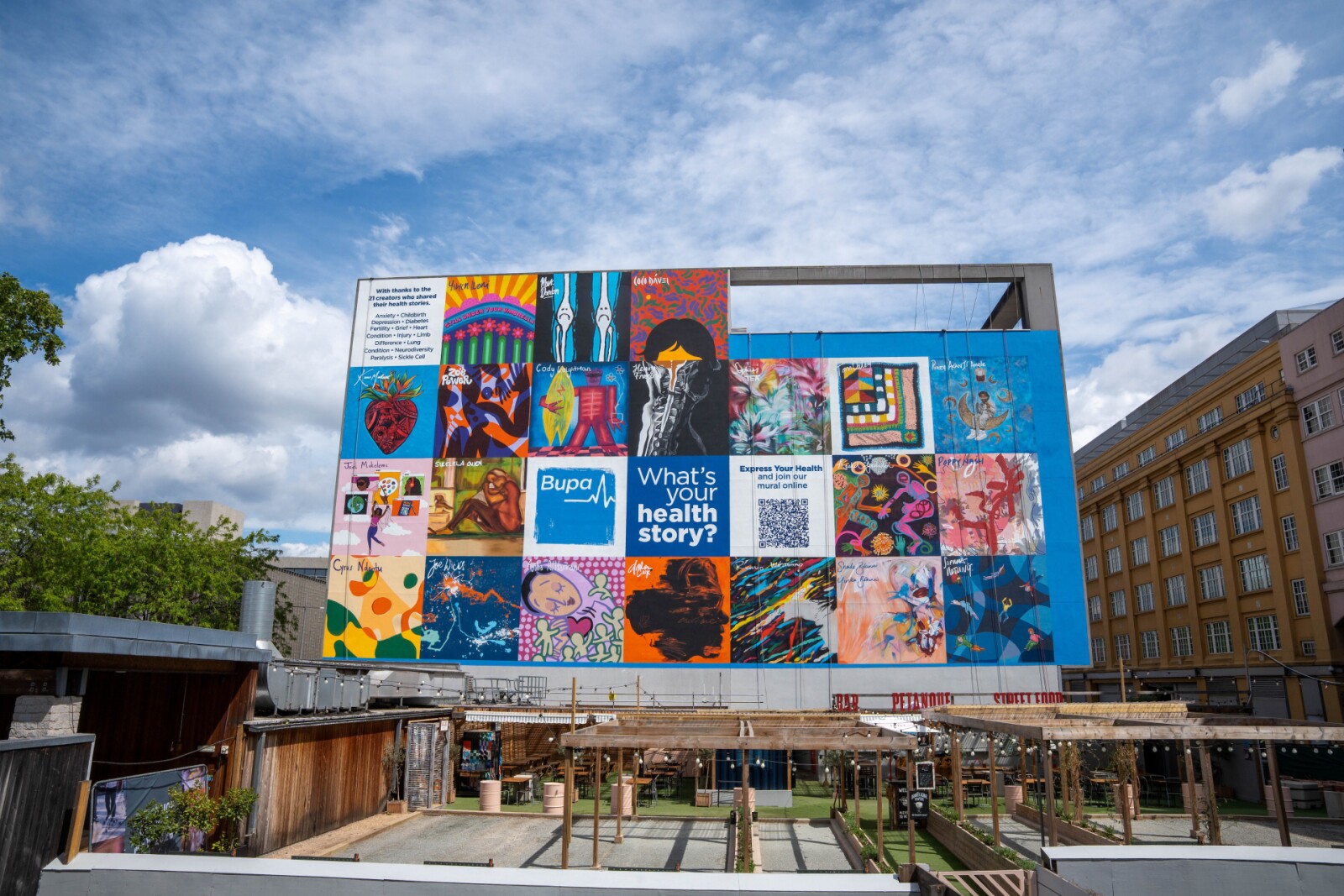
HONG KONG SAR - Media OutReach Newswire - 19 May 2026 - New research commissioned by Bupa (a survey of 4,000 adults in the UK, Spain and Australia) found that while 85% recognised that hobbies like drawing, doodling, painting or crafts can have a positive impact on health and wellbeing, 55% of those who don't make time for creative activities said they can't remember the last time they did any (and among those who could remember, 35% said it was more than a year ago). The survey points to a broader challenge many people face in making time for creativity as part of overall wellbeing. Almost half (47%) of people don't spend any time on creative activities, with around a quarter quoting lack of time (24%), lack of inspiration (26%) and tiredness after work (28%) as some of the biggest barriers. As part of Bupa’s Express Your Health campaign, the hand-painted mural on London’s Southbank brings together powerful health stories expressed through art by more than 20 creators from around the world. The findings spotlight a strong yet often overlooked connection between creativity and health and coincide with the launch of Express Your Health – Bupa's new campaign celebrating creativity as a powerful way to share health experiences and encouraging people to open up so they can feel less alone and empowered to seek care.
Contributors include Hong Kong-based digital artist Sophia Hotung, who shares her story of autoimmune relapse and how art gave her a way to express and make sense of her experiences with illness. Other creators include Olympic diver Tom Daley, Paralympian Richard Whitehead and Australian Football League player Cody Weightman. The mural represents stories spanning fertility, sickle cell, diabetes, anxiety, ageing, grief, and more, showing how art can express the physical, mental and emotional sides of health.
Sophia Hotung, who created a piece of artwork for the campaign, said,"For me, art is a way to express and understand my life experiences, which include moments of disability, limitation, and illness. After autoimmune relapses left me bedbound, I taught myself digital art, transforming what was isolation and hopelessness into a creative practice on my own terms. Digital art enables and empowers me to create, even when my body is limited. Entering that flow state of creation allows me both to escape and ground myself through stretches of joy and difficulty. I love that this campaign facilitates authentic creative expression about and through illness and I'm proud to work with Bupa to show others the powerful and positive impact of art on wellness."
Global studies are increasingly showing that even short bursts of creativity can benefit health. 30–45 minutes of activities like art, regardless of skill, has been shown to reduce stress and anxiety, with measurable drops in physiological markers of stress including the hormone cortisol.[1] Other research shows art can support mental wellbeing[2] and help people process life experiences and emotions[3].
Fiona Bosman, Group Brand Director, said, "This work highlights something we see globally: when people are given the space to share their health experiences, it can be transformative. Through this campaign, we're encouraging people to express themselves creatively, because when words are hard to find, creativity can help us process, communicate and connect, and ultimately take greater control of our health."
Bupa is inviting people around the world to share their health story through creativity and be part of a growing global collection on the campaign site Express Your Health. People in Hong Kong can also take part by submitting their own creative expression to the online collection. Tips and prompts are available to help people get started with a simple 30-minute creative activity.
The research was carried out by Opinium. 4,000 people were surveyed online in the UK, Spain and Australia. Quotas were set to ensure respondents were nationally representative of age (18+), gender and region for each country. Fieldwork took place between 13-20 April 2026.[1] Reduction of Cortisol Levels and Participants' Responses Following Art Making - PMC
[2] Arts, mental distress, mental health functioning & life satisfaction: fixed-effects analyses of a nationally-representative panel study - PubMed
[3] How the arts heal: a review of the neural mechanisms behind the therapeutic effects of creative arts on mental and physical health
The issuer is solely responsible for the content of this announcement.


 Tag:
Tag:






 Mobile Version