
Vietnam ranks as third-largest coffee and tea market in Southeast Asia

 |
The "Coffee & Tea Chains in Southeast Asia 2026" report reveals that Vietnam's modern coffee and tea market was valued at $1.34 billion in 2025, with a number of local chains of significant size. Vietnam is the third-largest market behind Indonesia and Thailand.
Vietnam's coffee chain segment reached a gross merchandise value of $725 million in 2025, an increase of 27 per cent from $572 million in 2024. The country is one of the fastest growing coffee chain markets, expanding 27 per cent as modern coffee chains rapidly scale store networks and consumer adoption of branded coffee increases.
Meanwhile, Vietnam's tea chain segment posted a gross merchandising value of $617 million last year, rising 28 per cent from $483 million in 2024. The country recorded strong growth as both customer segments and frequency of tea drinking expanded.
Modern coffee and tea in Southeast Asia continued robust growth, with total market size across the region reaching $9.9 billion in 2025, a 52 per cent growth from $6.5 billion in 2021.
This is a result of the rapid expansion of modern beverage chains, enabled by improved productivity through digitisation, expanded customer segments and the rise of online platforms across the region.
With maturing store networks and improving operational efficiency, productivity, customer experience, and store-level economics are becoming a bigger focus for the industry.
Coffee brands have demonstrated stronger scaling ability across the region, with multiple players surpassing the 1,000-store mark. This resonates well with typical coffee consumers’ consumption patterns, as well as the economies of scale of café operations.
In Vietnam, Milano Coffee is the only coffee chain surpassing the 1,000-store mark. With more than 2,000 outlets, Milano Coffee ranks behind Café Amazon (over 4,400 stores) and PunThai Coffee (over 2,200 stores), and is on par with Starbucks (over 2,000 stores).
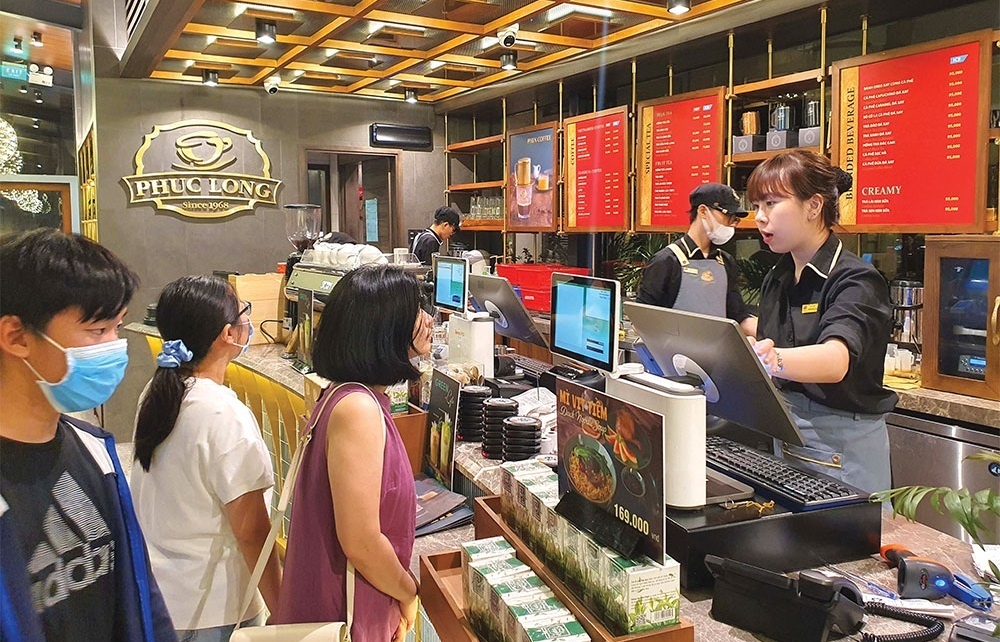
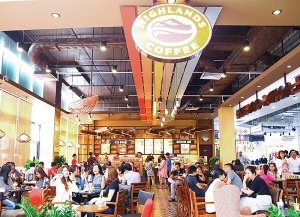 | Major coffee chains attempt to wade through price storm Beverage chains are struggling under the pressure of increasing selling prices due to sky-high costs of fuel and raw materials. |
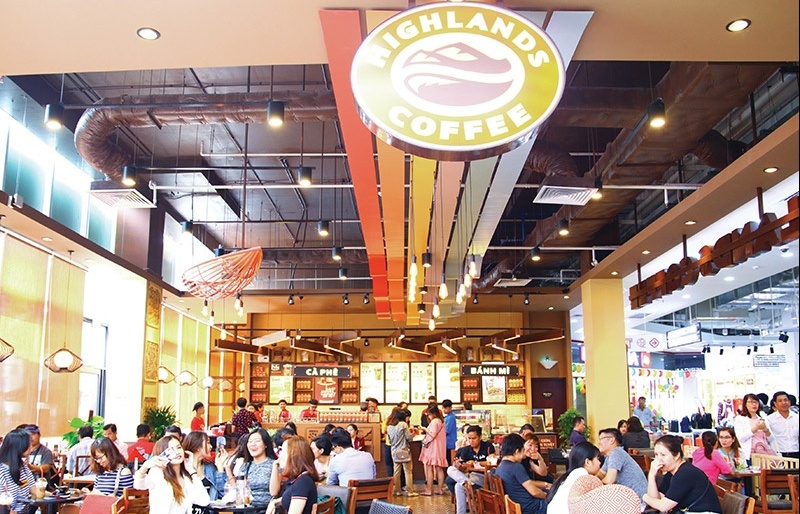
 | Drinks chains tinker with new models Many beverage chains have been forced to close their out-of-date business models, despite being effective during the pandemic and being good for brand building. |
 | Beverage chains take on new models While foreign beverage chains are gradually expanding their influence to second and third-tier urban areas, domestic brands are facing challenges in the race to expand market share. |
What the stars mean:
★ Poor ★ ★ Promising ★★★ Good ★★★★ Very good ★★★★★ Exceptional
 Tag:
Tag:
Related Contents
Latest News






More News
- Sojitz in Vietnam: 40 years from individual projects to a business cluster 'KATAMARI' (October 08, 2026 | 09:00)
- Coteccons targets 'Quality Growth' with 25 per cent dividend plan (October 07, 2026 | 13:00)
- Vietnam Education Forum opens UK Education Mission's Hanoi visit (October 07, 2026 | 12:27)
- Tax authorities deactivate TINs of nearly 180,000 businesses (October 07, 2026 | 12:08)
- World Bank raises Vietnam's 2026 GDP growth forecast to 7.4 per cent (October 07, 2026 | 11:41)
- Vietstock 2026 to spotlight livestock innovation and green transition (October 07, 2026 | 09:00)
- Vietnam’s GDP grows over 9 per cent in first nine months (October 05, 2026 | 18:45)
- Vietnam earns $56.3 billion from agro-forestry-fishery exports (October 05, 2026 | 18:32)
- DSV balances resilience and decarbonisation in supply chains (October 05, 2026 | 18:20)
- Electronics exports reach $175.4 billion in the first nine months (October 05, 2026 | 18:12)



Latest News





 Mobile Version