
Aircraft makers urge out-the-box thinking

At last week’s Singapore Airshow 2026, Vietnam emerged as a focal point in conversations about Asia’s next aviation growth frontier.
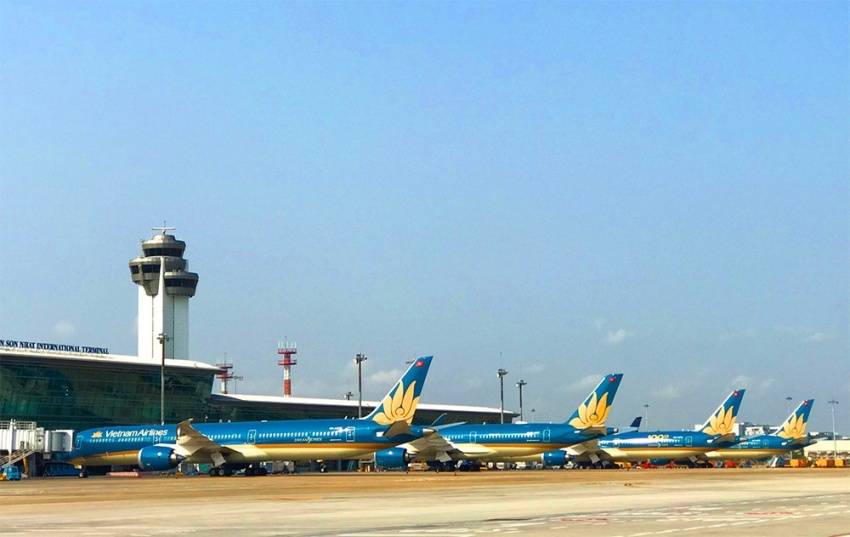
Two aircraft manufacturers, business jet provider Dassault Aviation and the world’s largest turboprop manufacturer ATR, arrived with a shared message: Vietnam’s aviation market is expanding rapidly, but its next phase of development will depend on filling structural gaps rather than adding more capacity on already crowded routes.
 |
| Aircraft makers urge out-the-box thinking |
Vietnam’s business aviation market remains small by regional standards, but Dassault Aviation sees clear momentum building. According to Carlos Brana, executive vice president for Civil Aircraft at Dassault, the growth trajectory mirrors patterns seen previously in other emerging Asian economies.
“Vietnam’s business aviation market is still young, but it is developing quickly,” Brana said. “Vietnam’s strong economic expansion, underpinned by industrialisation and deeper integration into global supply chains, is creating new mobility needs for companies operating across borders. As enterprises scale up, the limitations of scheduled airline networks become more apparent.”
The fundamental value proposition, he stressed, is time efficiency. Direct point-to-point travel between secondary cities can eliminate multiple stopovers, enabling companies to reach destinations that are poorly served or not served at all.
While Vietnam’s fleet of business jets remains modest compared with markets such as Singapore, Thailand or Indonesia, Dassault expects steady growth over the next 5-10 years as economic activity becomes more geographically dispersed.
Vietnam’s ongoing airport expansion is often cited as a constraint, but Dassault argues that business aviation is well-suited to operate within existing infrastructure. Business jets can operate from airports closer to final destinations, reinforcing their time-saving advantage. In many countries, including France, smaller airports rely heavily on business aviation to sustain operations, an experience Vietnam could replicate as its regional airport network expands.
While business aviation addresses a niche segment, ATR sees a much larger structural gap in Vietnam’s aviation ecosystem: the near absence of regional turboprop operations. Despite rapid traffic growth, turboprops – typically a hybrid aircraft engine that uses a gas turbine to drive a propeller – account for about 2 per cent of Vietnam’s commercial fleet.
Jean-Pierre Clercin, managing director and head of Asia-Pacific at ATR, said, “Vietnam’s aviation growth has concentrated on long-haul and high-density routes, north-south travel and international connectivity within ASEAN and beyond. For those markets, jets are the most efficient solution.”
That strategy has delivered impressive results, but it has also concentrated traffic heavily at a small number of airports. ATR research shows that roughly 90 per cent of Vietnam’s air traffic flows through just 10 airports, placing increasing pressure on major hubs.
“Smaller cities and secondary regions are growing economically, and residents increasingly aspire to move faster and more efficiently, not only by road but by air,” he added.
Turboprops, designed for short stage lengths and thinner routes, are well-suited to this next phase. ATR aircraft typically operate most efficiently on flights of around one hour, routes that are often unviable for jets due to cost structures.
Currently, Vietnam has approximately 22 operational civil airports. Of these, about 11 are international airports, and 11 are domestic airports. According to Vietnam’s national airport plan, Vietnam aims to expand its airport network to as many as 33 airports by 2030. Most recently, the Long Thanh International Airport, which underwent technical opening in late 2025, is expected to begin commercial operations in mid-2026.
ATR argues that the development of regional aviation is not just about domestic connectivity. Short-haul international routes linking Vietnam with neighbouring countries also offer strong opportunities, thanks to turboprop aircraft.
“The need for a thinner, more granular network will become unavoidable. This would help ease congestion at major hubs while making better use of investments in regional airports,” Clercin said.
“Policy support will be critical. Simplifying regulations for smaller airlines, reducing entry barriers and offering incentives such as lower airport fees on secondary routes could encourage new regional carriers to emerge. If the operating environment supports profitability, new regional airlines will follow,” he added.
In addition, the government has shown a proactive stance in facilitating regional aviation, even though the ecosystem remains at an early stage.
Despite serving different market segments, Dassault and ATR identify similar challenges when engaging with Vietnam. For Dassault, the main hurdle is familiarity. “In emerging markets, companies may be unfamiliar with aircraft ownership, operating costs and maintenance obligations,” Brana said, noting parallels with China’s early business aviation market.
ATR, meanwhile, points to competition for attention. With airlines focused on wide-body orders and international expansion, regional opportunities can be overlooked. “The key is finding entrepreneurs willing to build dedicated regional airlines,” Clercin said. “Regional aviation requires a different mindset.”
From a policy perspective in Vietnam, the revised Law on Civil Aviation, set to take effect in 2026, is expected to create a more enabling legal framework, widening the scope for private-sector participation in investment, operations and the development of aviation infrastructure.
What the stars mean:
★ Poor ★ ★ Promising ★★★ Good ★★★★ Very good ★★★★★ Exceptional
 Tag:
Tag:Related Contents





Latest News





More News
- Sojitz in Vietnam: 40 years from individual projects to a business cluster 'KATAMARI' (October 08, 2026 | 09:00)
- Coteccons targets 'Quality Growth' with 25 per cent dividend plan (October 07, 2026 | 13:00)
- Vietnam Education Forum opens UK Education Mission's Hanoi visit (October 07, 2026 | 12:27)
- Tax authorities deactivate TINs of nearly 180,000 businesses (October 07, 2026 | 12:08)
- World Bank raises Vietnam's 2026 GDP growth forecast to 7.4 per cent (October 07, 2026 | 11:41)
- Vietstock 2026 to spotlight livestock innovation and green transition (October 07, 2026 | 09:00)
- Vietnam’s GDP grows over 9 per cent in first nine months (October 05, 2026 | 18:45)
- Vietnam earns $56.3 billion from agro-forestry-fishery exports (October 05, 2026 | 18:32)
- DSV balances resilience and decarbonisation in supply chains (October 05, 2026 | 18:20)
- Electronics exports reach $175.4 billion in the first nine months (October 05, 2026 | 18:12)



Latest News





 Mobile Version