
ADB and GEAPP launch ENABLE platform to fast-track battery storage adoption

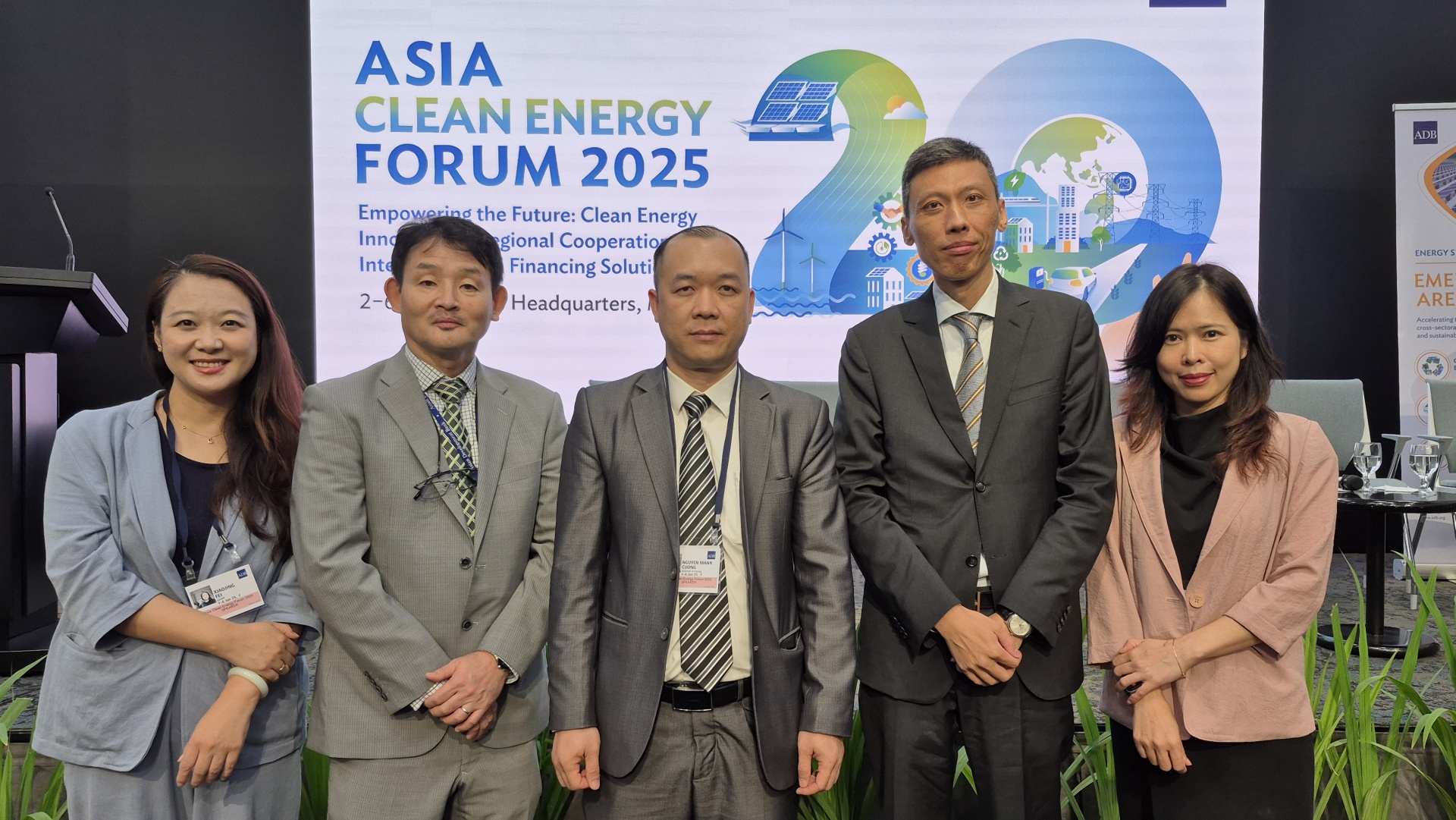 |
ENABLE is a platform dedicated to accelerating battery storage deployment across the Asia-Pacific region by pooling and concentrating human and financial resources to fast-track BESS projects, together with other similar-minded development partners. The grant, to be administered by the ADB, consists of $500,000 in financing from the Smart Energy Innovation Fund under the Clean Energy Financing Partnership Facility and $250,000 from GEAPP.
“ENABLE addresses key barriers by providing technical expertise, project development support, and innovative financing solutions that will help countries integrate more renewable energy into their grids,” said Cindy Cisneros-Tiangco, ADB's director of Emerging Areas, Energy Sector Office. "With energy demand growing rapidly across the region, battery storage represents a critical technology for ensuring stable, reliable, and clean power systems.”
The need is urgent in Asia-Pacific, where renewable energy is expanding rapidly. The renewables capacity in Asia-Pacific is expected to grow by nearly 430GW from 2023 to 2028. Solar installations will account for two-thirds of the growth, the majority of which will be from utility-scale deployments. With this significant expansion of renewable energy, BESS solutions are essential for grid stability and renewable energy optimisation.
The country’s latest power development plan, approved in May 2023, aims to more than double the maximum power generated to 150GW by 2030, up from 69GW in 2020. The plan pivots away from coal and expects to achieve nearly half of total generating capacity from renewable sources. Vietnam is already a regional leader in this, with an installed capacity of 21GW of renewable energy, but faces power shortages due to a lack of transmission infrastructure and renewable energy integration.
“By 2030, Vietnam is aiming for 49 per cent of its energy capacity to be from solar and wind power. But to get there, we’ll need battery energy storage systems. GEAPP has had our backs these past two years, supporting crucial studies on frequency control, replacing coal-fired power plants with renewables and BESS in North Vietnam, and provide blueprints for how BESS and solar power can strengthen our energy system. And now, with the newly launched ENABLE platform, we’re pushing even further to close the policy gap and bring BESS into Vietnam’s electricity market,” Nguyen Manh Cuong, a representative from the Institute of Energy, said.
"The rapid growth of renewables in the region represents both an achievement and a challenge," said Kitty Bu, vice president of Southeast Asia at GEAPP. "Through ENABLE, GEAPP is helping address the critical battery storage gap that could constrain the region's clean energy potential. Our approach is distinctive, we use philanthropic capital to reduce risk and mobilise greater investment from the private sector. Our collaboration with the ADB enables us to address market barriers systematically and create conditions where BESS becomes an attractive, mainstream investment opportunity throughout the region."
The ENABLE platform will focus on accelerating BESS deployment through a comprehensive approach that includes technical assistance, pilot project preparation, and capacity-building initiatives for key stakeholders across the energy sector.
It will help address key barriers to BESS adoption, including lack of technical understanding, high costs, concerns about cost impacts on consumers, and limited access to concessional financing, all critical for the region to achieve its green transition goals.
Over an initial three-year period, ENABLE will prioritise Vietnam, Mongolia, and Cambodia, with a customised approach based on each country’s stage of BESS development. With plans to scale up, the platform aims to expand its reach to additional countries in the region. Initial focus areas include private-led grid-scale BESS integration studies, policy frameworks, procurement guidelines, technical standards, application of digital tools like AI, and innovative business models for storage deployment. Countries will receive targeted support for integrating BESS with their growing renewable capacity.
By creating fast-track bankable projects and enabling conditions for private investment, this landmark partnership between the ADB and GEAPP aims to make BESS a cornerstone of the region’s sustainable energy future. ENABLE brings together diverse stakeholders, including other development partners, and innovative financing approaches to establish a replicable project development model that will support the region's long-term clean energy transition while creating economic benefits across Asia-Pacific.
 | BESS Task Force to accelerate Vietnam’s clean energy transition The Electricity Authority of Vietnam, in collaboration with the Vietnam Energy Partnership Group (VEPG) and supported by the Global Energy Alliance for People and Planet (GEAPP), officially launched the Battery Energy Storage System (BESS) Task Force on April 9 in Hanoi. |
 | ADB works with MoF to mobilise more loans for sustainable development Minister of Finance Nguyen Van Thang received Scott Morris, vice president for East and Southeast Asia, and the Pacific of the Asian Development Bank (ADB), on April 15 to discuss how to improve the efficiency of loan use. |
 | WB and ADB provide $400 million for three projects in Vietnam The World Bank and the Asian Development Bank will provide loans and grants worth $400 million for three socio-economic development projects in Vietnam. |
What the stars mean:
★ Poor ★ ★ Promising ★★★ Good ★★★★ Very good ★★★★★ Exceptional
 Tag:
Tag:
Related Contents



Latest News



More News
- Skellefteå: epicentre of an extraordinary societal transformation (June 19, 2026 | 12:30)
- Novonesis and Nha Xanh Vietnam partner to strengthen Vietnam's biofuel production (June 18, 2026 | 15:48)
- Vietnam lays groundwork for carbon market development (June 17, 2026 | 16:26)
- EVI Hub 2026 kicks-off (June 17, 2026 | 15:48)
- Decree 112 sets legal framework for Vietnam's carbon market participation (June 15, 2026 | 13:34)
- Karpowership on floating LNG as a bridge for Vietnam's energy needs (June 15, 2026 | 12:56)
- ESG standards key to Nam Dinh Vu IP's competitiveness (June 13, 2026 | 10:26)
- CIP-FECON proposes Laos wind power project to supply electricity to Vietnam (June 13, 2026 | 02:40)
- Advancing the circular economy: opportunities for Germany-Vietnam cooperation (June 13, 2026 | 02:23)
- Vietnam sets launch date for domestic carbon exchange (June 13, 2026 | 02:18)






 Mobile Version