
Accor goes big on Vietnam with bold franchising pivot

What motivated Accor to formalise hotel franchising in Vietnam?
 |
| Andrew Langdon, chief development officer for Asia at Accor |
Langdon: Market maturity, regulatory readiness, brand registration, and a favourable growth cycle are converging to make this the right moment for Accor to formalise hotel franchising in Vietnam.
Two core drivers are underpinning Accor’s push to formalise hotel franchising in Vietnam: a maturing ownership base and an increasingly robust legal framework.
The market has reached a point where many hotel owners possess sufficient operational experience to independently manage properties while meeting international brand standards. We now see a growing pool of such partners in Vietnam.
Second, the regulatory environment has evolved considerably. Vietnam’s franchising regulations are increasingly comprehensive and robust, providing a solid foundation for us to roll out this model with confidence.
Beyond these two fundamentals, several enabling factors are also falling into place. We have completed the registration of key brands for franchising in Vietnam, particularly across the economy and midscale segments, including Ibis, Ibis Styles, Novotel, and Grand Mercure.
Crucially, the timing coincides with Vietnam’s strong growth cycle. The country is now the fastest-growing hospitality market in Asia, leading the region in new hotel supply while continuing to post record international visitor arrivals.
What were the key hurdles in aligning with Vietnam's law?
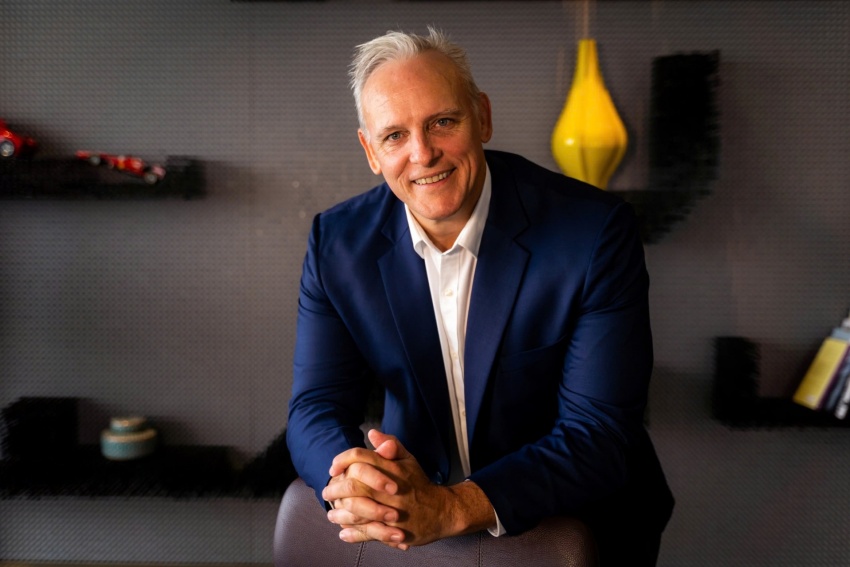 |
| Garth Simmons, COO for Asia, Premium, Midscale & Economy at Accor |
Simmons: Ultimately, the key conditions are effectively in place. It’s twofold: having the market mature enough, and the law allowing us to do so as well. Reaching this stage has not been straightforward as we have had to navigate a number of hurdles, but that process is precisely why we are now confident in moving forward.
Fundamentally, franchising means entrusting third parties to represent the brand. That places a premium on control and accountability. Where standards are not met, we have safeguards in place and can take the necessary corrective actions.
Langdon: For Accor and other international operators, the critical consideration has always been brand protection, specifically trademarks and brand identity. In that regard, Vietnam’s legal framework has made significant progress. The strength of its trademark protection regime is a key factor underpinning our confidence to expand franchising in this market.
What types of investors or property owners are you targeting in Vietnam?
Simmons: Our focus is on owners with the right capabilities and structure, those able to operate their hotels independently while meeting brand standards. Under the franchise model, the owner assumes day-to-day operations, with Accor providing systems, standards, and ongoing support.
There is no single investor profile. What matters is strategic fit: commitment, operational readiness, and location. Each opportunity is assessed individually to ensure partners can represent the brand effectively.
Langdon: In most markets, franchising tends to resonate strongest with existing hotel owners. In Asia, these are often what we call “mum and pop” owners, those are local families who own 50- to 80-room hotels in downtown Hanoi or Ho Chi Minh City. They have been running their own brand and see the opportunity to partner with a major international brand.
For these owners, franchising offers a compelling proposition: the ability to plug into a global platform spanning marketing, sales, loyalty programmes, and distribution, while retaining operational control. It combines international scale with local ownership, which is a model that has been largely underdeveloped in Vietnam to date, but one we believe will significantly accelerate growth.
What advantages does Accor’s franchising model offer to Vietnamese hotel owners?
Simmons: The value proposition begins with operational expertise: clear standards, policies, and procedures that underpin consistent service delivery. For guests, international brands offer a level of trust and predictability, particularly in areas such as hygiene and service quality.
Equally important is distribution. Global brand recognition, combined with extensive sales and booking networks, enables hotels to access a far broader customer base than independent properties, translating into stronger and more stable demand.
Langdon: The impact is measurable. In several case studies, hotels that adopted our franchise model recorded revenue growth of around 30 per cent within just a few months. For local owners, simply aligning with an international brand like Accor and tapping into its distribution ecosystem can deliver a significant uplift in performance.
How might this formalisation reshape standards, transparency, and investor confidence in Vietnam’s hospitality sector?
Simmons: At its core, this is about reputation and the value a global brand brings. International branding reinforces trust, enhances market confidence, and strengthens a property’s ability to attract guests. As Vietnam’s market matures, travellers are increasingly seeking that level of consistency, knowing what to expect when booking a branded hotel.
Langdon: More broadly, franchising helps elevate Vietnamese hotels onto the global stage, increasing international visibility and supporting the country’s positioning as a destination. Operationally, ownership remains unchanged, but brand standards are clearly defined and closely monitored.
Crucially, hotels gain access to a global distribution network and loyalty ecosystem, which are key drivers of demand that can materially improve commercial performance.
What are the benefits for owners under a franchise model? How does franchising in Vietnam compare with other markets?
Langdon: Franchising is essentially a plug-and-play model. Owners gain immediate access to Accor’s global distribution network, loyalty programmes, and established operating procedures, enabling them to elevate their properties to international standards. Also, they retain full control over day-to-day operations.
Simmons: Globally, franchising is most established in mature markets. It accounts for more than 80 per cent of hotels in the US and around 70 per cent in Europe, while in Asia the model is still evolving, with stronger traction emerging in markets such as Singapore, South Korea, and more recently Thailand.
In Vietnam today, our current portfolio remains fully under management contracts. However, over the next decade, we expect a gradual rebalancing towards a roughly 50-50 split between managed and franchised properties.
It is also important to note that franchising will not be applied across all brands. Our luxury portfolio, including Fairmont and Sofitel, will remain under management, as will upper-tier premium brands such as Swissôtel, Pullman, and Mövenpick.
Looking ahead 5–10 years, what would success for Accor in Vietnam look like?
Langdon: Over the next five to ten years, we see the market moving towards a 50-50 road map model on the split between managed and franchised hotels.
We have already begun executing this strategy. Our first franchise in Vietnam, under the Novotel brand, was signed in November last year, followed by a second Novotel property in December. We are currently in active negotiations for a further three to four franchised hotels. This is not a long-term vision, it is already underway and gaining momentum quickly.
 | The choice of MICE at Grand Mercure Danang It is no secret that the coastal city of Danang is beginning to earn a reputation as a business and economic stronghold in Central Vietnam. As such, it comes as no surprise that the city with its prime location along the coast, easy access to an international airport, and rapid development has now established a blooming business tourism industry. |
 | Pullman Danang Beach Resort appoints new general manager
|
 | The status of franchising when withdrawing from markets A series of Western companies such as McDonald’s, Unilever, Shell, Goldman Sachs, and many more have announced their withdrawal from Russia. Pham Duy Khuong, managing director at ASL Law, sheds light on the aspects of franchising in particular, and the legalities surrounding contracts. |
What the stars mean:
★ Poor ★ ★ Promising ★★★ Good ★★★★ Very good ★★★★★ Exceptional
 Tag:
Tag:Related Contents





Latest News





More News
- The perfect time to escape the city at Seahorse Resort & Spa (August 28, 2026 | 09:42)
- M Village founder raises $26 million (August 26, 2026 | 15:48)
- Eastin Grand Saigon puts Vietnamese twist on afternoon tea (August 17, 2026 | 11:03)
- Palladium Hotel Group launches Asia-Pacific HQ in Vietnam (August 17, 2026 | 10:33)
- Reverie Saigon unveils 2026 mooncake collection (August 14, 2026 | 15:29)
- Meliá Hotels International expands in Vietnam with first Meliá Collection hotel (July 28, 2026 | 20:03)
- Ngan Dinh Saigon: where traditional cuisine meets Asian flavours (July 21, 2026 | 11:44)
- The Reverie Saigon appoints new general manager (July 09, 2026 | 14:54)
- NHAAN Resort & Spa Hoi An ready to accept reservations ahead of August opening (July 08, 2026 | 21:12)
- Hoi An Memories Resort & Spa: Where cultural heritage shapes luxury hospitality (July 07, 2026 | 10:00)


Latest News





 Mobile Version