
Vietnamese businesses navigate US tariffs

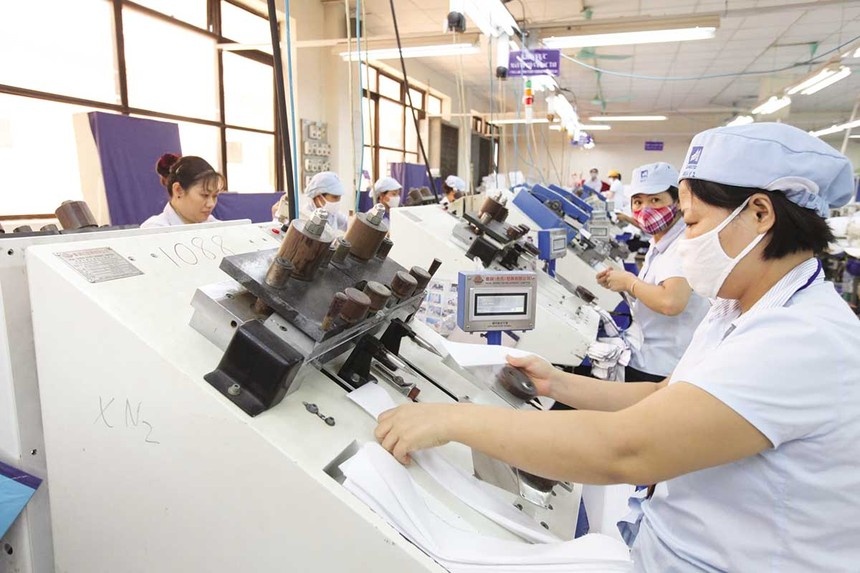 |
According to the "US Tariff Policies: Impact and Pathways" study published by PwC Vietnam on June 25, the new US tariff policy (effective April 2025) imposes up to 46 per cent tariffs on certain Vietnamese goods. Key sectors like apparel, shoes, wood, furniture, agriculture, and seafood are particularly hard hit, facing higher production costs, reduced long-term orders, and intensified competition from rivals in Mexico, Indonesia, and Malaysia.
PwC has conducted a survey to assess how Vietnamese manufacturing companies and related service providers are navigating these shifts. The survey found that Vietnamese manufacturing businesses are on high alert as they navigate the uncertain terrain shaped by US tariffs. 86 per cent of survey respondents expressed concern or deep concern about the tariffs' impact, with the remaining 14 per cent showed neutral or light concern.
Significant challenges anticipated from US tariffs include higher costs (23 per cent) and market shifts (15 per cent). This pervasive anxiety underscores the urgent threat that evolving US trade policies pose to the stability and growth of Vietnamese businesses. As they brace for potential financial and operational impacts, companies face the challenge of adapting to an increasingly competitive global landscape.
Against this backdrop, businesses are taking specific actions to prepare for or mitigate the potential impact. These actions can be categorised into three strategies. First is to reduce trade dependency and control high costs. Accordingly, 44 per cent of businesses are diversifying sourcing to other countries, while 34 per cent are negotiating with existing suppliers.
Another strategy is to enhance operational efficiency. In pursuit of this strategy, 40 per cent of businesses are automating and streamlining processes, while 32 per cent are improving efficiency/reducing waste. The third strategy is to protect long-term competitiveness. Specifically, 41 per cent of businesses are looking to diversify into new markets, while 25 per cent are adjusting pricing strategies.
The transformation journey of Vietnamese businesses begins with supply chains, where companies are realising the risks of overreliance on a single source like China. Diversifying suppliers, especially towards more stable regions, has become essential. At the same time, many are seeing the opportunity to renegotiate supplier contracts to better control costs and improve cash flow.
In production, the heart of operations, businesses are accelerating automation and adopting lean models to boost efficiency. Exporters and domestic manufacturers are actively integrating into local and foreign direct investment supply chains as a practical strategy to optimise costs and enhance competitiveness.
On the market front, as traditional export destinations become more unpredictable, Vietnamese companies are expanding into the EU, ASEAN, and Japan, leveraging the country’s strong network of free trade agreements. They are also refining pricing strategies and strengthening digital brand presence in existing markets to unlock untapped potential.
Finally, service providers, especially in logistics, consulting, banking, and insurance, are facing declining demand from export clients and rising credit risks. In response, they are diversifying their customer base and improving service quality to maintain resilience in a shifting landscape.
Responses to the survey were collected from a broad spectrum of companies operating in Vietnam, with 78 per cent from manufacturing and 22 per cent from services. Notably, 33 per cent of businesses export directly to the US, while 67 per cent don’t, offering a balanced view of both direct and indirect exposure.
 | US agriculture secures greater market access in Vietnam, Thailand, and Brazil US Secretary of Agriculture Brooke L. Rollins on June 6 announced American agricultural producers will have greater market access to Vietnam and Thailand and maintained access to Brazil. |
 | Vietnam and US move closer to trade pact in high-level virtual talks Minister of Industry and Trade Nguyen Hong Dien held virtual talks with US Secretary of Commerce Howard Lutnick and Trade Representative Jamieson Greer on June 19 to advance bilateral trade agreement negotiations. |
 | Vietnam making headway in US tariff talks At the National Assembly meeting session on June 20, Deputy Prime Minister Nguyen Hoa Binh revealed the prospects for tax negotiations with the US are positive, and the government is doing the utmost to avoid a 46 per cent tax rate. |
What the stars mean:
★ Poor ★ ★ Promising ★★★ Good ★★★★ Very good ★★★★★ Exceptional
 Tag:
Tag:Related Contents


Latest News


More News
- Family businesses face succession hurdles (June 30, 2026 | 17:05)
- Global shocks and tightening cash for Vietnamese business (June 22, 2026 | 06:00)
- Data and governance key hurdles to AI scaling for Vietnamese firms (June 17, 2026 | 16:55)
- Vietnam second fastest growing automotive market in ASEAN‑6 (April 20, 2026 | 20:34)
- Vietnam’s green push requires further hurdles to clear (March 30, 2026 | 08:00)
- The use of artificial intelligence to advance ESG goals for businesses (March 06, 2026 | 11:50)
- Vietnam a strategic growth engine for Asia-Pacific: CEO survey (March 05, 2026 | 17:12)
- PwC launches global workforce survey (February 09, 2026 | 17:42)
- Delivering urban railways and transit-oriented development (January 26, 2026 | 10:25)
- Expectations increased with EU’s tightened due diligence (January 20, 2026 | 09:00)









 Mobile Version