

Vietnam’s green push requires further hurdles to clear

At the UK-Vietnam Green Investment Forum hosted by the British Embassy to Vietnam, with support from PwC Vietnam as the Knowledge Partner, on March 26, industry leaders converged on a common assessment: while capital and technology are increasingly available, the country remains held back by a critical gap, turning near-ready projects into fully bankable investments within a still-evolving regulatory framework.
Abhinav Goyal, director of Capital Projects and Infrastructure at PwC Vietnam, observed that the nature of energy financing in Vietnam is undergoing a fundamental shift.
“Digital solutions, particularly in areas such as battery energy storage systems (BESS), are where international partners like the UK clearly hold an edge,” he said. “But technical capability alone is not sufficient if the financial system is not equipped to absorb the risks that come with these innovations.”
Goyal noted that Vietnam’s banking sector has traditionally relied on straightforward corporate lending models, but is now gradually transitioning towards project finance, which is an essential shift for capital-intensive energy projects.
“Over the past three years, we have seen local banks begin moving from pure corporate finance towards project financing structures,” he explained. “However, many of the existing financing solutions are still not flexible enough to make new green technologies viable. This is where international experience in structuring and de-risking projects could play a pivotal role in unlocking capital at scale.”
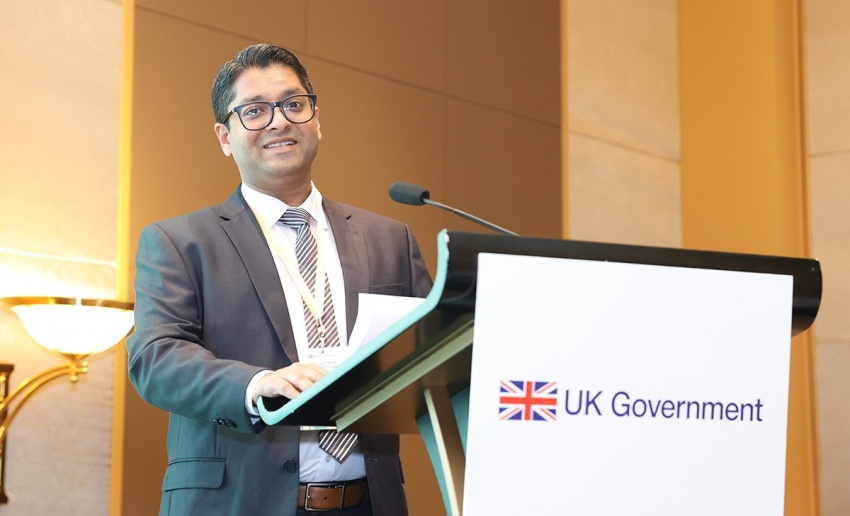 |
| Abhinav Goyal, director of Capital Projects and Infrastructure at PwC Vietnam |
Denzel Eades, chairman of the British Chamber of Commerce Vietnam, highlighted regulatory reform as the key catalyst for the next wave of investment, particularly in energy storage and integrated system solutions.
“The deployment of BESS at scale will be a major driver, and what we are seeing now is the application of system-wide solutions that combine digitalisation, digital twins, and AI optimisation. These are essential for more advanced models such as direct power purchase agreements (DPPAs) plus storage, enabling a more sophisticated pricing mechanism,” he added.
Eades expressed confidence that these developments are imminent. “We expect to see these solutions rolled out at scale within the next 24 months. However, there is no cookie-cutter solution for Vietnam. What is required are innovative financial and legal structures tailored to local conditions,” he added.
To that end, Eades outlined a three-part de-risking strategy. “Firstly, investors must understand the local market and the role of domestic players. Secondly, they need to navigate the legal and regulatory framework to address bankability issues. And thirdly, they must identify the right funding pool, which may include blended finance solutions,” he explained.
Ross Coull, CEO of Skye Renewables, brought the discussion down to operational reality and described DPPAs as a long-awaited breakthrough.
“DPPAs essentially allow developers to build large-scale solar or wind projects and sell electricity through the grid, which is a significant step forward,” he said. “Alongside this, behind-the-meter storage solutions are gaining traction among corporate users. This allows companies to manage rooftop solar and perform load shifting, charging power when it is cheaper and using it when demand is higher.”
Yet, despite clear technological pathways and growing investor interest, Coull underscored a persistent impediment.
“There is still a lack of clear regulations, and that is a major concern,” he said. “The market feels like it is 95 per cent there, but that remaining 5 per cent, which is the finalisation of policy details, is what determines whether projects can actually move forward. For many investors, this uncertainty translates into hesitation, leaving capital on the sidelines despite strong fundamentals.”
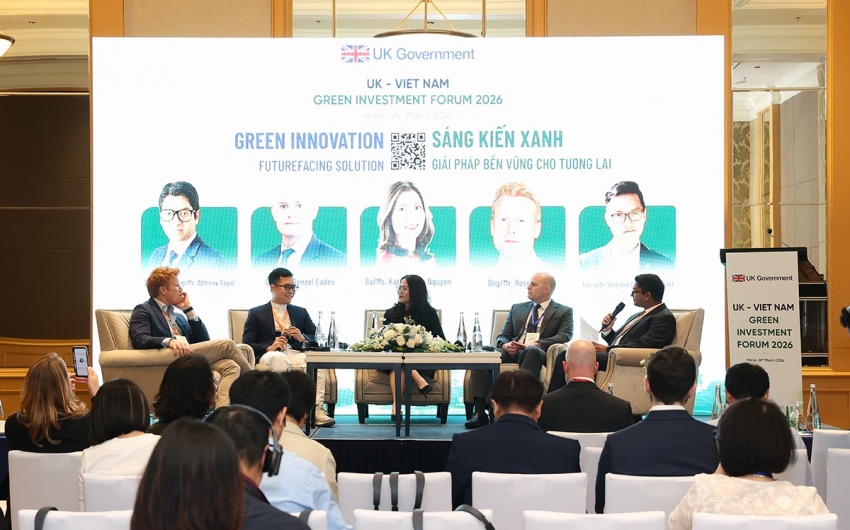 |
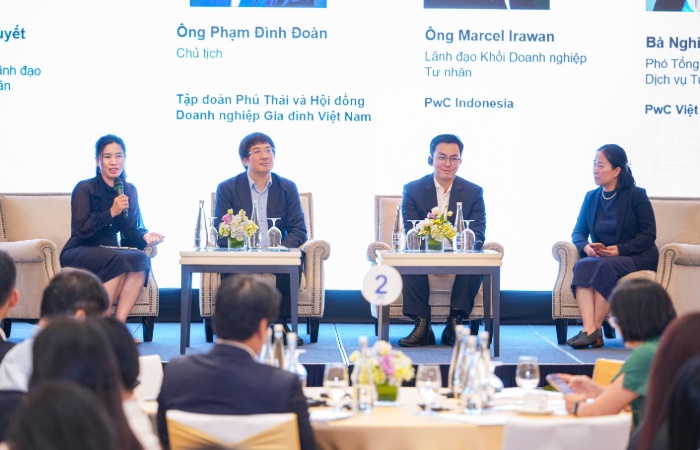
| Overview of the panel discussion |
Kathy-Thuy Nguyen, who is the country director at Impact Investment Exchange (IIX), framed this gap not as a structural mismatch between investment readiness and risk allocation.
“In emerging markets like Vietnam, the constraint is often not capital itself, but the shortage of investment-ready projects and the inability to appropriately distribute risk. That is where blended finance becomes critical in bridging the gap between early-stage innovation and commercial-scale investment,” she said.
She introduced the concept of orange bonds as a mechanism designed to unlock private capital by embedding a layered risk structure.
“Our orange bonds are structured with a first-loss layer provided by catalytic investors, including institutions and partners from the UK, the EU, and Canada,” explained Nguyen. “This allows private investors to participate in projects that would otherwise be perceived as too risky, particularly in sectors like climate and renewable energy.”
Importantly, growing signs that Vietnam’s financial ecosystem is capable of absorbing such innovation. The participation of local financial institutions demonstrates that blended finance can be deployed effectively within the domestic market, translating global priorities into tangible investments, she added.
Nguyen also pointed to the less visible but equally critical issue of the shortage of investment-ready projects.
“Mobilising capital is only one side of the equation, but we also need to build a pipeline of investable businesses,” she said. “Through initiatives such as the Impact Investment Readiness Vietnam programme, IIX works directly with enterprises to strengthen their financial and operational capabilities, guiding them through a structured process to become scalable and bankable.”
By preparing high-impact enterprises and connecting them with responsible investors, IIX helps bridge the gap between innovation and capital. Such efforts are essential to ensure the energy transition is not only technically feasible, but also financially inclusive and scalable, noted Nguyen.
According to Alice Carr, executive director for Public Policy under the Glasgow Financial Alliance for Net Zero, Vietnam is entering a critical phase of rapid urbanisation and industrialisation, creating pressure to transition towards more nature-based development models. Efforts such as mangrove restoration alongside coastal development reflect attempts to balance economic growth with environmental protection, but scaling these initiatives remains a challenge.
“Support from international partners has helped accelerate progress. However, a major constraint lies in strengthening measurement, reporting, and verification systems, which are essential for connecting projects with international climate finance, particularly in coastal and high-risk areas,” Carr said.
Land use presents another structural bottleneck, Carr explained. “Urban expansion and industrial development often compete directly with agricultural land and forests, creating a zero-sum dynamic. Addressing this requires more strategic land-use planning, alongside stronger coordination between domestic authorities and international stakeholders.”
Technological solutions, including renewable energy, battery storage, and electrification, are already available, but the challenge lies in deploying them at scale. “This places greater importance on policy consistency, particularly in developing bankable mechanisms such as power purchase agreements, while maintaining flexibility to adapt as implementation evolves,” Carr added.
What the stars mean:
★ Poor ★ ★ Promising ★★★ Good ★★★★ Very good ★★★★★ Exceptional
 Tag:
Tag:Related Contents




Latest News



More News
- Global shocks and tightening cash for Vietnamese business (June 22, 2026 | 06:00)
- Data and governance key hurdles to AI scaling for Vietnamese firms (June 17, 2026 | 16:55)
- Vietnam second fastest growing automotive market in ASEAN‑6 (April 20, 2026 | 20:34)
- The use of artificial intelligence to advance ESG goals for businesses (March 06, 2026 | 11:50)
- Vietnam a strategic growth engine for Asia-Pacific: CEO survey (March 05, 2026 | 17:12)
- PwC launches global workforce survey (February 09, 2026 | 17:42)
- Delivering urban railways and transit-oriented development (January 26, 2026 | 10:25)
- Expectations increased with EU’s tightened due diligence (January 20, 2026 | 09:00)
- Standing out in the Chinese outbound investment wave (December 29, 2025 | 10:29)
- PwC 2025 Family Business Survey: navigating a new era of agility and purpose (December 10, 2025 | 11:59)


Latest News




 Mobile Version