

Banking sector showcases digital transformation progress at 2026 competition

The focus was underscored at the closing ceremony of the 2026 Digital Transformation in the Banking Industry Competition on May 23, held under the theme “Proactive digitalisation - Breaking through to the future.”
The event, which kicked off a day earlier, brought together 32 teams from banks, credit institutions, and sectoral agencies, while also marking the 75th anniversary of Vietnam’s banking industry and supporting the sector’s Digital Transformation Day.
Speaking at the event, Governor of the State Bank of Vietnam (SBV) Pham Duc An said the programme reflected the banking sector’s commitment to innovation and its ambition to build a modern, intelligent, and sustainable financial system.
According to the governor, the competition also highlighted the sector’s determination to implement Resolution No.57-NQ/TW of the Politburo on science and technology development, innovation, and national digital transformation.
“The competition has helped spread the spirit of innovation and proactive digital transformation throughout the banking sector,” he said.
In recent years, banking has remained among Vietnam’s leading industries in technology adoption, with regulators increasingly placing customer experience and business accessibility at the centre of development strategies.
Digital payment infrastructure has continued to expand, supporting rapid growth in cashless transactions nationwide. Many credit institutions now handle more than 90 per cent of transactions through digital channels, while digital banking ecosystems are becoming more diverse and integrated.
At the same time, the industry has accelerated administrative reform, expanded digital public services, and strengthened banking data infrastructure, laying the groundwork for broader digitalisation across the financial system.
Despite the progress, An acknowledged that the industry continues to face growing pressures as digital adoption advances. These include stricter cybersecurity requirements, shortages in high-quality digital talent, uneven readiness among institutions, and the need to respond more quickly to emerging technologies.
“This shows that digital transformation is not only about technology, but also about changing mindsets, awareness, and working methods,” he added.
Against that backdrop, this year’s competition adopted a stronger practical focus, with content covering digital data, foundational technologies, cybersecurity, governance, and customer experience. The initiative also incorporated modern presentation formats and technology applications to better reflect ongoing changes within the industry.
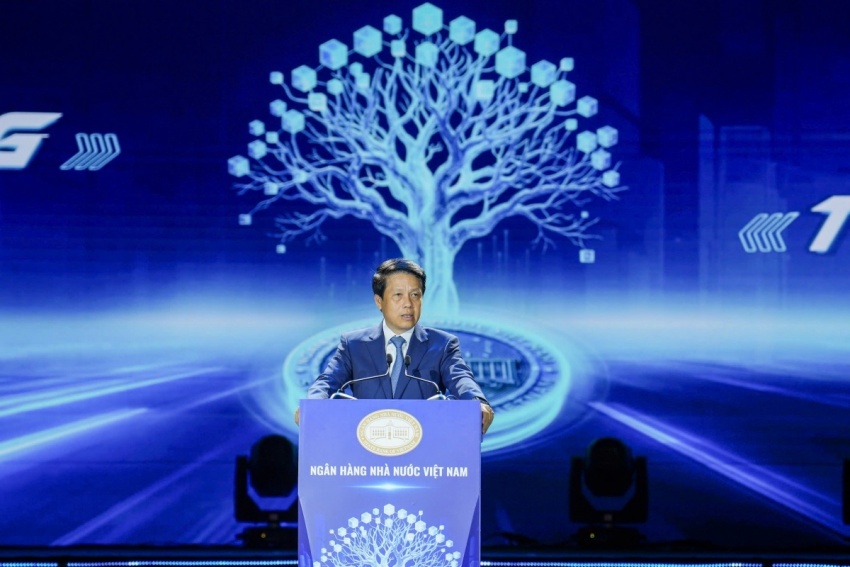 |
| Pham Tien Dung, Deputy Governor of the State Bank of Vietnam and head of the organising committee, delivers closing remarks. Photo: Hoang Giap |
Pham Tien Dung, Deputy Governor of the SBV and head of the Organising Committee, said more than 600 banking employees directly participated.
“The initiative not only created an internal platform for exchange, but also highlighted the image of a modern, dynamic, and resilient banking sector ready to advance in the digital era,” Dung said.
Looking ahead, the SBV stated that the banking industry would continue prioritising people- and business-centred development, while treating data as the foundation and technology as the key driver of growth.
Regulators also plan to speed up improvements to legal frameworks and policies supporting sci-tech development, innovation, and digitalisation, while removing obstructions limiting the rollout of safe and modern banking services.
The sector is also expected to prioritise synchronised digital infrastructure, improve specialised databases, and expand digital payment services linked to electronic authentication, biometric verification, and customer data cleansing.
Cybersecurity, data protection, and information safety will remain central priorities as online banking services continue to scale up, particularly amid rising concerns over fraud and cyber risks.
The SBV additionally stressed the importance of strengthening digital talent and fostering a stronger digital culture across the banking industry through training initiatives and wider digital literacy programmes.
What the stars mean:
★ Poor ★ ★ Promising ★★★ Good ★★★★ Very good ★★★★★ Exceptional
 Tag:
Tag:
Related Contents




Latest News






More News
- From loans to women’s economic empowerment (October 06, 2026 | 17:58)
- VIB named Outstanding Retail Bank 2026, targets transaction banking (October 06, 2026 | 10:52)
- FTSE upgrade paves way for stronger stock market development (October 05, 2026 | 18:44)
- coLoan to empower women through inclusive green finance (October 05, 2026 | 18:42)
- Techcombank CEO: AI no longer a tool but a new operating foundation (October 05, 2026 | 18:11)
- Banks sustain profit growth as funding costs squeeze margins (October 02, 2026 | 22:22)
- Nam A Bank delivers strong breakthrough in 2026 (October 02, 2026 | 19:00)
- Policy credit builds sustainable livelihoods from the grassroots (September 29, 2026 | 07:48)
- VIB deploys Front Arena treasury and foreign exchange trading system on AWS (September 28, 2026 | 16:46)
- Nam A Bank receives $60 million loan from FMO (September 28, 2026 | 12:37)


Latest News






 Mobile Version