
Retailers step up to reduce plastic waste

The third ‘No Plastic Bag Day’ campaign was launched last week by AEON Vietnam, focusing on changing consumer behaviour around the use of plastic bags and single-use plastic products in supermarkets and shopping centres most frequented by urban residents.
AEON is one of the first retail chains in the country to implement comprehensive solutions to reduce plastic waste. Since opening its first mall in Vietnam in 2014, the company has replaced all plastic shopping bags with biodegradable alternatives. By 2019, AEON Vietnam had fully ceased the sale of single-use plastic items, replacing them with products made from paper, bagasse, cornstarch, or rice starch.
The retailer also promotes green consumption programmes. Customers receive a small discount for each transaction in which they refuse a plastic bag. AEON Vietnam also designates the first Monday of each month as No Plastic Bag Day for cashless transactions, aiming for 80 per cent of all transactions to forgo plastic bags by 2030.
Another initiative is its rent-a-bag service, which charges $0.20 per bag, refundable upon return. In 2024, the programme recorded over 22,000 rentals, indicating a positive consumer response.
Nguyen Thi Ngoc Hue, senior general manager of people and brand strategy at AEON Vietnam, said, “The long term goal of these programmes is not only to reduce waste but also to create a closed-loop system, reusing resources and minimising environmental discharge. AEON aims for 80 per cent of transactions to refuse plastic bags by 2030.”
In the third quarter, AEON Vietnam plans to introduce paper recycling collection points across its supermarket network. Customers will earn loyalty points for bringing paper to designated machines – a move aimed at encouraging recycling habits and reducing waste.
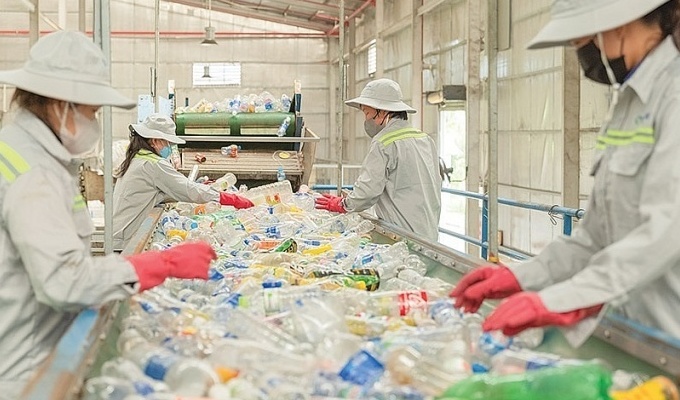
According to a survey on single-use plastics in Vietnam, published by the United Nations Development Programme in cooperation with the former Ministry of Natural Resources and Environment in February, the country’s retail sector generates approximately 300,000–400,000 tonnes of plastic waste annually, primarily from single-use items. This represents around 10–13 per cent of the nation’s total plastic waste.
With an annual growth rate of 25 per cent, the survey forecasts that retail-related plastic waste could double to around 800,000 tonnes within a few years.
Under Vietnam’s plastic reduction roadmap, from 2025 provincial people’s committees must regulate and enforce plastic waste management. Single-use plastic products and plastic bags will no longer be permitted in shopping malls, supermarkets, hotels, and tourist destinations. A complete ban on the production and import of such items is targeted after 2030.
Lotte Mart, another South Korean retailer, has also adopted a range of concrete actions to reduce plastic waste. Since 2019, it has replaced non-degradable plastic bags with biodegradable ones, used banana leaves for fresh produce, substituted foam boxes with bagasse packaging for cooked food, and increased its eco-friendly product offerings. The retailer also launched the Green Commitment campaign, calling on in-store partners to join the effort.
Over the past four years, Lotte Mart’s eco-friendly L-Care bag has evolved in design and style, becoming a favoured item among green-minded shoppers.
Lotte Mart also introduced an innovative environmental bag made from lotus leaves, capable of carrying 20–25 kilogrammes and lasting 6-8 months – or even up to one year.
“At just our four Lotte Mart supermarkets in Ho Chi Minh City, over 500 tonnes of plastic bags have been eliminated over recent years,” a company representative said.
Thai-based Central Retail, with more than 11 years in Vietnam, has also implemented various sustainability initiatives. It has introduced Lohas bags sold at cost, provided paper boxes and bagasse trays, implemented waste segregation at GO! supermarkets, and eliminated more than 170,000 plastic bags through its No Plastic Bag Day at Tops Market.
As the only retail chain in Vietnam to stop providing plastic bags at checkout since 2019, MM Mega Market has consistently promoted sustainable consumption. Instead of plastic bags, the retailer offers reusable cardboard boxes and actively encourages shoppers to bring their own bags. This initiative helps eliminate around 10 million plastic bags from the environment each year.
Reinforcing its sustainability agenda, MM Mega Market has partnered with well-known organisations to install automated collection machines for used milk cartons, aluminium cans, and plastic bottles. It has also launched e-waste collection points at stores in Hanoi and Ho Chi Minh City, aiming to promote source separation and encourage more responsible consumer behaviour.
A sustainability and plastic waste survey by NielsenIQ Vietnam in May found that only 27 per cent of supermarkets and convenience stores currently offer comprehensive plastic reduction solutions – most of them in Ho Chi Minh City, Hanoi, and Danang. Notably, 65 per cent of consumers still prioritise convenience over environmental concerns.
From 2025, the Law on Environmental Protection requires retailers to work with producers to collect and recycle plastic packaging. Those failing to comply may face higher costs or operational restrictions.
“Legal pressure will force retailers to change – but sustainable conversion also requires tax incentives, green credit, and policies that promote a circular packaging supply chain,” said Truong Manh Tien, chairman of the Vietnam Association for Environmental Economics.
 | The tourism industry tackles plastic waste Reducing plastic waste is a key focus for greener tourism at destinations across the country. |
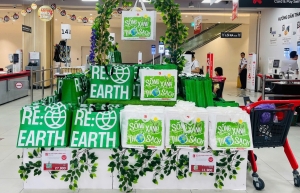 | Vietnam launches “No Plastic Bag Day” campaign To mark International Plastic Bag Free Day on July 3, Vietnam launched the “No Plastic Bag Day 2025”, carrying the message “Quick Sorting – Green Consumption – Waste Reduction”. |
What the stars mean:
★ Poor ★ ★ Promising ★★★ Good ★★★★ Very good ★★★★★ Exceptional
 Tag:
Tag:Related Contents


Latest News




More News
- Sojitz in Vietnam: 40 years from individual projects to a business cluster 'KATAMARI' (October 08, 2026 | 09:00)
- Coteccons targets 'Quality Growth' with 25 per cent dividend plan (October 07, 2026 | 13:00)
- Vietnam Education Forum opens UK Education Mission's Hanoi visit (October 07, 2026 | 12:27)
- Tax authorities deactivate TINs of nearly 180,000 businesses (October 07, 2026 | 12:08)
- World Bank raises Vietnam's 2026 GDP growth forecast to 7.4 per cent (October 07, 2026 | 11:41)
- Vietstock 2026 to spotlight livestock innovation and green transition (October 07, 2026 | 09:00)
- Vietnam’s GDP grows over 9 per cent in first nine months (October 05, 2026 | 18:45)
- Vietnam earns $56.3 billion from agro-forestry-fishery exports (October 05, 2026 | 18:32)
- DSV balances resilience and decarbonisation in supply chains (October 05, 2026 | 18:20)
- Electronics exports reach $175.4 billion in the first nine months (October 05, 2026 | 18:12)



Latest News




 Mobile Version