
Real estate deals shift from volume to quality

Amid policy shifts and changing investment trends, many real estate developers are undertaking comprehensive restructuring of capital, land banks, and portfolios to align with new objectives.
Domestic real estate developer DIC Corp (DIG) announced on the final day of 2025 the transfer of two subprojects within Dai Phuoc Ecotourism Urban Area to Everland An Giang and TNT Phu Hoa, generating proceeds of nearly $113 million.
With the successful divestment of these two schemes, DIG has effectively withdrawn from Dai Phuoc Urban Area after more than 21 years since the land was allocated by Dong Nai People’s Committee. The area comprises nine sub-zones, with DIG acting as the primary developer.
On the same day, the Board of Directors of LDG Investment approved a resolution to transfer the entire LDG Sky Apartment to a partner.
The LDG Sky high-end complex comprises four 29-storey residential towers and one 30-storey tower, with nearly 1,700 high-end apartments. To date, the project has completed foundation works and all related legal procedures.
Meanwhile, at the end of 2025, Ngan Hiep Real Estate, a subsidiary of Novaland, became a major shareholder of Seaprodex after swiftly acquiring more than 30 million shares, in a transaction valued at no less than VND1 trillion ($38 million).
Seaprodex currently owns prime land in the centre of Ho Chi Minh City. Despite its modest size of 1,600 square metres, the site occupies an exceptionally strategic location and has been planned for development into a 20-storey mixed-use complex comprising a hotel, commercial services, and office space.
In addition, the ownership transfer of Saigon Broadway, a 3,200-unit residential project located along Mai Chi Tho Boulevard and developed by Sun City Company, was a discreet transaction between Novaland and SonKim Land.
Through a direct and cross-shareholding structure, SonKim Land has effectively gained indirect control of Sun City, thereby securing development rights over Saigon Broadway.
The largest real estate M&A transaction in the south in the past year involved Capitaland Tower acquiring more than 150 hectares of Vinhomes Green Paradise Can Gio in late 2025. Capitaland Tower was established in 2016 in Ho Chi Minh City. Singapore-based CapitaLand Group previously held an ownership interest in Capitaland Tower but withdrew from this company in 2018, and currently has no affiliation whatsoever with Capitaland Tower.
More deals anticipated
Le Thi Huyen Trang, country head of property consultants JLL Vietnam, believes that M&A numbers in real estate in 2026 will continue to rise, but in a more prudent and selective manner. Investors will conduct more rigorous due diligence, scrutinising projects across legal status, financial soundness, and long-term development potential.
“The recovery momentum from the previous year is expected to reinforce confidence firmly, drawing sidelined capital back into the market, supported by Vietnam’s stable macroeconomic fundamentals and rapid urbanisation. However, caution is set to remain the dominant theme, as investors, having absorbed lessons from the preceding downturn, are likely to conduct more rigorous and comprehensive due diligence than ever before,” Trang told VIR at the end of December.
“Although the cost of capital is trending downward, it is unlikely to return to the historically low levels seen in the past. Credit flows are also being allocated selectively, prioritising ventures with clear legal standing, sustainable profitability, and alignment with green development trends. This will lead M&A capital to focus more heavily on asset quality,” she added.
Latest figures from JLL Vietnam stated that in 2025, cumulative transaction value reached approximately $2.5 billion. However, when including deals that have not yet been officially disclosed, the estimated figure is significantly higher. Residential real estate led the market, accounting for nearly 70 per cent of total M&A transaction value. Other segments, including commercial, hospitality, and industrial real estate, accounted for approximately 17 per cent, 5 per cent, and 5.6 per cent, respectively.
According to Avison Young Vietnam’s Q4/2025 research report, real estate continued to be the sector attracting the highest level of M&A transactions.
David Jackson, CEO of Avison Young Vietnam, observed that the market is currently tilted in favour of investors. However, many parties remain highly cautious in their decision-making, maintaining strict discipline in valuation and deal structuring, particularly in legal due diligence and operational risk assessment.
“Deals that ultimately reach completion are often transformational in nature, enabling investors to reshuffle their market positions and reposition assets for the next growth cycle. Amid the global reallocation of capital, Vietnam, with its strategic geographic location and positive economic outlook, is expected to continue benefiting from rising demand in 2026,” he said last week.
Satellite direction
In 2025, negotiation processes tended to be prolonged, reflecting a tug-of-war between future expectations and the more pragmatic perspectives of the parties involved. Asset locations also revealed a shift in focus towards areas supported by inter-regional infrastructure.
“Domestic investors have overtaken foreign counterparts to become the dominant buyers, accounting for the majority of transactions valued at over $100 million. Local enterprises are driven by restructuring objectives, divestment or capital-raising activities, or the expansion of land banks to improve cash flow and balance sheets. This trend is evident in transactions involving Vincom Retail, Sunshine Group, Phat Dat, and SonKim Land,” Jackson explained.
He added that, by contrast, foreign investors are focusing on large-scale transactions and long-term strategic plays, as exemplified by Gamuda Land’s project in Haiphong, CapitaLand’s acquisition of an initiative from Vinhomes, and a Japanese purchase of an 80 per cent stake in Thuan An 1 from Phat Dat.
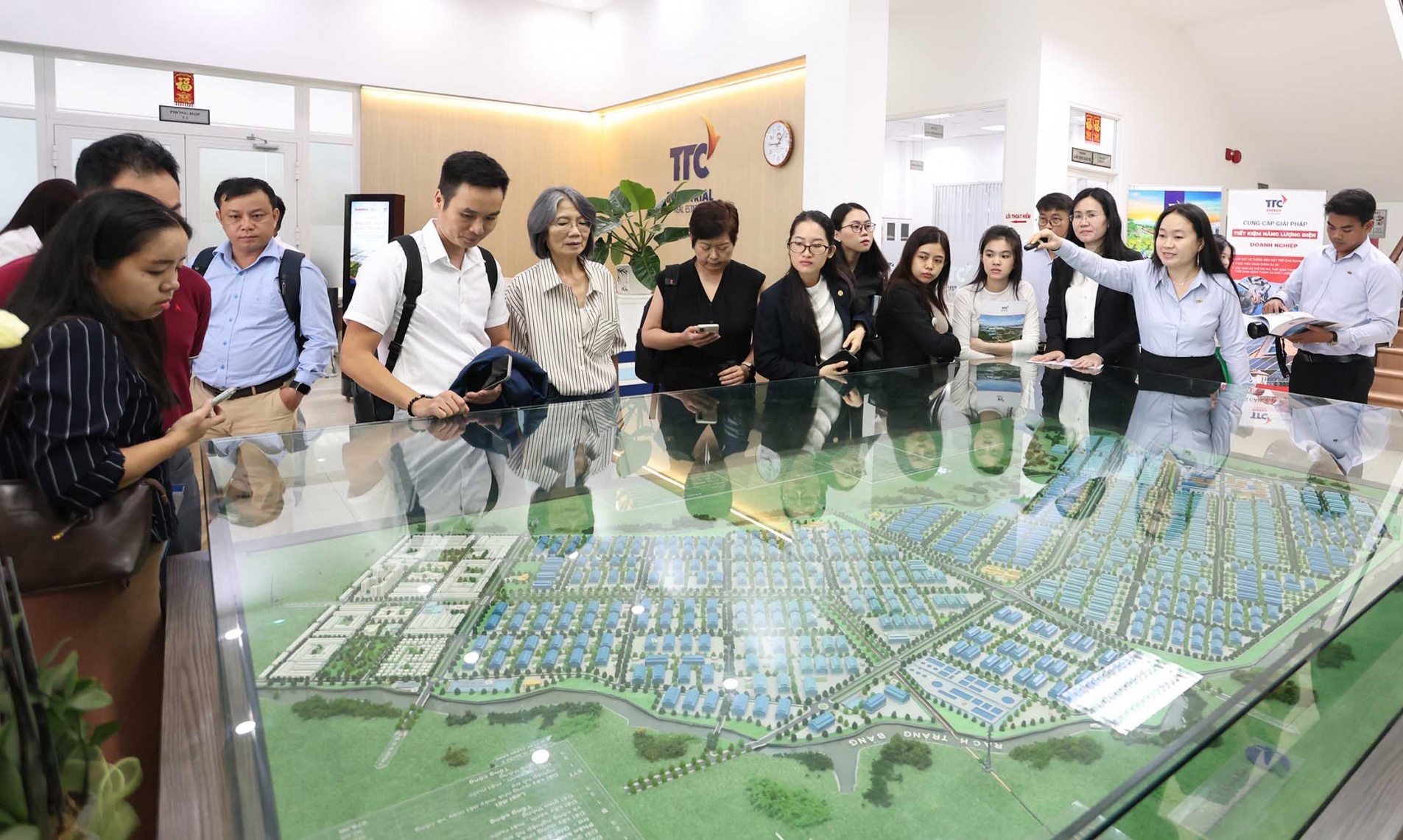
According to Avison Young data, many announced successful M&A transactions took place in the new Ho Chi Minh City area (including 15 deals in the city itself, and one deal in the former Binh Duong). A further 11 transactions were recorded in satellite cities around Hanoi, while one deal took place in the central region.
“This indicates that long-term capital is increasingly flowing towards satellite cities. These areas still offer substantial growth potential, driven by strong end-user demand, the trend towards decentralised urban development, and the rapid rollout of infrastructure projects,” Jackson added.
“In addition, coordinated infrastructure funding is significantly reshaping the urban development landscape, prompting real estate M&A capital in 2026 to increasingly shift towards satellite areas, where land reserves remain ample and align well with long-term accumulation strategies,” he added.
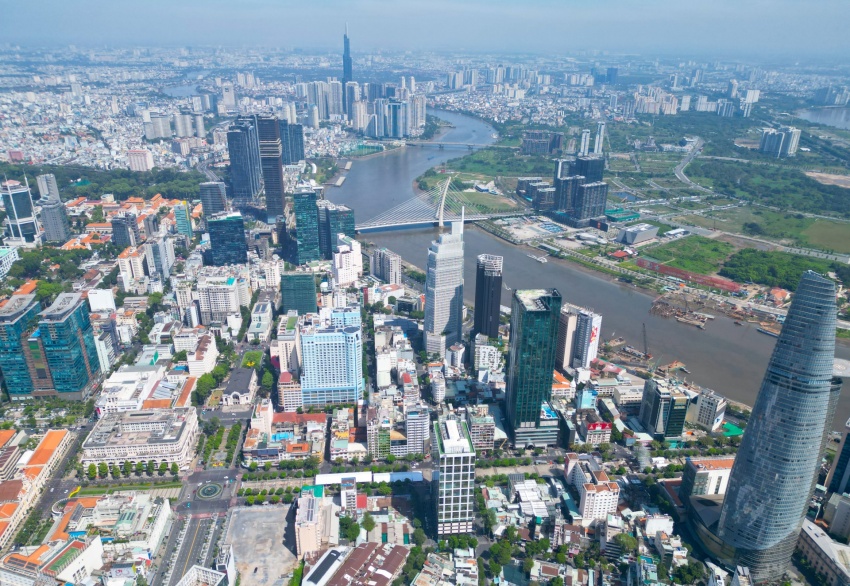 |
| Many announced successful M&A transactions took place in the new Ho Chi Minh City area. Photo: Le Toan |
 | Private capital market shifts from growth-at-all-costs to patient capital As Vietnam's private capital market matures, investors are shifting their focus from aggressive expansion to long-term, sustainable growth. At the VIPC Summit on May 28, Nguyen Thanh Thao, CEO of Thien Viet Securities (TVS) explained why 'patient capital' – capital focused on governance, operational resilience, and sustainable value – is becoming the new benchmark. |
 | Ho Chi Minh City attracts over $3.8bn foreign investment in five months Ho Chi Minh City has pulled in more than $3.8 billion in foreign investment in the first five months of 2026, a more than 20 per cent increase on-year. |
What the stars mean:
★ Poor ★ ★ Promising ★★★ Good ★★★★ Very good ★★★★★ Exceptional
 Tag:
Tag:
Related Contents




Latest News
More News
- MIK Group launches House of MIK in Ho Chi Minh City (October 03, 2026 | 17:00)
- Vietnam hospitality shifts towards integrated mixed-use developments (October 03, 2026 | 10:00)
- Stavian IP accelerates its modern expansion (October 02, 2026 | 14:00)
- ESG for future-ready industrial success (October 02, 2026 | 09:00)
- Green Future Awards honour five leading industrial park developers (October 01, 2026 | 22:20)
- Green transition leaders honoured at Green Future Awards 2026 (October 01, 2026 | 22:10)
- Six developers honoured as Emerging Green Industrial Property Developers (October 01, 2026 | 22:00)
- Why logistics will define the next phase of growth (October 01, 2026 | 09:00)
- Urban Development Law takes effect on October 1 (September 30, 2026 | 17:49)
- Phu My Hung to demolish Lawrence S. Ting Building for new development (September 30, 2026 | 17:43)



Latest News




 Mobile Version