
Japan has it all to offer in microchip development

How are Vietnam and Japan cooperating in human resource (HR) training for the semiconductor industry?
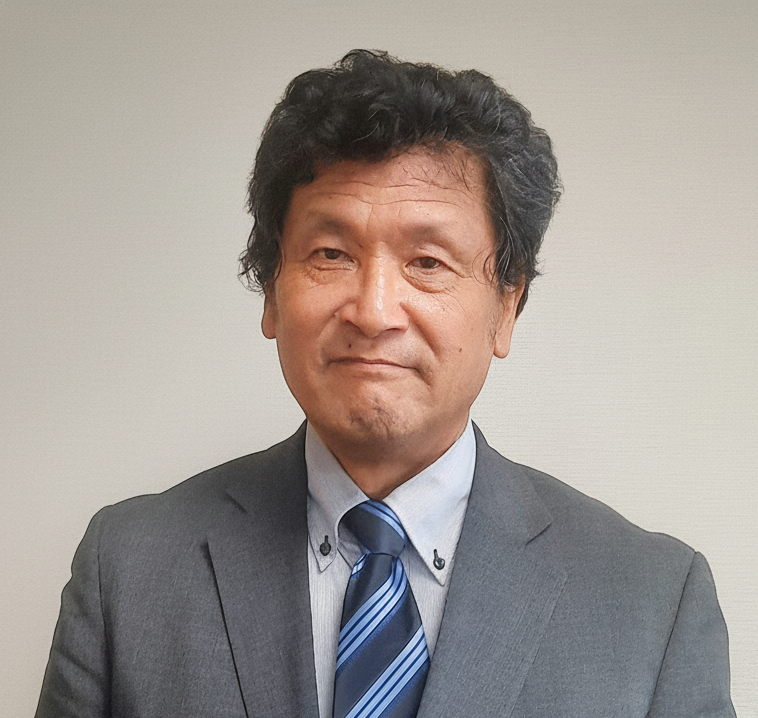 |
| Usagawa Tsuyoshi, special advisor to the rector of the Vietnam Japan University |
Currently, Vietnam has yet to establish a complete chip fabrication industry. To build a robust semiconductor ecosystem and shift from traditional packaging and testing to advanced packaging, expertise in chip fabrication is essential.
The establishment of the Vietnam Japan University (VJU) is a strategic move to support Vietnam’s HR development across multiple sectors. For the first time, the university has launched a dedicated semiconductor chip technology programme, enrolling 100 students who will graduate by 2030.
In addition to this flagship scheme, the VJU also offers three other semiconductor-related programmes, with a total of around 300 students. In total, we expect approximately 400 graduates from these programmes. Leveraging its strong ties with Japanese universities and corporations, the VJU can provide an advanced educational environment. Our goal is for the VJU to act as a bridge between Vietnam and Japan, facilitating academic and industry collaboration with other Vietnamese institutions as well.
Vietnam aims to train at least 50,000 semiconductor engineers by 2030 under its national development strategy. How do you view this target?
A report from the Japanese government indicates that eight major semiconductor companies in Japan will require around 40,000 engineers over the next decade - roughly 20,000 within the next five years. This highlights how intense the global demand for semiconductor talent is, not just in Japan, but also in economies like South Korea, Taiwan, and now Vietnam.
With Vietnam’s fast-growing economy and increasing involvement in the semiconductor industry, especially in high-tech exports, demand for skilled workers will only rise. In that context, the target of 50,000 engineers is ambitious but entirely realistic.
However, quantity alone is not enough. To ensure the quality of the workforce, the Vietnamese government must implement sound policies that encourage collaboration between educational institutions and enterprises.
To woo more private investment from Vietnam and Japan into semiconductor HR training, what steps should the Vietnamese government take, particularly in terms of financial incentives or risk-sharing mechanisms?
Like other high-tech sectors, semiconductors, especially advanced chip fabrication, is a high-risk, high-return industry. Success hinges on technological capability.
This field demands expertise across a wide range of disciplines: from IT, materials science, and chemistry, to quantum physics, telecommunications, mechatronics, and precision engineering. Importantly, both advanced packaging and chip fabrication are not labour-intensive compared to current industries including manufacturing.
That means low labour costs are not a major driver for investment. What matters most is the availability of highly skilled human capital.
This is why the Vietnamese government is prioritising the development of its semiconductor workforce. Financial incentives, tax benefits, or public-private partnerships could encourage more private investors to participate in training initiatives. Equally important is creating a stable policy environment that mitigates risks for long-term investment.
Vietnam wants to enhance cooperation with Japan in training, research, technology, and attracting investment in semiconductors. What lessons can Vietnam learn from Japan’s approach to development in this field?
No one disputes the strategic importance of semiconductors, which is why the global competition for talent is so fierce. One major challenge is how to attract young people into the field. In Japan, with a declining population, the talent pool, especially in semiconductors, is limited. Interestingly, according to the Organisation for Economic Co-operation and Development’s PISA assessment, Japanese 12-year-olds rank first in maths and second in science globally. Despite this, only 21 per cent of female students pursue science and engineering at the university level.
To address this, we’ve begun initiatives aimed at increasing female participation. At the Kumamoto University’s School of Engineering, women currently make up only about 10 per cent of the student body. To improve this, we launched the School of Informatics, which includes data science and semiconductor-related courses, with a special admission quota reserved for female students. While the quota is modest, it has succeeded in drawing more young women into the field.
Vietnam has a better gender balance than Japan, but similar initiatives could help attract more youth, and especially women, into science and engineering fields related to semiconductors.
What is your assessment of Vietnam’s potential for semiconductor HR training?
Vietnam has significant potential. The country is already strong in the design and packaging-and-testing stages of the semiconductor value chain, and its higher education institutions have the capacity to support the industry at current technology levels.
However, tech evolves rapidly. To stay competitive, all educational institutions must continuously upgrade programmes. This requires deep collaboration between universities and the private sector to ensure training aligns with future industry demands.
Which stages of the semiconductor value chain should Vietnam focus on, and why it is thought that Vietnamese graduates often fall short of the requirements of Japanese firms?
It’s important to first meet current HR demands in the existing semiconductor industry. Beyond that, universities must prepare students for the future by developing skills not just in semiconductor design, chip fabrication, and packaging/testing, but also in adjacent fields like AI, data science, and emerging application areas.
As for perhaps falling short, retraining is not unique to Vietnamese graduates - it’s also a common necessity for Japanese graduates. When I was involved in designing engineering programmes, our philosophy was to maintain generality rather than tailor education to specific companies or job roles.
What matters most is motivation and the willingness to continue learning. On-the-job training is fundamental for helping new hires meet expectations. Internal training, upskilling, and even reskilling are ongoing processes. After all, human capital is a company’s most valuable asset.
| Strengthening participation in semiconductors will require addressing shortage of skilled workforce. Vietnam currently faces a shortage of skilled engineers and workers in the semiconductor industry. CoAsia Semi Vietnam, a semiconductor design company operating in Vietnam, estimates that around 5,000 engineers work in semiconductor design in Vietnam. The majority of these engineers are scattered around the nearly 40 foreign-invested enterprises working in semiconductors, and 76 per cent of them are based in Ho Chi Minh City. A limited skilled workforce remains a major constraint despite recent partnership with US and efforts to increase trainings. It can take up to 12 months of advanced training for recently hired workers to meet their job requirements, and training of chip engineers require significant investment in physical infrastructure. It is estimated that the current number of chip design engineers in Vietnam represents less than half of the expected demand needed over the next five years. Source: World Bank |
What the stars mean:
★ Poor ★ ★ Promising ★★★ Good ★★★★ Very good ★★★★★ Exceptional
 Tag:
Tag:Related Contents






Latest News






More News
- Nearly 200 foreign-invested enterprises in Vietnam to pay global minimum tax (September 30, 2026 | 17:26)
- Vietnam steps up expressway funding efforts (September 30, 2026 | 17:17)
- Industrial investors prioritise execution and infrastructure over cost (September 30, 2026 | 12:00)
- Nina Group secures investment from Beacon Fund through Australian government-backed initiative (September 30, 2026 | 10:29)
- Vietnam seeks greater Canadian investment in green finance, infrastructure (September 28, 2026 | 11:49)
- VSIP Lang Son gains momentum as office building opens and first factory breaks ground (September 25, 2026 | 20:00)
- Vietnam and Canada announce Strategic Partnership (September 25, 2026 | 14:03)
- GenAI Fund backs Bonbon Mobility’s $500,000 pre-seed round (September 25, 2026 | 13:56)
- Private funding offer opens new path for Vietnam's rail sector (September 25, 2026 | 11:01)
- Draft decree proposes greater autonomy for foreign-invested education (September 24, 2026 | 18:14)








 Mobile Version