
India and Vietnam elevate ties to ‘Enhanced Comprehensive Strategic Partnership’

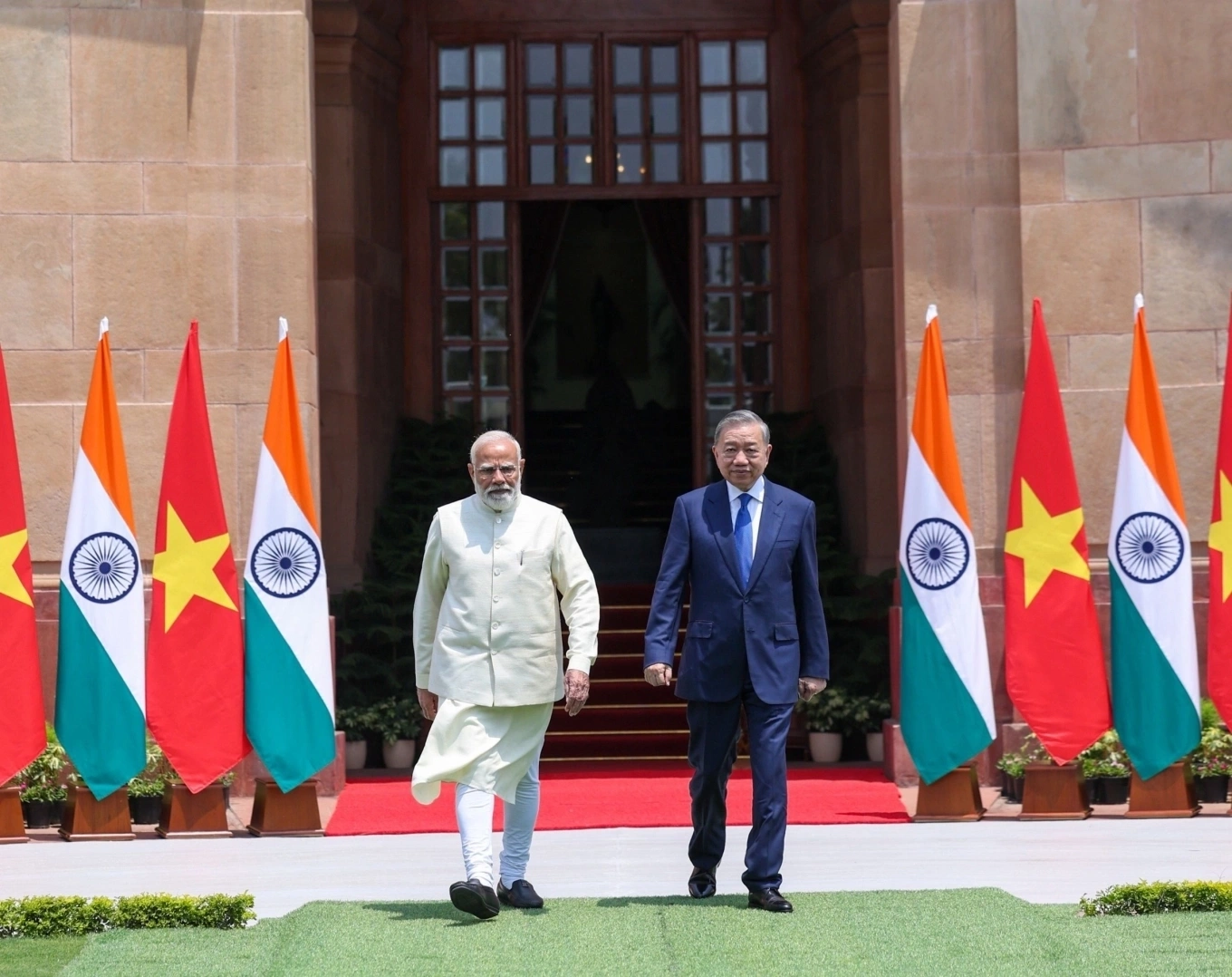 |
| Indian Prime Minister Narendra Modi (left) and Party General Secretary and President To Lam (right). Photo: the Indian Prime Minister Office |
Indian Prime Minister Narendra Modi and Party General Secretary and President To Lam held bilateral talks in New Delhi on May 6. The event took place during a state visit to India by Party General Secretary and President To Lam from May 5 to 7.
Sharing the common views on the transformative shifts in the global and regional landscape, the two leaders recognised the strong foundation of relations based on mutual trust, respect, understanding, shared outlook and effective cooperation across numerous fields.
They therefore agreed to elevate the bilateral relations to Enhanced Comprehensive Strategic Partnership in the spirit of ‘shared vision, strategic convergence, substantive cooperation’, further translating the enormous goodwill into tangible outcomes.
The two sides agreed to reinforce cooperation between the two rapidly growing economies at the level of governments and businesses for increasing two-way trade, investment and technological partnership. Noting the increase in bilateral trade in the last 10 years, the leaders emphasised the need to enhance it in a balanced and mutually beneficial way, and agreed on a new trade goal of $25 billion by 2030.
They decided that both sides will facilitate market access, including for agricultural products in respective countries. They welcomed the decision to grant market access for Indian grapes and Vietnamese durians. They also agreed to expedite market access for Indian pomegranates and Vietnamese pomelos, by quickly resolving technical issues through expedited bilateral consultations.
Both sides agreed to enhance the supply chains in sectors of mutual interest. Vietnam stated its commitments to diversify its supply sources and to import more products from India to serve its domestic production and export needs. Both sides agreed to explore ways for a more conducive regulatory environment to facilitate ease of doing business for companies of both countries, including in standards compliance certification. They underlined the importance of maintaining constructive dialogue for resolving mutual concerns under bilateral institutional mechanisms.
The leaders agreed that the ongoing review of the ASEAN India Trade in Goods Agreement should be concluded at the earliest. They concurred that the resulting agreement should be mutually beneficial, trade facilitative and relevant to current global trading practices.
The leaders agreed to encourage greater two-way investments to further strengthen India – Vietnam economic ties, especially in the fields of high-technology, transport, manufacturing, logistics, renewable energy, smart agriculture, EVs and IT, healthcare, agriculture and agro-processing, aquaculture, tourism and hospitality, among others. They also agreed to strengthen the linkages between the two countries’ startup ecosystems and encourage substantive cooperation among innovation centres.
Commending the decades-old institutional linkages between India and Vietnam in oil and gas exploration, and recognising the mutually beneficial cooperation in this sector, the leaders agreed to further enhance the exploration and production activities, including development of new wells where Indian companies are interested in participating, in accordance with Vietnamese laws and international laws.
Recognising the growing importance of e-commerce and the digital economy, both sides agreed to strengthen cooperation in these areas, through enhanced sharing of experiences in developing enabling regulations and policies to support their growth and support businesses, especially micro, small, and medium-sized enterprises to participate in e-commerce to integrate deeply and sustainably in the regional and global value chains.
Besides cooperation in economic, trade and investment, other key areas of "Enhanced Comprehensive Strategic Partnership" include politics, defence and security, maritime, regional and international cooperation. This is coupled with health, development partnership, as well as sci-tech, including critical and emerging technologies.
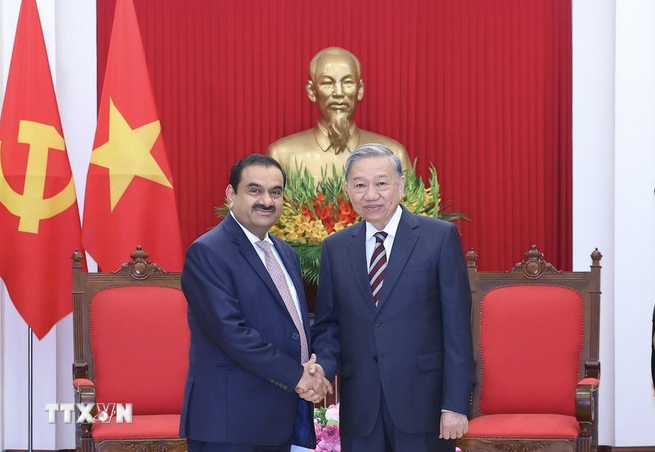 | Adani Group eyes $10 billion strategic investment in Vietnam Adani Group, one of India's leading corporations, has committed to investing $10 billion in Vietnam, focusing on infrastructure, energy, and emerging technologies. |
 | India-Vietnam pharmaceutical ties strengthen at Hanoi business meet India’s growing prominence as a global pharmaceutical hub is creating fresh momentum for deeper cooperation with Vietnam, as both countries seek to strengthen healthcare systems and expand bilateral trade. |
 | Vingroup explores $6.5 billion investment in India Vingroup is mulling $6.5 billion investment in the Indian state of Maharashtra across key ventures, including urban development, electric mobility, energy, and social and public infrastructure. |
What the stars mean:
★ Poor ★ ★ Promising ★★★ Good ★★★★ Very good ★★★★★ Exceptional
 Tag:
Tag:Related Contents

Latest News


More News
- Sojitz in Vietnam: 40 years from individual projects to a business cluster 'KATAMARI' (October 08, 2026 | 09:00)
- Coteccons targets 'Quality Growth' with 25 per cent dividend plan (October 07, 2026 | 13:00)
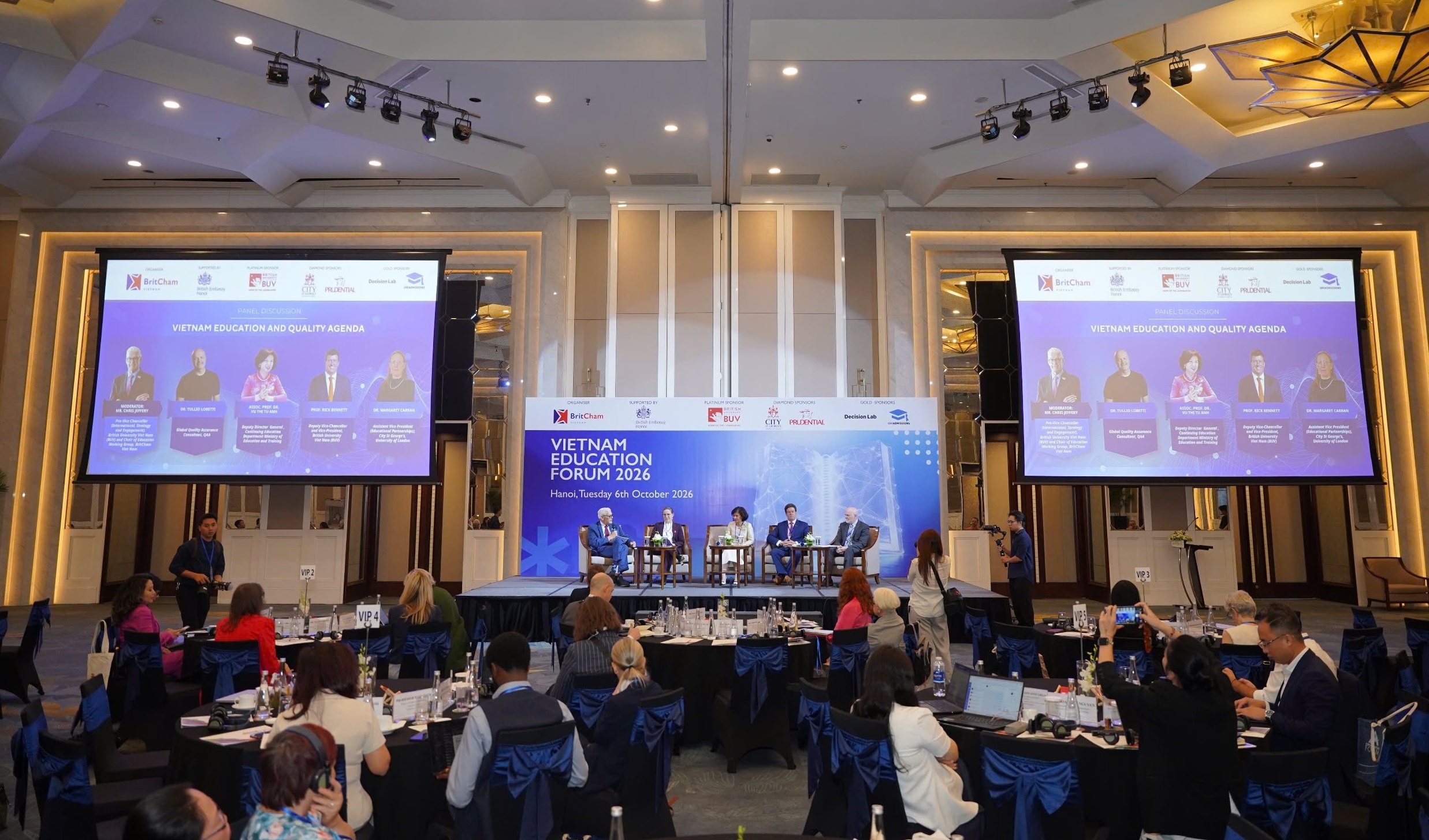
- Vietnam Education Forum opens UK Education Mission's Hanoi visit (October 07, 2026 | 12:27)
- Tax authorities deactivate TINs of nearly 180,000 businesses (October 07, 2026 | 12:08)
- World Bank raises Vietnam's 2026 GDP growth forecast to 7.4 per cent (October 07, 2026 | 11:41)
- Vietstock 2026 to spotlight livestock innovation and green transition (October 07, 2026 | 09:00)
- Vietnam’s GDP grows over 9 per cent in first nine months (October 05, 2026 | 18:45)
- Vietnam earns $56.3 billion from agro-forestry-fishery exports (October 05, 2026 | 18:32)
- DSV balances resilience and decarbonisation in supply chains (October 05, 2026 | 18:20)
- Electronics exports reach $175.4 billion in the first nine months (October 05, 2026 | 18:12)



Latest News




 Mobile Version