

Gemadept pivots to maritime ecosystem amid rising competition

According to Gemadept’s 2026 annual shareholders meeting on May 6, the transition planned for 2026 to 2030 will see the company move from a focus on physical terminal assets to a model where it dominates the broader maritime value chain.
This encompasses inland waterway transport, maritime finance, insurance and specialised industrial services.
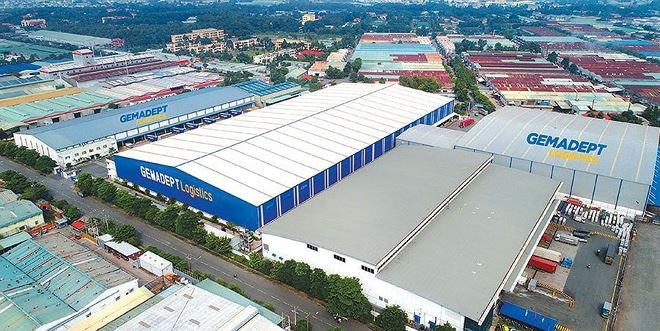
As part of this strategic shift, Gemadept is distancing itself from the fragmented, low-margin logistics segment, as evidenced by the recent divestment of its joint venture with CJ Logistics, to focus on green transport and specialised maritime services by launching the International Maritime Finance Centre in Ho Chi Minh City in May 2026.
 |
Gemadept plans to increase its fleet capacity 2.5 times by 2030, prioritising large-capacity river barges and feeder vessels over large ocean-going container ships to capture higher margins in Vietnam’s inland waterway sector.
A critical financial objective is to rebalance the group’s earnings profile so that 80 per cent of revenue and profit is derived from core legacy operations, while the remaining 20 per cent is contributed by these new segments.
Gemadept defines a business segment as a strategic pillar once it is capable of contributing at least $40 million in pre-tax profit by 2030, a milestone expected for the maritime segment through fleet expansion and new service lines.
The shift is fundamentally a response to intensifying regional competition that threatens the margins of traditional stevedoring.
In the north, the expansion of berths three through six at Lach Huyen deep sea port has introduced 2.5 to three million TEUs of new design capacity into the Haiphong market.
However, Gemadept executives remain confident in the competitiveness of their Nam Dinh Vu Port. Nguyen Manh Ha, director of Marketing and Market operations, addressed these concerns directly.
“It is not easy for import-export customers to move to Lach Huyen when they have long-established cargo bases in the Dinh Vu area, where shifting operations would require customers to dismantle complex logistics chains involving warehouses, depots, and transport networks,” Ha said.
Furthermore, Ha highlighted a significant cost disadvantage for the competition, noting that handling costs at Lach Huyen are currently significantly higher than at Dinh Vu.
“Service rates at Lach Huyen reportedly reach two to three times those of Nam Dinh Vu, which is particularly prohibitive for intra-Asia shipping lines that operate on thin margins and are highly sensitive to operational expenses and transit distances,” he said.
In southern Vietnam, the competitive landscape is defined by the emergence of mega-port proposals at Can Gio and Cai Mep Ha. CEO Nguyen Thanh Binh views these developments through the lens of a looming capacity shortage rather than a threat of oversupply.
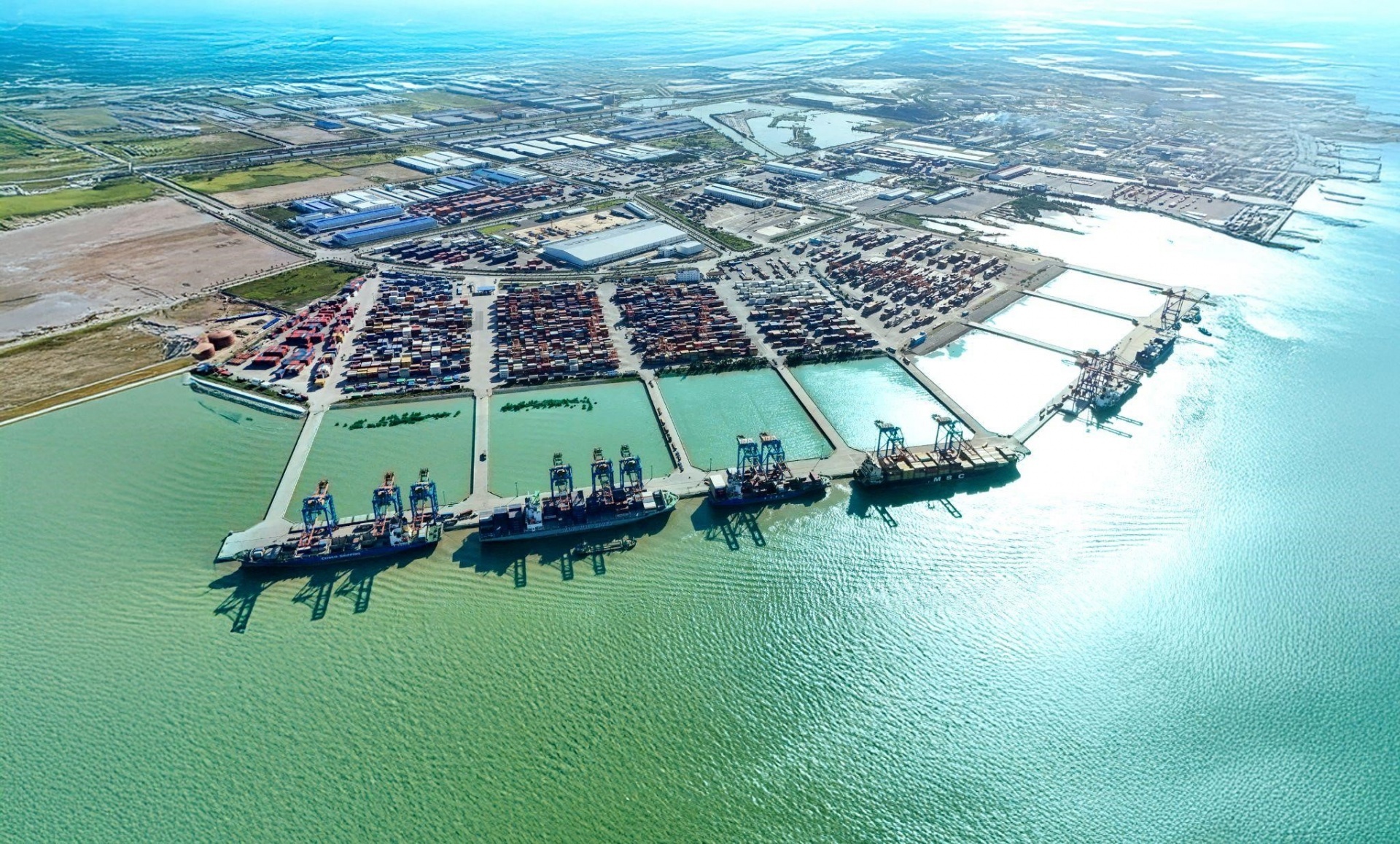
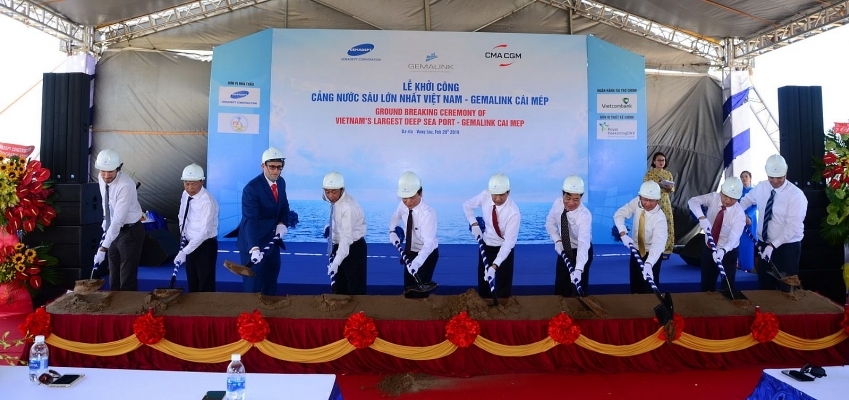
“Our internal forecasts suggest that regional demand in the Cai Mep area will reach between 12.5 and 12.7 million TEUs by 2030. Even with the completion of Gemalink’s phases and all competing mega-projects, total regional capacity will only reach approximately 10.5 million TEUs. For the next five to seven years, Gemalink will remain the port with the largest capacity in Vietnam, bolstered by substantial permitted expansion room,” he said.
Gemalink recently saw a 360-metre berth length extension that brings its total quay to 1,883 metres, specifically optimised with a 390-metre dedicated barge berth to facilitate efficient connections.
Regarding financial targets, Gemadept aims for a consistent 20 per cent annual growth rate in pre-tax profit for the 2026-2030khai sang corporation, supported by an increase in charter capital to approximately $260 million through a stock bonus and employee share programmes.
For the 2026 fiscal year, Gemadept has set a base revenue target of $260 million and a pre-tax profit goal of $112 million. The firm also set a stretch target of $272 million in revenue and $120 million in profit if market conditions prove favourable.
These figures represent a peak for the company, following a 2025 performance that already exceeded original plans by 40 per cent.
Volume targets are equally aggressive, with Nam Dinh Vu port expected to handle 1.85 million TEUs in 2026, while Gemalink port is targeting a throughput of 2.15 million TEUs.
 | Gemadept reports positive results but negative financial cashflow Gemadept Corporation, the owner of the largest Gemalink deep-water port in Vietnam, reported positive business results but negative cashflow in the first seven months of 2021. |
 | SSA Marine and Gemadept set to spearhead $6.7 billion Cai Mep Ha logistics centre US-based SSA Marine and Vietnam's Gemadept are partnering to develop the Cai Mep Ha Logistics Centre in Vietnam, with a projected valuation of $6.7 billion. |
 | Gemadept Run 2023 attracts more than 1,000 participants 'Gemadept Run 2023' took place on October 22, in Thu Duc, Ho Chi Minh City, the second such running event organised by Gemadept JSC. |
What the stars mean:
★ Poor ★ ★ Promising ★★★ Good ★★★★ Very good ★★★★★ Exceptional
 Tag:
Tag:


Latest News





More News
- Tien Phong Plastics highlights sharing resources for industrial symbiosis (September 30, 2026 | 14:11)
- The 2026 export equation: optimising profits in the processing and packaging industry (September 30, 2026 | 08:00)
- Vietnamese retailers make strong debut in Asia's Top 100 ranking (September 29, 2026 | 12:10)
- Ford appoints Annaliese Atina as managing director of Ford Vietnam (September 28, 2026 | 11:35)
- VIR’s content quality and its evolution over the years (September 26, 2026 | 08:00)
- Greenfeed rolls out early-life nutrition solution for piglets (September 25, 2026 | 17:00)
- BSR signs crude oil purchase framework agreement with ExxonMobil Asia Pacific (September 25, 2026 | 14:05)
- Amazon Kuiper licensed for private satellite telecommunications network in Vietnam (September 24, 2026 | 18:21)
- VIFC-HCMC facilitates $325 million in international capital for Vietnam’s education development (September 24, 2026 | 18:08)
- VinSpeed and Siemens Mobility sign contract on high-speed rail development (September 23, 2026 | 17:43)







 Mobile Version