

Digital green transformation drives sustainable growth

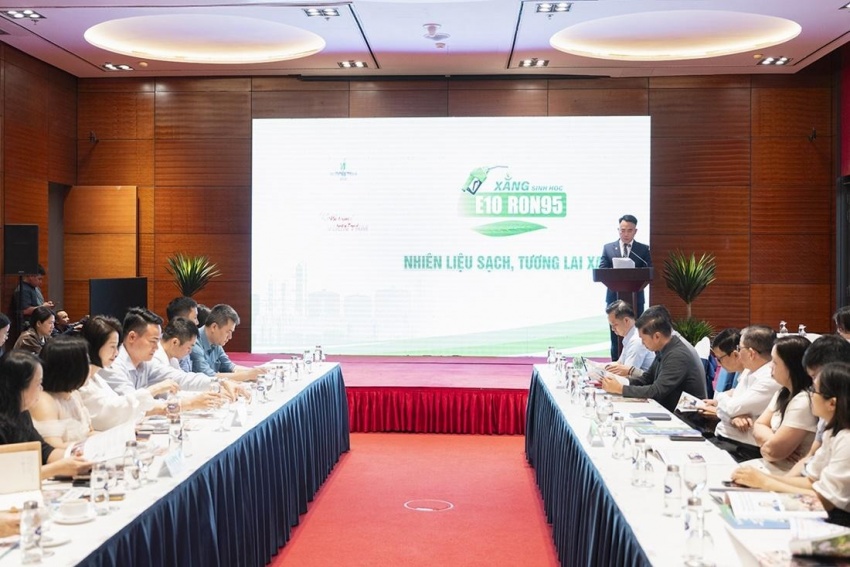 |
This message was highlighted at a workshop organised by the Agriculture and Environment magazine under the Ministry of Agriculture and Environment in Hanoi on March 30, where officials noted that Vietnam’s agricultural sector is under mounting pressure from climate change, resource depletion, and stricter global requirements such as the EU Deforestation Regulation and Carbon Border Adjustment Mechanism, making traditional resource-intensive growth models no longer viable.
Pham Thi Truc Hoa Quynh, from the Institute of Strategy and Policy on Economy and Finance under the Ministry of Finance, emphasised that Vietnam has clearly identified “greening and digitalisation” as an objective requirement, a development priority, and a central pillar in economic restructuring and growth model innovation.
Digital green transformation is increasingly becoming an essential component of corporate development strategies. Many enterprises have begun digitising data, standardising processes, and applying digital technologies in governance and production, gradually moving towards more comprehensive transformation.
Mac Quoc Anh, secretary general of the Hanoi Small and Medium-sized Enterprises Association, noted that Vietnam currently has around 900,000 active enterprises, more than 97 per cent of which are small and medium-sized enterprises (SMEs). In recent years, awareness of digital and green transformation among these businesses has grown significantly.
However, enterprises continue to face considerable barriers. Initial investment costs remain high, especially for green technologies in manufacturing. In addition, there is a shortage of high-quality workers, while many SMEs still face limitations in technological capacity and governance.
Despite these challenges, the opportunities are substantial. According to the International Monetary Fund (IMF), the adoption of digital technologies could help developing economies boost GDP growth by 1-2 per cent annually.
Anh proposed several key policy measures to accelerate the transformation process. It is necessary to further refine institutions supporting the digital and green economy, including regulations on data governance, carbon markets, and circular economy frameworks. Vietnam should also strongly develop a green finance ecosystem, including green credit, green bonds, and technology investment funds.
In addition, targeted support programmes should be established to assist SMEs in technology adoption through consulting, training, and technology transfer. Greater investment is needed in human capital development, particularly in digital skills, environmental, social, and governance, and green technologies.
Accelerating investment in national digital infrastructure will also be crucial to underpin the digital economy. At the same time, business associations should play a stronger role in connecting enterprises with technological, financial, and market resources.
Nguyen Van Long, director general of the Department of Science, Technology and Environment under the Ministry of Agriculture and Environment, stated that digital and green transformation was becoming a dominant global development trend.
Requirements related to traceability, supply chain transparency, environmental standards, and low emissions are becoming increasingly stringent, directly affecting production models and the competitiveness of the agricultural sector.
Domestically, although significant achievements have been made, agricultural production still depends heavily on natural resource exploitation, with high input costs and suboptimal efficiency.
Therefore, encouraging digital transformation alongside the application of sci-tech in green production and circular economy models is an urgent and long-term strategic requirement.
To support this transition, Long outlined several key solutions, including improving institutional frameworks to integrate digital transformation, green growth, and circular economy principles; developing digital infrastructure and interoperable data platforms; and mobilising diversified financial resources for technological innovation and green production.
What the stars mean:
★ Poor ★ ★ Promising ★★★ Good ★★★★ Very good ★★★★★ Exceptional
 Tag:
Tag:Related Contents
Latest News



More News
- JBIC considers new financing options for Vietnam’s energy projects (October 03, 2026 | 08:00)
- Vestas to supply 16 turbines for two new Vietnam wind farms (October 01, 2026 | 07:00)
- Inter-sectoral cooperation on Montreal protocol (September 30, 2026 | 17:20)
- EV battery recycling rate proposed at 8 per cent from 2029 (September 29, 2026 | 16:00)
- Bankability remains hurdle for Vietnam's JETP projects (September 29, 2026 | 12:08)
- Binh Minh Plastics extends clean water project to border communities (September 29, 2026 | 10:57)
- Coca-Cola Vietnam expands packaging collection programme (September 25, 2026 | 08:15)
- Pacifico Energy secures sea survey licence for offshore wind project in Lam Dong (September 24, 2026 | 18:02)
- Vietnam secures $221 million in UN development programmes for 2027-2031 (September 23, 2026 | 17:39)
- Carlsberg Vietnam shows how resource efficiency can shape green industrial growth (September 18, 2026 | 09:03)


Latest News




 Mobile Version