
Construction firms squeezed by rising costs despite strong project pipeline

According to estimates by SSI Research, total planned public investment for 2026 is projected to increase by 12 per cent to approximately $43.2 billion, continuing the trend of expanding public spending in recent years to support economic growth.
Notably, Vietnam aims to expand its expressway network to more than 5,000km in 2026-2030, up from around 3,300km by the end of 2025. This implies sustained high demand for infrastructure construction over the forthcoming years, providing a stable pipeline of work for contractors.
In the residential construction segment, SSI Research believes that the removal of legal bottlenecks for housing projects, along with the nationwide expansion of social housing programs, will help construction demand recover markedly in 2026.
 |
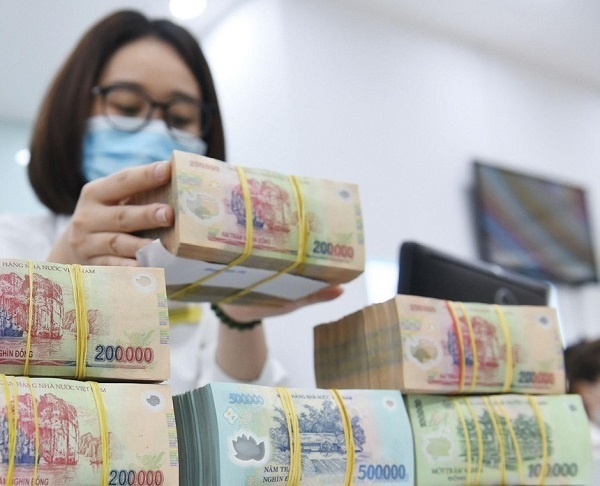
| In addition to rising borrowing costs, construction contractors are under pressure from sharply increasing material costs |
In practice, large backlog values are a clear bright spot across many leading construction firms.
Coteccons Construction JSC reported winning additional contracts worth $720 million in the second quarter of fiscal year 2025-2026 lasting from October 1 to December 31, 2025, bringing its total backlog to $2.5 billion, the highest level in its operating history.
Similarly, Hoa Binh Construction JSC recorded a total backlog of over $400 million at the end of 2025.
The company has continued to secure major contracts, including Meyspear Harmony Phu Quoc and Hoang Huy Commerce-Rose Residence’s second phase, while targeting $400 million in revenue and $10 million in net profit for 2026.
According to estimates by MB Securities, in Q1 of 2026, total backlog value across the construction sector continued to improve as both residential construction and public investment disbursement accelerated.
Companies under MBS observation are expected to increase backlog values by 7-45 per cent on-year. Notably, firms focused on residential construction may record stronger growth, as major developers accelerate project implementation to boost sales in 2026, while also benefiting from stronger decentralisation in executing key national projects.
Despite positive revenue prospects, the construction industry still faces a structural challenge: already thin profit margins are coming under further pressure from rising input costs.
Construction material costs typically account for around 60-70 per cent of total construction expenses, making the sector particularly sensitive to fluctuations in raw material prices.
Amid rising global energy prices driven by geopolitical tensions in the Middle East, the risk of escalating input costs is becoming increasingly evident.
The Ministry of Construction has recently called on ministries, agencies, and local authorities to strengthen management and stabilise construction material prices to ensure project progress, particularly for key national projects.
The underlying cause, it noted, is regional conflict in the Middle East disrupting energy supply chains, driving up fuel prices and, in turn, driving up transportation costs and the prices of materials such as sand, stone, fill soil, cement, and steel.
Beyond material costs, rising interest rates are also exerting significant pressure on contractors’ profit margins.
In Q1, deposit and lending rates at state-owned banks were adjusted upward. Accordingly, lending rates in the real estate sector have supposedly risen to 12-13 per cent, per year, the highest level in several years.
This not only pushes up developers’ cost of capital but may also delay project implementation, indirectly affecting the workload of construction contractors.
At Hoa Binh Construction, despite reporting profits approximating $40.4 million in 2024 and $10.8 million in 2025, most of these earnings came from asset liquidation and disposals during its restructuring process.
Excluding these factors, the company’s gross profit margin has declined significantly, from 10.5 per cent in 2017 to just 6.2 per cent in 2025.
Similarly, at Phuc Hung Holdings Construction JSC, after peaking in 2019 with profit of $3.05 million, business performance has shown a downward trend. Gross profit margin declined from 8.3 per cent in 2019 to 7.6 per cent in 2025, while net profit margin fell from 2.05 per cent to 1.49 per cent.
The construction sector’s business outlook in 2026 therefore presents a picture of contrasting dynamics: on one hand, growth expectations driven by large backlogs and strong public investment flows; on the other, mounting cost pressures weighing on already thin profit margins.
In this context, companies with healthy balance sheets, effective cost control, and the ability to target the right project segments are likely to gain a competitive edge, while financially weaker firms may continue to face an ongoing cycle of consolidation.
 | RoK construction firms interested in Vietnamese market With the domestic housing market entering a period of stagnation, many construction companies of the Republic of Korea (RoK) have amended their business strategies, in which many choose Vietnam as their destination, the RoK’s Newdaily newspaper reported. |
 | Construction firms seek changes to bidding mechanism for large-scale projects Construction firms are seeking amendments to the Law on Bidding to create better conditions to implement projects. |
 | Construction firms poised for growth on public investment and capital market support Building firms posted strong profit growth in 2025 and are entering the new year with expanding projects, supported by record public investment and signs of private sector recovery. |
What the stars mean:
★ Poor ★ ★ Promising ★★★ Good ★★★★ Very good ★★★★★ Exceptional
 Tag:
Tag:
Related Contents







Latest News
More News
- MIK Group launches House of MIK in Ho Chi Minh City (October 03, 2026 | 17:00)
- Vietnam hospitality shifts towards integrated mixed-use developments (October 03, 2026 | 10:00)
- Stavian IP accelerates its modern expansion (October 02, 2026 | 14:00)
- ESG for future-ready industrial success (October 02, 2026 | 09:00)
- Green Future Awards honour five leading industrial park developers (October 01, 2026 | 22:20)
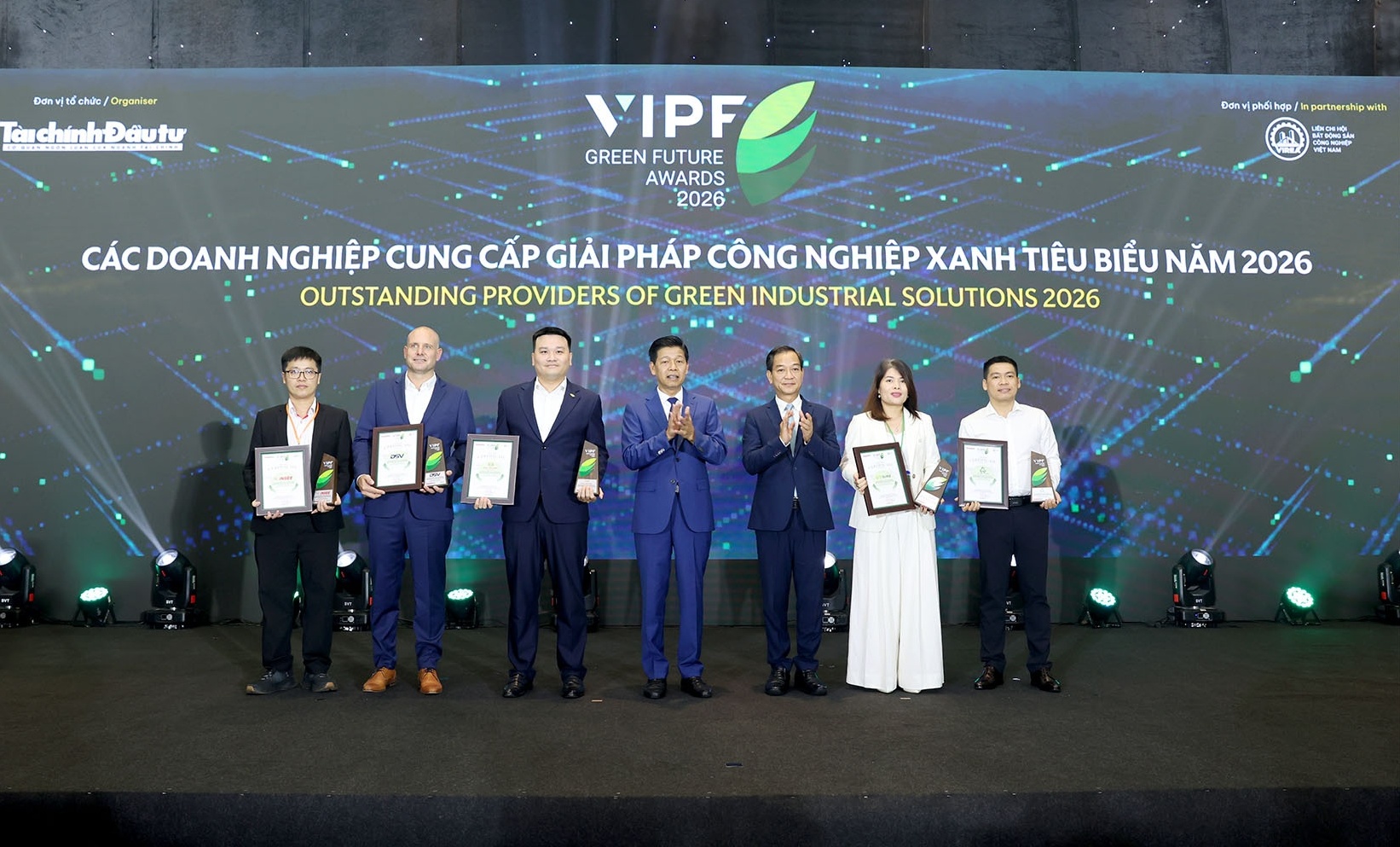
- Green transition leaders honoured at Green Future Awards 2026 (October 01, 2026 | 22:10)
- Six developers honoured as Emerging Green Industrial Property Developers (October 01, 2026 | 22:00)
- Why logistics will define the next phase of growth (October 01, 2026 | 09:00)
- Urban Development Law takes effect on October 1 (September 30, 2026 | 17:49)
- Phu My Hung to demolish Lawrence S. Ting Building for new development (September 30, 2026 | 17:43)



Latest News





 Mobile Version