
Ba Ria-Vung Tau property heats up

Interest in real estate across Ba Ria-Vung Tau surged sharply as the administrative merger with Ho Chi Minh City took place.
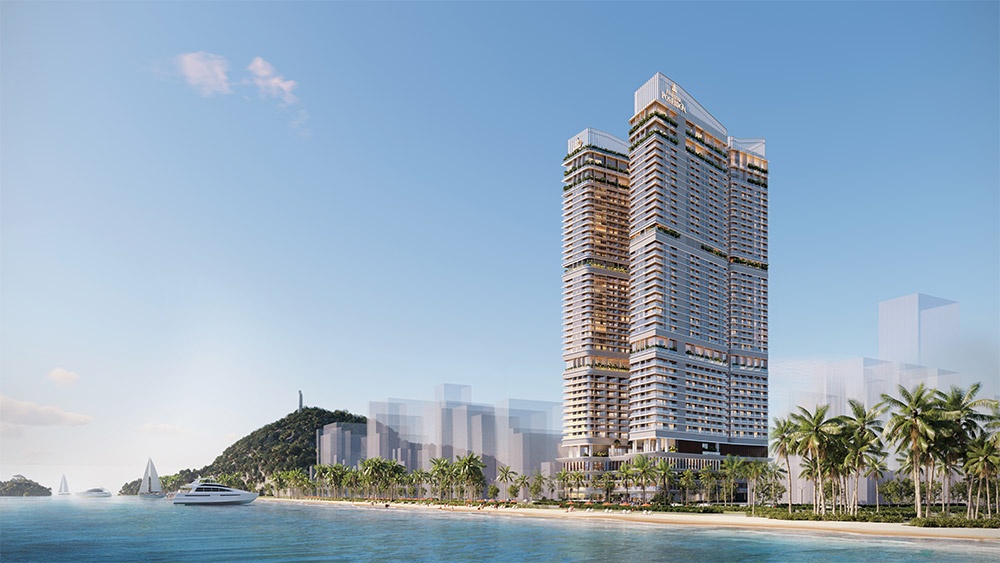 |
| Experts say that purchasing power is still cautious, with investors becoming more selective, Photo: Five Star Group |
Data from Batdongsan.com.vn noted that interest from buyers in the last three months has risen. For example, Phu My recorded the strongest increase at 22 per cent, followed by Xuyen Moc at 21 per cent and Ba Ria with 16 per cent.
In that time, several key ventures have been pushing ahead with their developments. In July, TDG Group, the developer of Maris Vung Tau launched for sale the Polaris Tower section.
Funded with around $307 million, the Maris Vung Tau features resort, commercial, and entertainment facilities, offering nearly 200 luxury villas and 500 apartments. The project is to be handed over to users by 2027.
A month previously, Sun Property (a member of Sun Group) introduced Blanca City, the first model coastal township in Vung Tau.
Developed under the “All-in-One” concept, the project integrates living, leisure, and entertainment, highlighted by the multifunctional Sun World water park. With investment of nearly $1.4 billion, Blanca City is set to become one of the largest model urban developments in the broader southern region.
Also in June, Five Star International Group broke ground on two 5-star condotel complexes: Five Star Odyssey and Five Star Poseidon, with a combined investment exceeding $384 million. These will be the tallest buildings in Vung Tau to date.
In mid-April, Lodgis Hospitality Holdings, a joint venture between Warburg Pincus, the oldest private equity firm in the United States, and VinaCapital, broke ground on a new phase of The Grand Ho Tram, the largest beachfront resort complex in Ba Ria area.
The new 35-hectare development carries an investment of over $1 billion, featuring a system of 5-star hotels, resort villas, entertainment facilities, a casino, and an international convention and exhibition centre.
This phase is part of the larger Grand Ho Tram project, which now totals more than $4 billion in investment with a scale of 9,000 rooms, positioning it as one of Southeast Asia’s premier international resort destinations.
Forecasting post-merger price movements in Binh Duong and Ba Ria-Vung Tau, real estate expert Tran Khanh Quang noted that Ho Chi Minh City’s apartment prices are already relatively high, while those in Binh Duong and Ba Ria-Vung Tau remain at lower levels.
“These two provinces will inevitably benchmark themselves against Ho Chi Minh City’s property prices and grow accordingly. Real estate in Di An and Thuan An could rise by 15-20 per cent in the near future. In Phu My (Ba Ria-Vung Tau), prices may increase 30-50 per cent, while resort properties in Ho Tram are expected to climb 20-30 per cent,” Quang said.
Meanwhile, Dang Phi Long, CEO of Phu My Land, remarked that although the property market is recovering, purchasing power remains cautious, with investors becoming more selective and focusing on reputable projects with transparent legal frameworks.
“In Ba Ria-Vung Tau, cash-rich buyers are returning to the market, mainly targeting individual units in densely populated neighbourhoods that can be used immediately, as well as titled land plots in suburban areas along the Long Thanh-Ho Tram expressway corridor,” Long said.
“This is a favourable time for genuine homebuyers and a chance for investors to acquire assets at attractive prices. However, one must be mindful of policy and planning changes to avoid risks. The administrative merger also raises questions of land-use restructuring, so investors should exercise caution and carefully review legal documents and master plans before making transactions,” Long added.
According to Vo Hong Thang, deputy CEO of DKRA Group, in the next few months, demand will remain concentrated in major urban centres with high urbanisation rates, dense populations, and strong housing demand, such as Ho Chi Minh City and Binh Duong’s provincial cities. By leveraging Ba Ria-Vung Tau’s seaport advantages, these areas could evolve into a so-called mega-urban hub with national significance and even global reach.
“In addition, Ba Ria-Vung Tau continues to pull in medium- and long-term investors who see strong growth potential driven by major infrastructure projects, including the Bien Hoa-Vung Tau expressway, the Cai Mep-Thi Vai port urban area, and the Cai Mep Ha logistics hub. Once operational, these projects are expected to become powerful catalysts for the province’s future development,” Thang said.
 |
| Hospitality development in Ba Ria-Vung Tau taking off
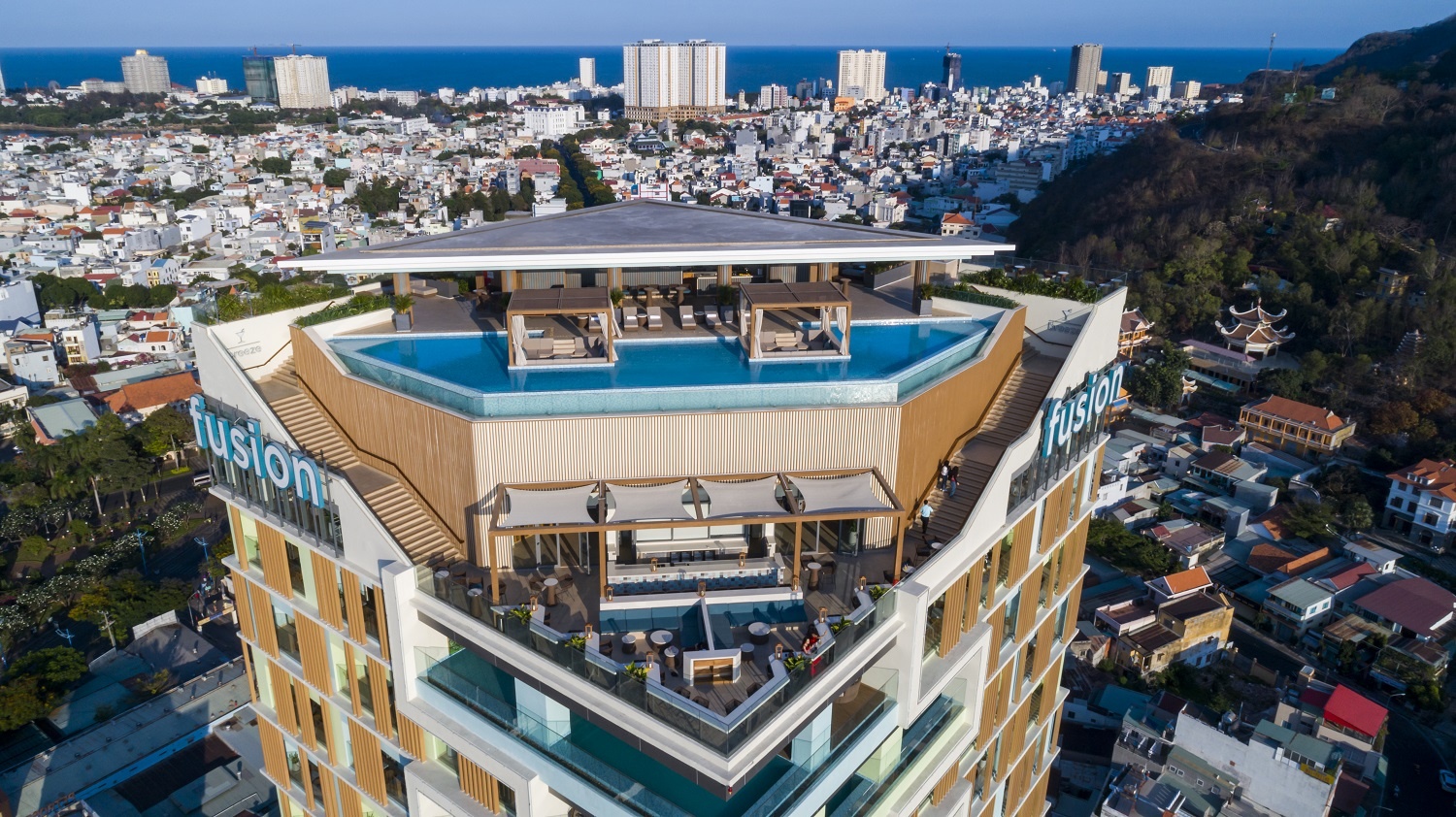
Ba Ria-Vung Tau continues to show strong potential as an attractive destination with ample room for future growth. The market holds enormous potential to take off. The key driver lies in a wave of breakthroughs in transportation infrastructure between 2024-2025, including major projects such as the Bien Hoa-Vung Tau Expressway, Long Thanh International Airport, Ring Road No.4, and the Cai Mep-Thi Vai deepsea port. These projects will significantly shorten travel time, facilitate tourism, and attract investment. In addition, the region’s tourism sector is experiencing robust growth in both visitor numbers and revenue, especially with the recovery of international arrivals. Vietnam’s macroeconomic indicators are expected to remain stable in 2025, with foreign investment inflows being a major highlight. The property market is also seeing abundant supply across various price ranges and types, drawing reputable developers and operators such as Sun Group, BRG, Charm Group, and Sunshine Group. According to data from the first five months, the Ba Ria-Vung Tau property market has seen diverse movements across segments. Land lot interest is concentrated in Vung Tau, Ba Ria, Phu My, and Long Dat thanks to infrastructure development, vibrant tourism, and strong price growth potential. The most popular price ranges are below $77,000 and above $385,000 for large lots, often bought by investors for subdivision and resale. Vung Tau city recorded the highest average selling price, with listing prices surging up to 81 per cent. In private houses segment, interest is mainly in Vung Tau centre, with stable price growth. The most popular price range is $77,000-192,000. Compared with Ho Chi Minh City, it is nearly impossible to find a similar house with equivalent amenities under $154,000. In villas and condotels segment, customer interest rose significantly on-year. However, condotel prices declined sharply due to unclear regulations. Demand for tourism in Ba Ria-Vung Tau is surging, but condotels in Vung Tau largely cater to short-term stays. Self-management and frequent use have reduced property quality, combined with oversupply and legal uncertainties, causing condotel prices to fall. The villa segment targets higher-income buyers. Developers are investing heavily in on-site and surrounding amenities, and favourable market conditions in early this year have driven average villa prices up 16 per cent, despite already high baselines. Interest in villas is about half that of condotels, but some projects reported price growth of up to 25 per cent. In apartments segment, interest rose sharply compared with late last year (up 38 per cent). Supply is shifting towards the mid- to high-end segment, a trend that contrasts with nearby markets, where rising interest is typically tied to new launches. In Ba Ria-Vung Tau, apartment supply has not increased, underscoring the market’s sustainable appeal and steady growth. The standout feature of the Ba Ria-Vung Tau property market compared with others is its diversity of product types and price ranges, creating opportunities for all kinds of investors. The residential real estate concentrates in Vung Tau city and Ba Ria, industrial and logistics real estate concentrates in Chau Duc and Phu My while the resort real estate mostly concentrated in Vung Tau centre and Xuyen Moc. The market also spans a wide price spectrum, from $77,000-115,000 for apartments and $192,000-269,000 for townhouses, to premium properties valued at $384,000 and above. This shows that Ba Ria-Vung Tau is a market open to everyone, with suitable options depending on each investor’s appetite and financial capacity. |

 | Ba Ria-Vung Tau looks ahead to high-quality funding future Amid growing opportunities for regional integration with Ho Chi Minh City and Binh Duong, Ba Ria-Vung Tau is emerging as a premier investment destination for both domestic and international investors. |
 | Ba Ria-Vung Tau embraces quality investment The Ba Ria-Vung Tau government is making concerted efforts to resolve persistent challenges in policy, infrastructure, and administrative procedures, as part of its strategy to foster sustainable economic development and draw in selective, high-quality investment. |
 | Ba Ria-Vung Tau emerging as new magnet Propelled by synchronised planning and robust infrastructure development, the Ba Ria–Vung Tau area – now part of the greater Ho Chi Minh City region – is emerging as one of Vietnam’s most dynamic investment destinations, drawing major players across strategic sectors, particularly property. |
What the stars mean:
★ Poor ★ ★ Promising ★★★ Good ★★★★ Very good ★★★★★ Exceptional
 Tag:
Tag:
Related Contents

Latest News
More News
- HoREA proposes new framework for affordable commercial housing (October 08, 2026 | 17:01)
- Hong Hac City event to explore Bac Ninh's urban transformation (October 08, 2026 | 15:27)
- Onsen in the heart of the city: a new experience at the shopping mall (October 08, 2026 | 08:00)
- Enterprises honoured as Outstanding Provider of Green Industrial Solutions (October 06, 2026 | 18:03)
- MIK Group launches House of MIK in Ho Chi Minh City (October 03, 2026 | 17:00)
- Vietnam hospitality shifts towards integrated mixed-use developments (October 03, 2026 | 10:00)
- Stavian IP accelerates its modern expansion (October 02, 2026 | 14:00)
- ESG for future-ready industrial success (October 02, 2026 | 09:00)
- Green Future Awards honour five leading industrial park developers (October 01, 2026 | 22:20)
- Green transition leaders honoured at Green Future Awards 2026 (October 01, 2026 | 22:10)



Latest News






 Mobile Version