
AI boom shifts focus to infrastructure readiness

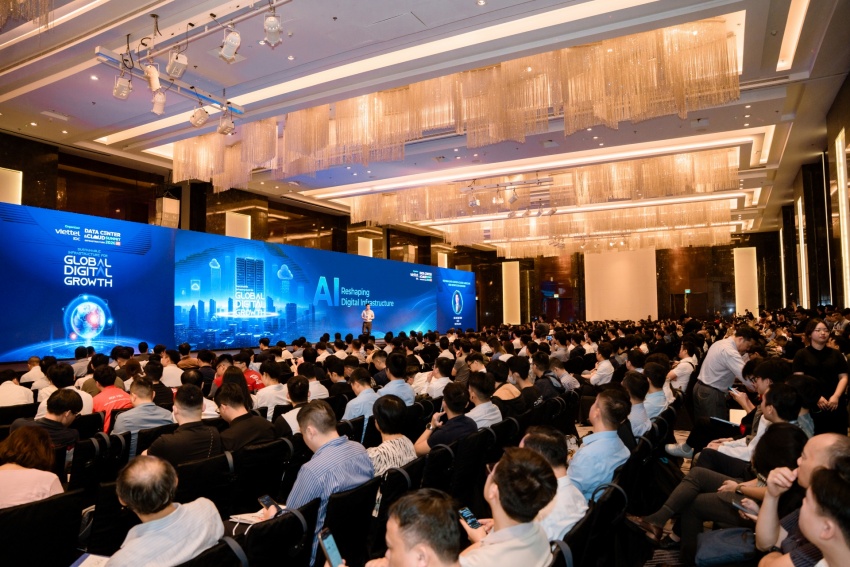
The Data Centre & Cloud Infrastructure Summit (DCCI Summit) 2026 was hosted by Viettel IDC in Hanoi on April 20, highlighting a growing market shift that AI is not only creating new demand at the application layer but is also driving profound changes across the digital infrastructure.
Discussions at the summit centred on a global reality: as AI transitions into production, data centres and cloud platforms are no longer merely supporting infrastructure but are becoming foundational to enterprises’ ability to deploy AI at scale.
“During 2026–2030, AI should not be viewed in isolation, but as part of an interconnected infrastructure stack,” said Le Ba Tan, CEO of Viettel IDC.
“Globally, there are around 11,000 data centres, yet AI data centres, while accounting for less than 1 per cent in number, already consume approximately 25 per cent of total system-wide electricity. This shows that AI is increasing data processing demand, while also reshaping the architecture of global data infrastructure.”
 |
Tan noted that while traditional data centres typically operate at 20–30 Kilowatt (kW) per rack, AI workloads can push density to 100kW or even over 200kW per rack.
“This creates entirely new requirements for power supply, cooling systems, network connectivity, and high availability. In other words, next-generation data centres must scale up, and be fundamentally redesigned to handle exponentially higher computational loads,” he said.
“This trend is also transforming operational models. As energy consumption and cooling costs become major constraints, modern data centres must evolve toward smarter, more efficient, and energy-optimised designs. Sustainability is no longer a branding concept, but a core requirement directly tied to investment efficiency and the competitiveness of AI infrastructure.”
Beyond global dynamics, these shifts are also opening a new growth cycle for regional data centre markets. According to figures presented at the event, the global data centre market is projected to reach $627.4 billion by 2030, while the Asia-Pacific market is expected to hit $174.8 billion. Although smaller in absolute size, Vietnam is among the fastest-growing markets, with a growth rate of approximately 14.2 per cent, nearly in line with Southeast Asia.
“Alongside data centres, the cloud market is also evolving rapidly under new AI-driven requirements. Previously, cloud was primarily viewed as a flexible resource-scaling solution, but its role has expanded significantly. As AI moves into production, enterprises are no longer focused solely on scalability, but also on data residency, system control, security, compliance, and long-term cost optimisation,” Tan said.
Vietnam currently ranks 45th globally in the AI Readiness Index. While still behind Singapore, Malaysia, and Thailand in overall capability, Vietnam ranks the sixth globally in trust and acceptance of AI, according to the WIN World AI Index 2025.
Shashidharan Jagadiswaran, partner, senior leader in Technology Consulting at EY Vietnam, said these figures suggest that while Vietnam may not yet lead in all AI metrics, it holds a notable advantage in societal trust, technology adoption, and governance frameworks.
According to Jagadiswaran, the issue for Vietnamese enterprises is not readiness, but execution capability.
“Given the rapid pace of AI development, many enterprises face significant challenges in upgrading their technology stacks. Moving from standalone AI applications to enterprise-wide AI platforms introduces risks not only in deployment but also in infrastructure readiness. Without sufficiently capable data centre and cloud systems, enterprises may encounter operational, cost, and risk management challenges,” he said.
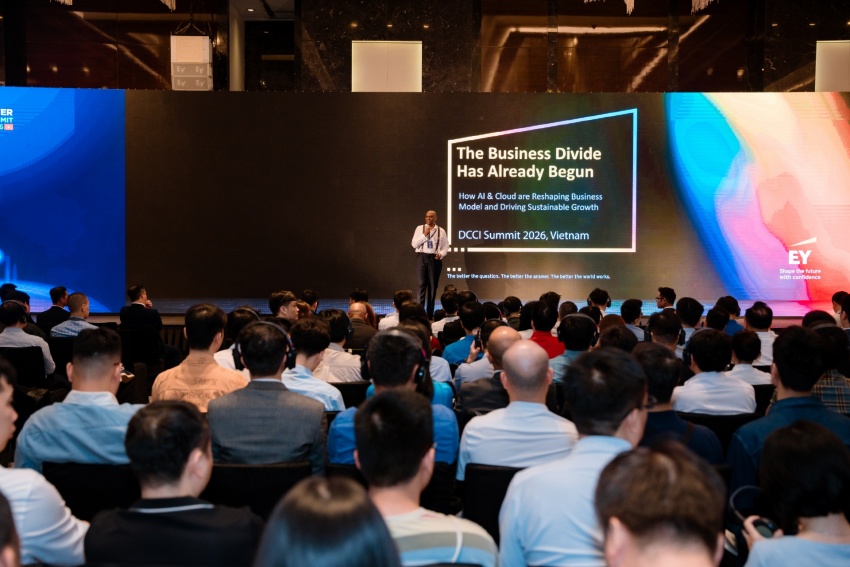 |
| Shashidharan Jagadiswaran, partner, senior leader in Technology Consulting at EY Vietnam |
“In this context, models such as private cloud, hybrid cloud, and sovereign cloud are gaining traction as suitable approaches for the new phase. For enterprises, the question is no longer whether to adopt AI, but how to build the right infrastructure to enable effective deployment while ensuring data security and long-term cost efficiency,” he added. “The gap between leading enterprises and the rest is no longer about access to technology, but about infrastructure readiness, data capabilities, and execution capacity.”
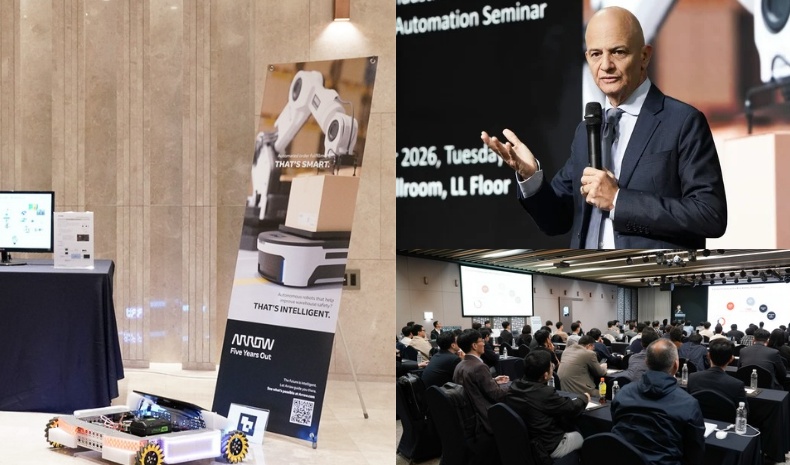
In addition to in-depth sharing, the event featured more than 20 technology booths showcasing data centre, cloud, and AI solutions, providing enterprises with opportunities to experience platforms firsthand and connect with ecosystem partners.
 | Vietnam emerges as cost-competitive data centre market A proposed $3 billion data centre complex in Dak Lak province highlights Vietnam's growing appeal as a cost-competitive destination for digital infrastructure investment. |
 | AI to power Grab’s latest offerings Grab is doubling down on AI to transform its super app into an “Everyday Guide," with new solutions designed to simplify daily life, travel, and business operations. |
 | Artificial intelligence training policy must be clear In June 2025, a California federal court held that Anthropic’s use of millions of pirated copies of books to train its large language models was “transformative, spectacularly so”, a ruling that briefly steadied the AI industry. The respite was short-lived: the same judge then held that a transformative end use cannot cleanse an unlawful acquisition at the front end of the pipeline. |
What the stars mean:
★ Poor ★ ★ Promising ★★★ Good ★★★★ Very good ★★★★★ Exceptional
 Tag:
Tag:Related Contents





Latest News




More News
- Work on digital technology building begins in Hanoi (October 16, 2026 | 17:46)
- Vietnam CFA showcase highlights $120m funding need for climate ventures (October 16, 2026 | 17:14)
- Long-delayed LNG power projects may be replaced in revised PDP VIII (October 14, 2026 | 11:59)
- Foreign investors seeking a synchronised manufacturing ecosystem (October 14, 2026 | 11:51)
- Localities report breakthrough results in FDI in first nine months (October 14, 2026 | 11:45)
- Why Asian FDI is flowing into northern Vietnam’s industrial parks (October 14, 2026 | 09:03)
- Hung Yen unveils adjusted master plan with three economic zones (October 13, 2026 | 11:30)
- Ho Chi Minh City climbs 17 places in Global Financial Centres Index (October 13, 2026 | 11:27)
- Quang Tri province to tighten delayed power projects (October 13, 2026 | 10:34)
- $600 million Ho Chi Minh City - Long Thanh expressway expansion under pressure (October 09, 2026 | 16:00)









 Mobile Version