
Vietnam establishes international trade negotiation team

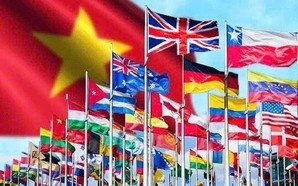
Decision No.883/QD-TTg, dated May 18, establishes a team responsible for helping direct authorities at all levels in the negotiation, approval, and implementation of international treaties on economic and trade matters of the state. This includes multilateral, bilateral, regional, and other mechanisms
The negotiating team will assist the prime minister in developing policies, strategies, plans, and overall negotiation approaches for Vietnam's participation in international economic and trade agreements. It will also propose objectives and flexible negotiation roadmaps with partners, consistent with national interests and Vietnam's socioeconomic development.
 |
| Photo: VGP |
The team will lead and coordinate with ministries and agencies in preparing, organising, and implementing negotiations on international economic and trade agreements, while proposing solutions to any issues. It will also develop and conduct negotiations and implement results based on approved plans.
The team will also lead and coordinate in exercising Vietnam's rights and obligations under international economic and trade agreements, including participation in permanent bodies, secretariats, councils, and joint committees. It will take part in negotiations to expand and upgrade existing agreements to which Vietnam is a member, such as the World Trade Organisation, APEC, and ASEAN – and bilateral and multilateral free trade agreements – to better tap into existing markets.
The team will consult the business community and stakeholders on negotiation content, based on assessments of challenges and risks to the economy, to develop strategies that protect and enhance Vietnam's interests.
The Minister of Industry and Trade will head the government negotiating team, with deputy heads from the ministries of Industry and Trade, Finance, and Foreign Affairs.
Team members include deputy ministers from the ministries of Agriculture and Environment; Science and Technology; Justice; Culture, Sports and Tourism; Health; Home Affairs; Public Security; and a deputy governor of the State Bank of Vietnam.
Technical-level negotiating groups will be established as required by each international trade agreement, composed of technical-level civil servants from relevant ministries and agencies, mobilising experts if needed.
In exceptional circumstances, Prime Minister Le Minh Hung may establish separate negotiating teams to handle strategic and urgent issues related to national interests.
Vietnam has joined a network of 17 free trade agreements involving 60 economies, covering most major global markets. The country's free trade agreement network can be grouped into three main categories: ASEAN-based agreements, new-generation FTAs and bilateral accords.
High-standard trade agreements include the Comprehensive and Progressive Agreement for Trans-Pacific Partnership, the Regional Comprehensive Economic Partnership, and the EU–Vietnam Free Trade Agreement.
 | Addressing the weaknesses in trade and supply chains Globalisation and the international trade system have many critics. Some say that trade does more harm than good, is bad for the environment, lacks resilience, is not transparent, and doesn’t include enough people. |
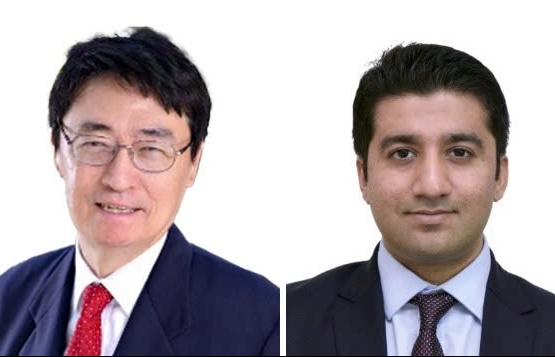
 | Strong institutions shield emerging markets from US monetary shocks Economists Donghyun Park and Irfan A. Qureshi from Asian Development Bank (ADB) delve into the factors helping emerging markets to ensure long-term financial stability and foster sustained economic growth amidst the challenges posed by global financial fluctuations. |
 | Innovations and impacts on international trade In 2024, the global economy and Vietnam’s economy in particular had three distinct characteristics: slow growth, high sensitivity, and profound change. To fit this economic context, international trade promotion activities in Vietnam also boasted many innovations. |
What the stars mean:
★ Poor ★ ★ Promising ★★★ Good ★★★★ Very good ★★★★★ Exceptional
 Tag:
Tag:


Latest News


More News
- Expanding education partnerships to drive mutual growth (October 06, 2026 | 16:04)
- VTG 2026 to showcase textile and footwear innovation in Ho Chi Minh City (October 06, 2026 | 16:00)
- Infineon boosts Vietnam footprint with Ho Chi Minh City office (October 06, 2026 | 10:02)
- Vietnam Customs expands priority enterprise scheme to 74 firms (October 03, 2026 | 08:00)
- ASL Law opens Danang office (October 02, 2026 | 22:12)
- Project ACTIVE 2.0 launches in Vietnam to boost cervical cancer care (October 02, 2026 | 22:02)
- Vietnam launches first embodied AI conference to advance robotics ecosystem (October 02, 2026 | 17:00)
- DKSH Performance Materials – A trusted partner in Vietnam’s evolving personal care landscape (October 02, 2026 | 14:28)
- Ghanaian delegation reviews PSL Machinery’s cashew factory-management and implementation roadmap (October 02, 2026 | 10:18)
- People living with chronic kidney disease and diabetes should be aware of infectious disease risks (September 30, 2026 | 18:00)


Latest News



 Mobile Version