
Unilateral termination of labour contracts due to CV misrepresentation

 |
| (L-R) Huong Nguyen and Nguyen Tuan Anh, partners at Nishimura & Asahi (Vietnam) Law Firm |
Employees have a legal obligation to provide truthful information to employers. How should employers address suspicions that an employee provided false information about past employment and work experience (here below being mentioned as ‘information’) in a resume (CV) that was a key factor in the hiring decision, and can employers unilaterally terminate the relevant labour contract if the Information proves false?
This article will discuss a novel case of first impression in Vietnam (‘precedent’), in which an employee claimed illegal termination of his labour contract and violations of his privacy rights, and offer insight into employers’ rights to terminate labour contracts due to provision of untrue information, and obligations to handle employees’ personal data properly during the Information verification process, from the perspectives of Vietnamese labour and privacy law.
- The precedent
In September 2023, a district people’s court adjudicated a labour dispute between a defendant local company and the plaintiff, a former employee who claimed the company illegally terminated his labour contract, executed in September 2021, and infringed his legal rights under personal data protection law, damaging the plaintiff’s personal honour.
Among his requests for relief, the plaintiff asked the court to (i) nullify the June 2022 termination notice and permit the plaintiff to resume work for the defendant, and (ii) award the plaintiff compensation for damages resulting from the defendant’s violation of then-current personal data protection regulations during performance of a background check to verify the plaintiff’s CV Information.
The defendant objected to all of the plaintiff’s claims, arguing it had legal grounds to terminate the plaintiff’s labour contract unilaterally under the Labour Code because the plaintiff provided false information in his CV about the length of previous employment, and the roles and positions held. The defendant also argued the plaintiff failed to submit lawful evidence proving the elements of the claim that the defendant violated personal data protection law (a violation, actual damages, and the causal link between them).
The trial court upheld the defendant’s arguments and rejected the plaintiff’s claims. The court of appeal later upheld the ruling.
- Legal issues
The precedent addresses two legal issues employers should note when facing similar situations:
Under labour law, whether an employer can terminate a labour contract unilaterally if Information in the employee’s CV is found to be false; and under privacy law, whether an employer has a lawful basis on which to verify employees’ CV Information, by sharing relevant personal data with former employers, in the context of potential termination of untruthful employees’ contracts.
*Unilateral right to terminate labour contracts due to false information
An employer can terminate an employee’s labour contract unilaterally if the employee “provide[s] untruthful information in accordance with Article 16.2 of the Labour Code when executing the labour contract, which impacts the recruitment of the employee.”
Article 16.2 of the Labour Code states, “The employee must provide truthful information to the employer regarding full name, date of birth, gender, residence address, educational background, professional skill level, heath condition, and other matters, which directly relate to the execution of the labour contract as requested by the employer.”
Thus, employers have a legal basis to terminate a labour contract if information requested by the employer, and provided by the employee, during the recruitment process proves false. The content of candidates’ CVs is vital to employers’ decisions to hire prospective employees. Perhaps for that reason, the precedent court treated the relevant employee information as falling within the scope of Article 16.2.
However, it is uncertain whether the ruling in the precedent would change if the Information at issue was not specifically requested by the employer. If an employer fails to request specific Information during the recruitment process, or to indicate that the information relates to execution of the labour contract, it may be difficult to claim the Information is covered by Article 16.2 in the context of contract termination.
*Lawful basis for verification of CV information
To exercise unilateral termination rights on the basis of false information, employers must prove (among other things) the employee provided false information pursuant to Article 16.2.
This is challenging because it requires obtaining evidence the Information was untrue from the employee or from his/her former employers.
Obtaining information from former employers, while more feasible, requires processing employees’ personal data, for example, by disclosing CV information to former employers during the verification process.
Information in an employee’s CV constitutes protected personal data (i.e., information associated with, or which identifies or helps to identify, a specific person) under relevant laws. Therefore, to process an employee’s personal data for a specific purpose, the employer, as data controller, must ensure it obtains the employee’s consent or has a lawful basis to process the data without the employee’s consent.
Under current personal data regulations (Decree 13), it appears impossible for employers to verify CV information lawfully without employee consent because no alternative lawful basis justifies processing employees’ personal data for this purpose.
However, on January 1, 2026, a new non-consent based justification for personal data processing, to reasonably protect an organisation’s legitimate interests, is being introduced, and arguably permits an employer to verify the information with former employers, without employee’s consent, due to potential violations of the obligation to provide truthful information during recruitment.
The precedent court rejected the employee’s privacy claims without discussing whether the employer had a lawful basis to share personal data to former employers without consent.
However, employers cannot rely on the precedent to conduct the Information verification because the dispute occurred before implementation of Decree 13. That said, after January 1, 2026, employers should be able to verify information in reliance on the new legal basis for data processing without consent.
In conclusion, Vietnamese labour law makes it challenging for employers to terminate/dismiss employees absent concrete evidence of wrongdoing. Companies should identify specific Information, directly related to employment terms, that candidates must provide during recruitment. Employers also should consider obtaining candidates’ consent to verification of CV Information with former employers. In the absence of consent, employers should consider alternative lawful bases for data processing, or different approaches to verification, to avoid legal claims.
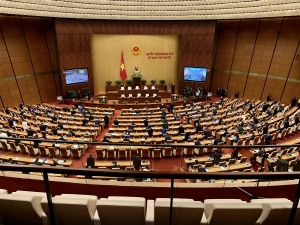 | National Assembly to discuss key issues The 10th session of the 14th National Assembly was kicked off on Monday morning, focusing on many issues including socioeconomic development orientations for the next year, amid the raging health crisis. |
 | Adhering to the law in termination of labour contracts in Vietnam A guideline issued by the Supreme People’s Procuracy in November covered a number of fundamental contents in the supervision of settlement of individual labour disputes including specific guidelines on settlement of disputes of unilateral termination of a labour contract. In addition, an August verdict issued by the Appeal Court of Binh Duong province also covered some noteworthy views of the court in settlement of a lawsuit on unilateral termination of a labour contract. The last piece of this article will address proposed to-do actions. |
 | Investors and legislation at odds on energy contracts Liquefied natural gas projects in Vietnam are facing bankability challenges which affect the country’s efforts in energy reform. |
What the stars mean:
★ Poor ★ ★ Promising ★★★ Good ★★★★ Very good ★★★★★ Exceptional
 Tag:
Tag:
Related Contents








Latest News




More News
- Private and foreign-invested enterprises remain Vietnam's largest job creators (July 16, 2026 | 10:38)
- European business confidence in Vietnam surged in second quarter (July 15, 2026 | 12:21)
- Vietnam's auto market hits turning point as electric vehicles reshape sector (July 14, 2026 | 16:23)
- China imports $1.4 billion of Vietnamese seafood in first half of 2026 (July 14, 2026 | 10:00)
- Motorcycle sales rise despite electrification push (July 13, 2026 | 14:57)
- Non-smoker diagnosed with early-stage lung cancer during routine health check-up (July 13, 2026 | 11:00)
- Cyber incidents – a 'litmus test' of a company’s management capability (July 13, 2026 | 10:51)
- Carlsberg Vietnam earns fourth consecutive HR Asia recognition and VCCI Top 10 Green Enterprise honour (July 11, 2026 | 11:36)
- DatVietVAC set for IPO to unlock growth capital (July 09, 2026 | 14:48)
- Strong fundamentals to keep Vietnam at the top of ASEAN growth rankings (July 08, 2026 | 13:49)








 Mobile Version